 en
en 中文简体
中文简体 русский
 Español
 Deutsch
 Polskie
 REQUEST A QUOTE


Professional Manufacturers of Custom Roto Molding Products
-
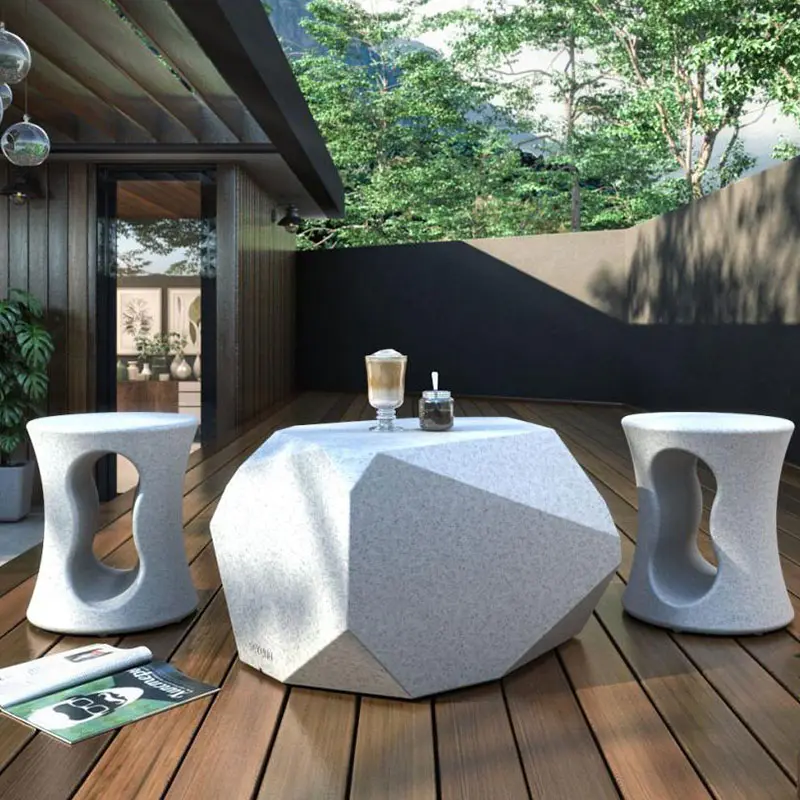 View More >
Rotational molding furniture mold
View More >
Rotational molding furniture mold
-
 View More >
Flowerpot gardening mold
View More >
Flowerpot gardening mold
-
 View More >
Off-road bumper mold
View More >
Off-road bumper mold
-
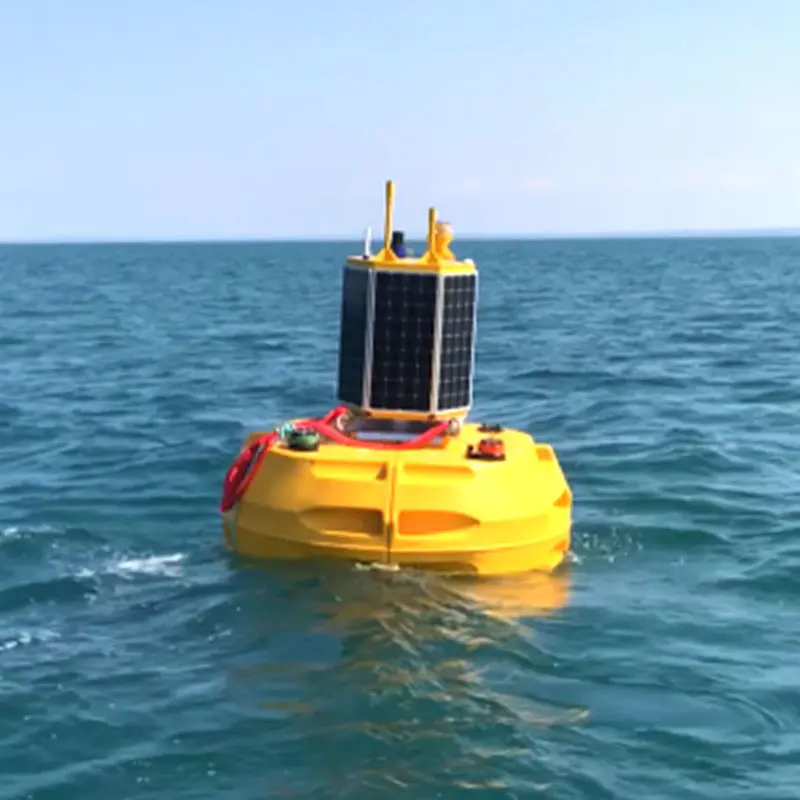 View More >
Navigation buoy mold
View More >
Navigation buoy mold
-
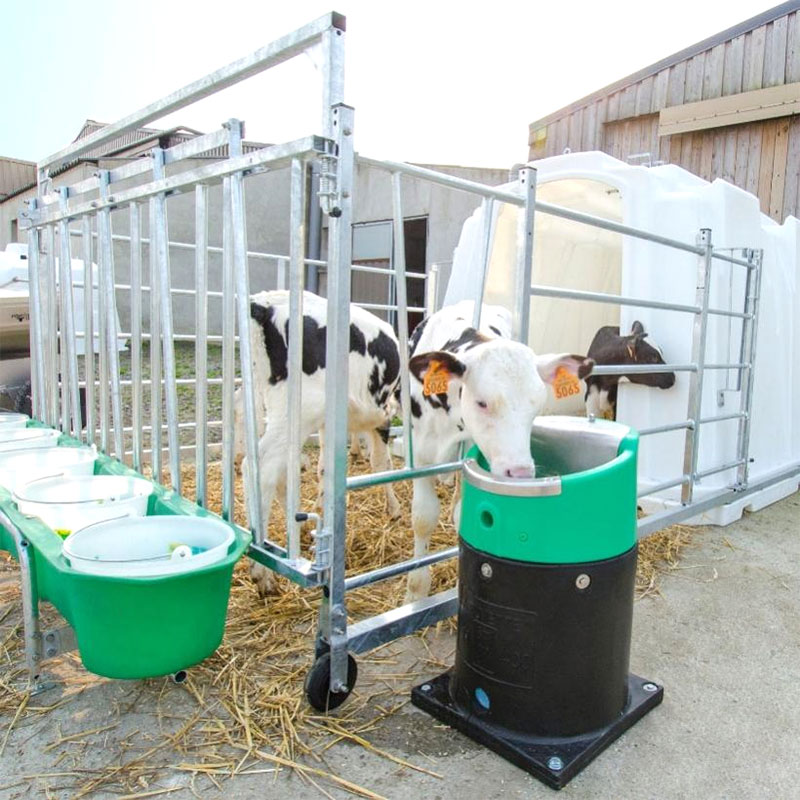 View More >
Livestock breeding mold
View More >
Livestock breeding mold
-
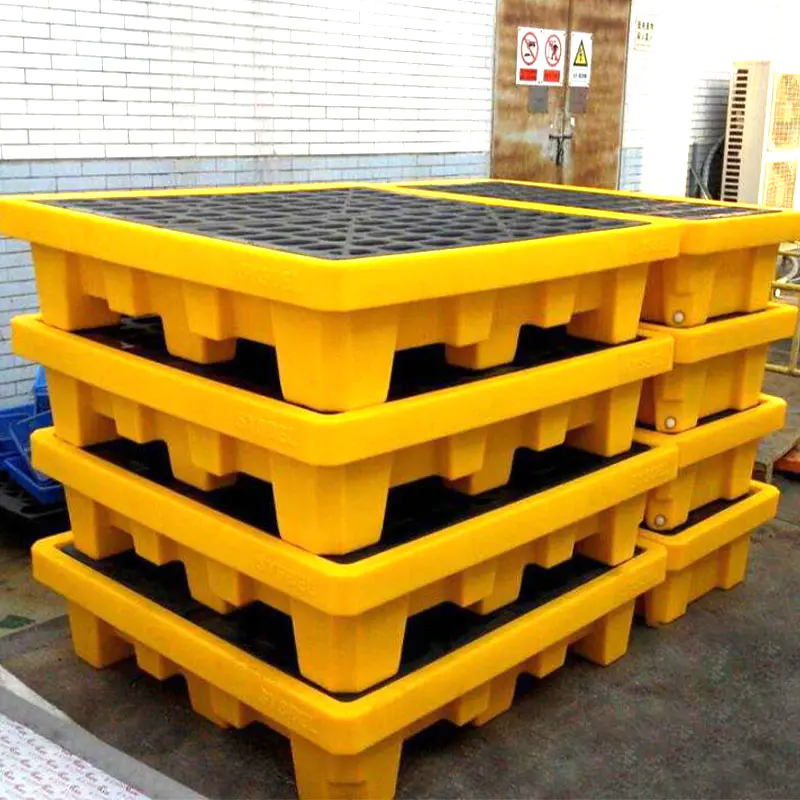 View More >
Industrial cleaning mold
View More >
Industrial cleaning mold
-
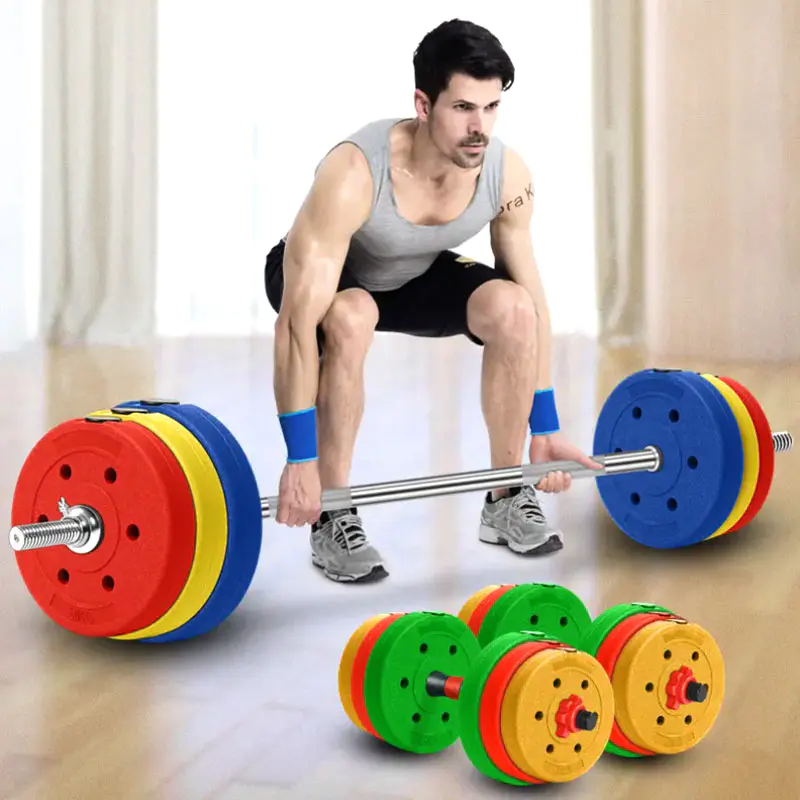 View More >
Sports equipment mold
View More >
Sports equipment mold
-
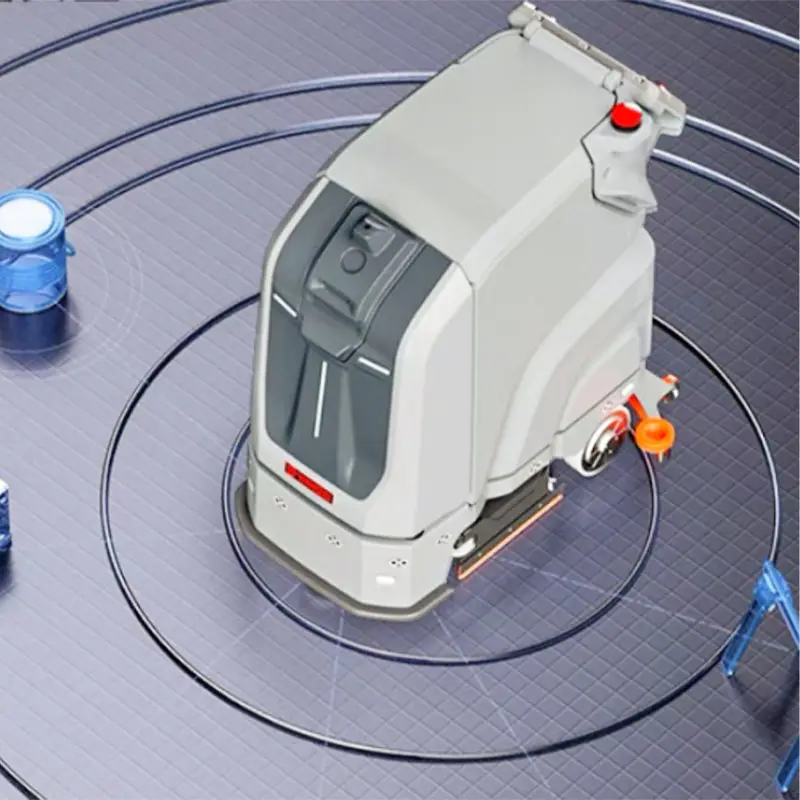 View More >
Unmanned sweeping robot mold
View More >
Unmanned sweeping robot mold
-
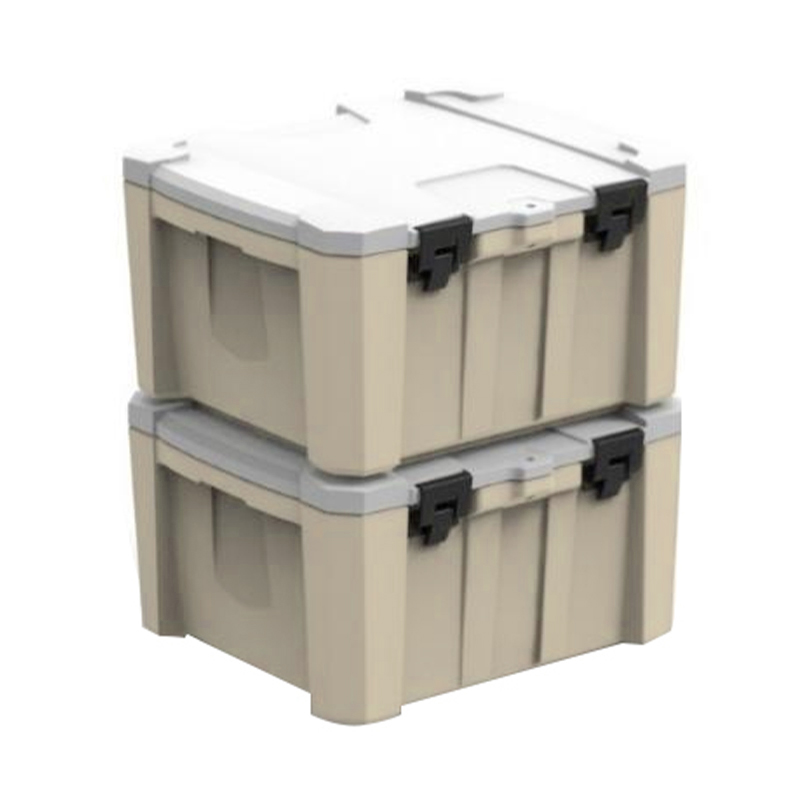 View More >
Cold chain insulation box mold
View More >
Cold chain insulation box mold
-
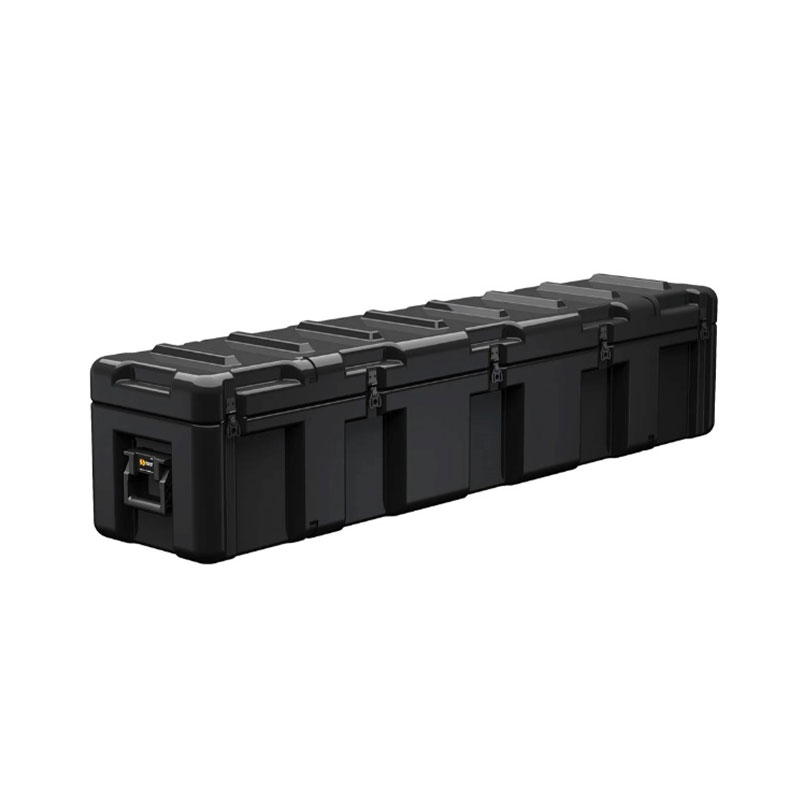 View More >
Military box mold
View More >
Military box mold
-
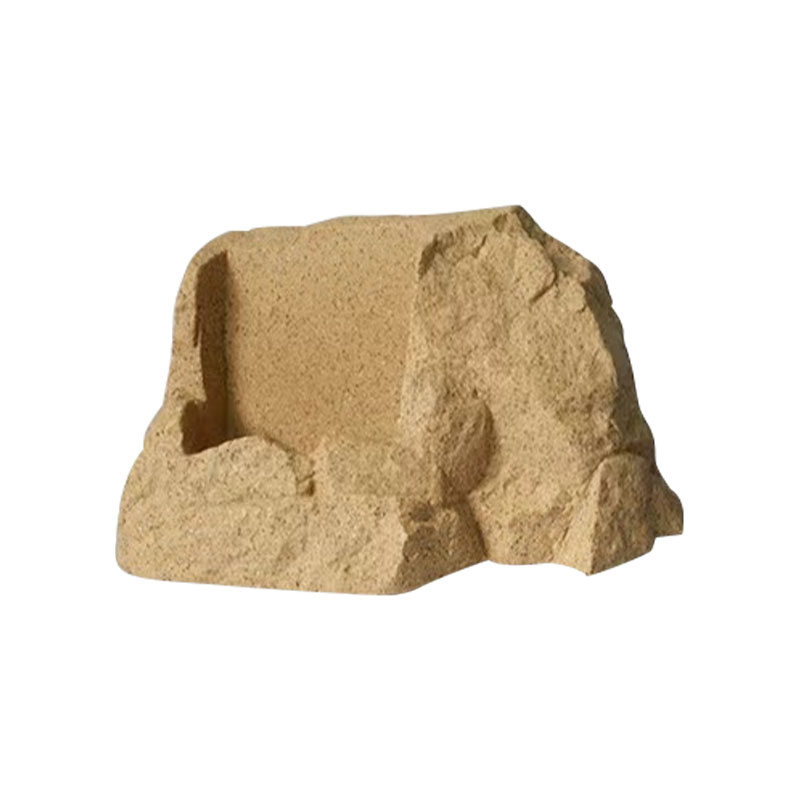 View More >
Rockery fence mold
View More >
Rockery fence mold
-
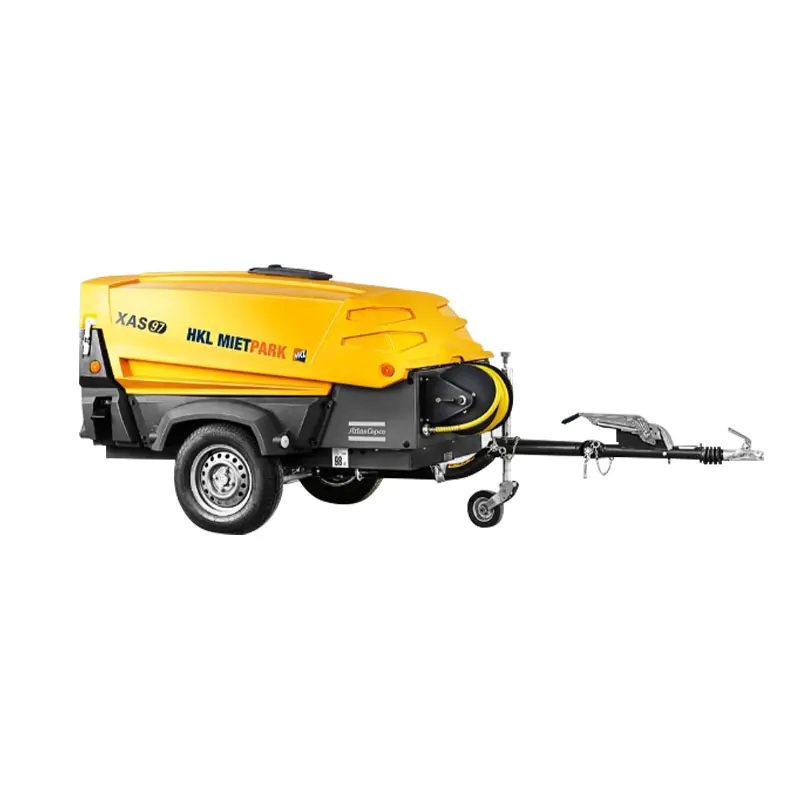 View More >
Automobile fuel tank mold
View More >
Automobile fuel tank mold


How to Choose Between Cast Aluminum and CNC Machined Molds
Choosing the right mold is one of the most important decisions in rotational manufacturing. Mold construction affects dimensional accuracy, surface quality, thermal response, production speed, maintenance requirements, and the total cost of a project. For manufacturers evaluating roto molding solutions, the two most widely considered aluminum options are cast aluminum molds and CNC machined molds. Each approach has clear advantages, and the best choice depends on product geometry, expected production volume, required tolerances, surface finish, and development schedule.
A reliable rotomolded mold must do more than reproduce a product shape. It must transfer heat consistently, withstand repeated heating and cooling cycles, support reliable demolding, and maintain its geometry throughout production. This is why material selection and manufacturing method should be evaluated together rather than separately. The following comparison explains where each mold type performs best and how manufacturers can select an appropriate solution.
Cast Aluminum Molds for Flexible and Cost-Conscious Production
Cast aluminum molds are produced by creating a pattern or tooling model and casting aluminum around the required geometry. After casting, the mold is machined and finished to achieve the necessary dimensions and surface characteristics. This manufacturing route is particularly suitable for large hollow products with relatively complex shapes, where obtaining the complete cavity through direct machining could require substantial machining time.
One of the main advantages of cast aluminum is design flexibility. The casting process can accommodate deep cavities, rounded transitions, integrated structural features, and large exterior surfaces without requiring every area to be removed from a solid billet. Properly designed casting structures can also provide practical wall support while keeping the mold relatively manageable for rotational molding equipment. For many projects, cast aluminum vs cnc billet molds is therefore a decision based on the balance between geometry, tooling investment, and expected production requirements.
Cast aluminum tooling is commonly used for tanks, containers, agricultural components, outdoor products, industrial housings, and other large hollow plastic parts. It is particularly attractive when the mold has a large overall volume and the product does not require extremely tight machining tolerances across every surface. The resulting tooling can provide good thermal conductivity and an efficient heating response, both of which are valuable for consistent plastic distribution.
- Suitable for large and complex hollow components.
- Efficient for tooling designs where direct billet machining would be extensive.
- Good thermal conductivity for conventional rotational molding processes.
- Practical for medium and high-volume production when properly engineered.
The principal limitation is that casting introduces additional variables. Dimensional consistency depends on casting quality, pattern accuracy, machining allowances, and post-processing. For applications requiring particularly precise interfaces or highly controlled dimensions, additional CNC finishing may be necessary. A professional supplier should therefore evaluate casting and finishing requirements as one integrated process.
CNC Machined Aluminum Molds for Precision and Complex Detail
CNC machined molds are manufactured directly from aluminum billet using computer-controlled machining equipment. The process removes material progressively until the desired cavity, mounting surfaces, parting lines, and detailed features are produced. Because the geometry originates directly from the digital engineering model, CNC machining offers strong control over dimensional accuracy and repeatability.
The most important advantage of this approach is precision. CNC machining is especially valuable for products containing detailed ribs, carefully controlled interfaces, tight dimensional requirements, or complex curved surfaces. It also provides excellent consistency when multiple molds or mold sections must match each other. In a practical rotomolding mold material comparison, CNC machined aluminum generally becomes more attractive as precision requirements increase.
CNC tooling can also deliver a highly controlled surface finish. This is useful when the final plastic component requires a specific texture or appearance and the mold surface must reproduce that finish consistently. Another benefit is design modification. Because the mold geometry is closely tied to the CAD model, localized changes can often be planned and machined with high accuracy.
However, CNC machining can require more machine time when the mold is very large or contains substantial volumes of material that must be removed. The tooling cost may therefore become less attractive for extremely large cavities or projects where ultra-high precision is unnecessary. Manufacturers should avoid choosing CNC machining simply because it appears technologically advanced; the method should match the actual product requirements.
- Review product geometry, wall requirements, interfaces, and critical dimensions.
- Determine production volume and expected mold service life.
- Compare thermal requirements, surface finish, machining complexity, and tooling cost.
- Evaluate lead time, sample validation, future modifications, and maintenance needs.
- Select the tooling process that provides the best overall production value.
The difference between these methods can be summarized through the following pros and cons of rotomold tooling types comparison:
| Category | Cast Aluminum | CNC Machined Aluminum | Typical Advantage |
| Manufacturing method | Casting with finishing | Direct billet machining | Depends on geometry |
| Complex large cavities | Very suitable | Suitable but machining-intensive | Cast aluminum |
| Dimensional precision | Good after finishing | Very high | CNC machining |
| Detailed surfaces | Good | Excellent | CNC machining |
| Large mold economics | Often favorable | Can require more machining | Cast aluminum |
| Modification control | Good | Excellent | CNC machining |
Large Rotomolding Molds for Tanks, Containers, and Industrial Products
Large rotomolding molds represent a specialized category because mold size, structural support, thermal behavior, and handling requirements become increasingly important. Products such as water tanks, chemical-free industrial containers, agricultural equipment housings, float bodies, and large outdoor components often require substantial cavity dimensions and carefully engineered parting structures. In these applications, a roto molding plastic tool must maintain stable geometry while moving through repeated heating, rotation, cooling, and demolding operations.
Cast aluminum is often advantageous for very large molds because the casting process can create substantial cavity forms without relying entirely on material removal from a solid block. CNC machining remains valuable for critical mounting areas, sealing surfaces, parting edges, and complex sections requiring precise control. In practice, a hybrid engineering strategy can sometimes provide the best result, combining a cast structure with carefully machined functional surfaces.
Large-mold production also requires attention to machine compatibility. Mold weight, lifting points, frame construction, ventilation, parting-line design, and heating behavior should be considered before manufacturing begins. A mold that is geometrically correct but poorly matched to the production machine can cause unnecessary cycle variation and handling difficulties.
Jiangsu Zhroto Mould Co., Ltd. provides large-scale rotational molding mold engineering and manufacturing capabilities, including complex curved-surface machining, rapid prototyping, mold trial validation, and finished-product support. Founded in 2015, the company operates from a modern facility in Jiangyan District, Taizhou City, with standardized production workshops exceeding 12,000 square meters. Its products serve applications including water tanks, vehicle fuel tanks, agricultural equipment, industrial components, outdoor facilities, and hydrogen cylinders.
Electric-Heated Rotomolding Molds for Advanced Thermal Control
Electric-heated rotational molding introduces different tooling considerations because the mold becomes an important part of the thermal management system. Instead of relying only on conventional gas heating, electric systems can provide more controlled heating behavior and zoned temperature management. Since 2023, Jiangsu Zhroto Mould Co., Ltd. has invested in electric-heated rotomolding technology and associated manufacturing capabilities to support projects requiring more precise thermal process control.
For these systems, choosing the right mold for rotomolding involves evaluating thermal conductivity, mold wall construction, heating-zone configuration, temperature response, and compatibility with the production equipment. A mold designed for conventional gas heating may not automatically deliver the same performance when integrated into a sophisticated electric heating system. Engineering decisions must therefore consider the complete mold-machine-process combination.
Electric-heated tooling is particularly relevant for applications where temperature uniformity and process repeatability are critical. Properly engineered systems can support temperature control accuracy in the range of plus or minus 1 to 2 degrees Celsius, independent heating zones, thermal efficiency above 95 percent, and potential energy reductions of approximately 30 to 50 percent depending on the production setup.
Compared with conventional gas-heated tooling, electric-heated molds require more attention to thermal conductivity and process integration. Their advantage is not simply lower energy use; they can also provide a more structured approach to process management. Zhroto supports customers through design review, CAD engineering, mold manufacturing, trial runs, quality inspection, delivery, production technical support, and maintenance advice.
How Production Requirements Affect Mold Selection
Tooling selection should always begin with the finished product rather than the preferred manufacturing method. Product dimensions, structural complexity, surface appearance, production quantity, dimensional requirements, machine type, and expected service life all influence the appropriate mold strategy. Project schedules are equally important because rotomold production lead times can vary according to mold size, design complexity, material selection, machining requirements, finishing standards, and sample validation.
A manufacturer developing a simple large container may benefit from cast aluminum tooling, while a technically demanding component with complex interfaces may justify CNC machining. For advanced electric-heated applications, thermal behavior may become a deciding factor. The objective is to select the manufacturing route that delivers consistent production rather than simply choosing the most expensive or most sophisticated option.
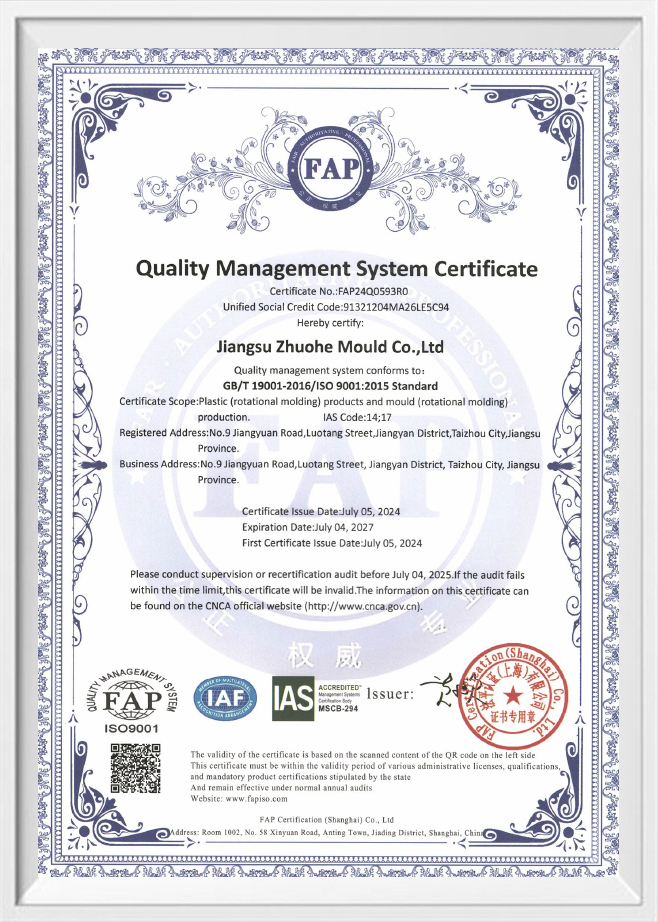
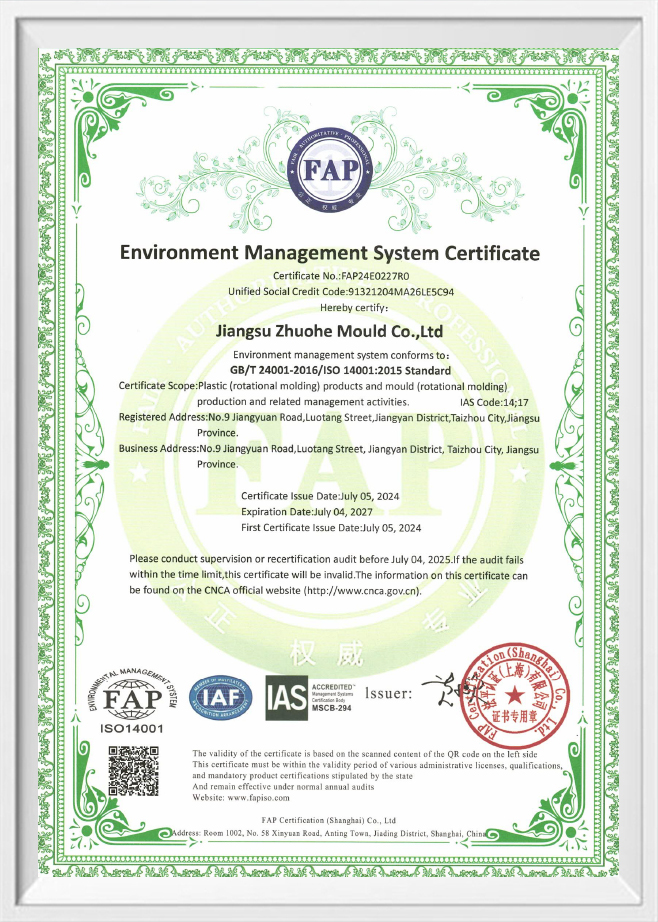
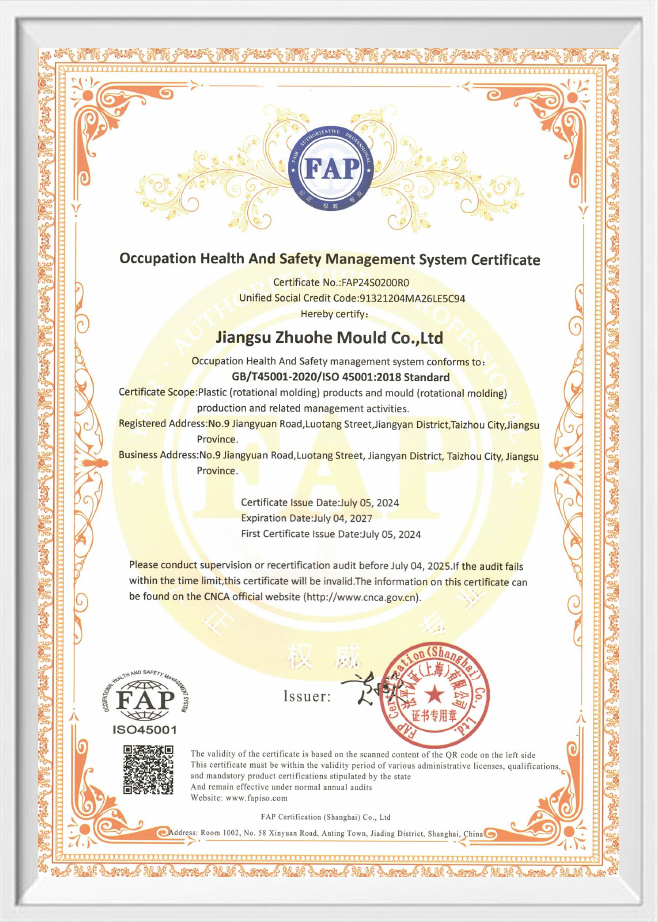
Zhroto Mould has established a complete development workflow covering project consultation, product design optimization, 3D modeling, mold design confirmation, precision manufacturing, material and process recommendations, testing, sample validation, quality inspection, acceptance, delivery, and ongoing technical support. The company has also achieved ISO 9001:2015, ISO 14001:2015, and ISO 45001:2015 certifications and reports an annual output of more than 800 mold sets.
Selecting the Most Suitable Mold Construction
The final decision between cast aluminum and CNC machined aluminum should be based on the complete production lifecycle. Initial tooling cost is important, but it should be evaluated alongside manufacturing consistency, expected production volume, maintenance, modification requirements, sample approval, and long-term process stability. For complex projects, experienced mold engineers can identify which surfaces genuinely require CNC precision and which areas can be produced economically through casting.
For conventional applications, cast aluminum often offers an effective balance between flexibility, thermal performance, and tooling economics. CNC machined aluminum becomes more compelling when precision, surface definition, and repeatability are dominant requirements. Large industrial molds may benefit from a combination of casting and precision machining, while electric-heated systems demand particularly careful thermal engineering.
For customers requiring customized tooling, Zhroto Mould provides integrated solutions from concept evaluation and engineering design to CNC manufacturing, mold trials, sample validation, and production support. Its capabilities cover both conventional gas-heated and electric-heated rotational molding machines, allowing tooling recommendations to be aligned with the customer's actual equipment and production objectives.
Frequently Asked Questions
Q1: Which is better for large rotational molding products, cast aluminum or CNC machined aluminum?
Cast aluminum is often advantageous for very large and complex cavities because it can reduce extensive material removal. CNC machining is preferred when tighter dimensional control or detailed surfaces are essential. The best solution depends on product geometry and production requirements.
Q2: How does mold material affect rotational molding performance?
Aluminum provides strong thermal conductivity and is widely used for rotational molding. However, the manufacturing method also affects dimensional accuracy, surface finish, structural stability, and modification flexibility. Mold design and process compatibility should therefore be evaluated together.
Q3: When should CNC machining be selected?
CNC machining is appropriate when the product contains critical dimensions, complex interfaces, detailed surfaces, or multiple sections that must match precisely. It is especially useful when repeatable CAD-based manufacturing and controlled modifications are important.
Q4: Can Zhroto Mould provide both cast and CNC machined tooling?
Yes. Jiangsu Zhroto Mould Co., Ltd. provides professional rotational molding mold design and manufacturing services, including large-scale machining, engineering development, mold trials, sample validation, and production technical support. Tooling recommendations can be developed according to product structure, equipment, production volume, and quality requirements.
Q5: What should be considered before ordering a rotomolding mold?
Manufacturers should define product geometry, material, wall requirements, production volume, machine type, surface finish, dimensional tolerances, expected service life, and delivery schedule. Early engineering evaluation helps prevent unnecessary tooling changes and supports more predictable production results.
We provide customers with one-stop services ranging from product design, mold manufacturing to finished product production.
-
 +86-18006248936
 -
 ricky.t@zhroto.com
 -
 No.9 Jiangyuan Road, Luotang Street, Jiangyan District, Taizhou City,Jiangsu Province, China
