 en
 中文简体
 русский
 Español
 Deutsch
 Polskie
 REQUEST A QUOTE

 Home / News / Industry News / Rotational Molding Machine Market: Machine Types, Applications, and Mold Selection Guide
Rotational Molding Machine Market: Machine Types, Applications, and Mold Selection Guide
Content
- 1 What the market reports actually tell you
- 2 Machine types and what they mean for your production plan
- 3 Application-driven selection: from fuel tanks to water storage
- 4 The mold is half of the productivity equation
- 5 Risks that show up after the machine is installed
- 6 Frequently asked questions about rotational molding machine market
- 6.0.1 Q1: What is the difference between rock and roll and shuttle rotomolding machines?
- 6.0.2 Q2: How does the mold material affect piece cost and cycle time?
- 6.0.3 Q3: What wall thickness tolerance can a buyer reasonably specify?
- 6.0.4 Q4: How should a buyer evaluate a mold supplier for a new production project?
- 6.0.5 Q5: Is the growth of the machine market a reason to purchase equipment now?
An automotive parts supplier in eastern China starts comparing rock and roll machines and receives a quotation for the machine frame, burners, cooling fans, and control cabinet. The tooling set that will govern part geometry, wall thickness, and cycle time often gets priced later. Procurement teams usually begin to see the bigger picture only after several rounds of quotes: the rotational molding machine market is expanding steadily, but the machine is one leg of the system. The other leg is the mold system running inside it.
This article looks at the market numbers, the main machine categories, and the mold-related factors that decide whether the investment turns into real production.
What the market reports actually tell you
Public market research broadly agrees that the global rotational molding machine market will keep growing through the 2030s. Reported growth rates, however, range from roughly 4 percent to more than 7 percent depending on the machine population, the applications included, and the geographic scope.
| Source | Base year value | Forecast value | Reported CAGR |
|---|---|---|---|
| Future Market Insights | USD 1.99 billion (2026) | USD 3.63 billion (2036) | 6.2% |
| Market Research Future | USD 3.33 billion (2024) | USD 7.13 billion (2035) | 7.15% |
| WiseGuy Reports | USD 1.97 billion (2025) | USD 3.50 billion (2035) | 5.9% |
| Persistence Market Research | Not stated | USD 4.2 billion (2033) | Not disclosed |
For a buyer, the absolute value matters less than the direction. Three practical takeaways emerge. Automotive and industrial applications remain the largest revenue drivers. The fastest growth tends to come from medium-sized machines serving contract molders. Larger production cells are increasingly linked to the demand for more molds running at higher efficiency.
Machine types and what they mean for your production plan
The machine category you choose determines part size, fixture complexity, and how many molds you can run in one cycle. Rock and roll machines dominate the installed base because they handle long, heavy parts like fuel tanks and storage containers with a simple arm geometry. Shuttle machines are growing faster in contract manufacturing because they let operators load and unload parts while another station is still rotating.
Carousel machines add stations for higher-volume runs. Swing arm machines offer more flexibility for irregular geometries, while clamshell or vertical configurations save floor space. Before choosing a machine, compare the number of arms, oven volume, and maximum mold weight on the turntable. These values will affect how many molds you can place on the same machine.
The relationship between machine capacity and product requirements is covered in more detail in our article on rotational molding mold types.
Application-driven selection: from fuel tanks to water storage
The application is the starting point for the specification. In the automotive sector, a fuel tank mold must achieve a tight wall thickness distribution and support integrated insert locations. That pushes mold design toward CNC-machined steel or cast aluminum with carefully monitored heat transfer. A manufacturer with automotive fuel tank mold experience can help avoid wall thinning at corners.
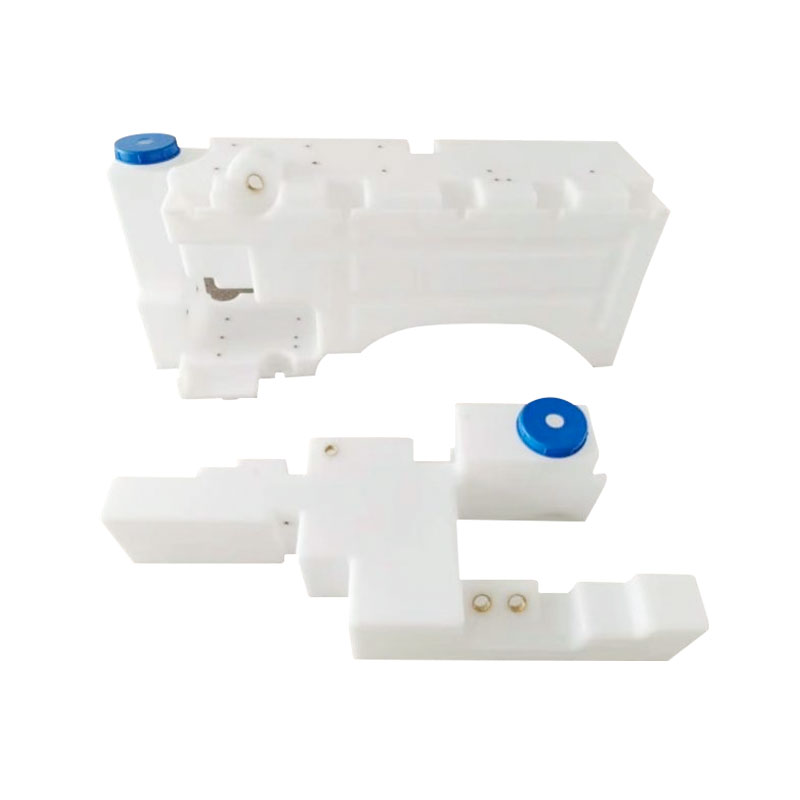 Automotive Fuel Tank Rotational Molding Mold for Lightweight Fuel StorageThis one-piece rotational molding mold produces seamless plastic fuel tanks that fit car chassis spaces, reducing vehicle weight and improving fuel economy compared to metal tanks.View Product →
For water storage and material handling, mold weight and cooling become critical. Large water tanks require big turntables and efficient cooling because cooling time dominates the cycle. Mold design choices such as parting lines, vent placement, and heating path directly influence output.
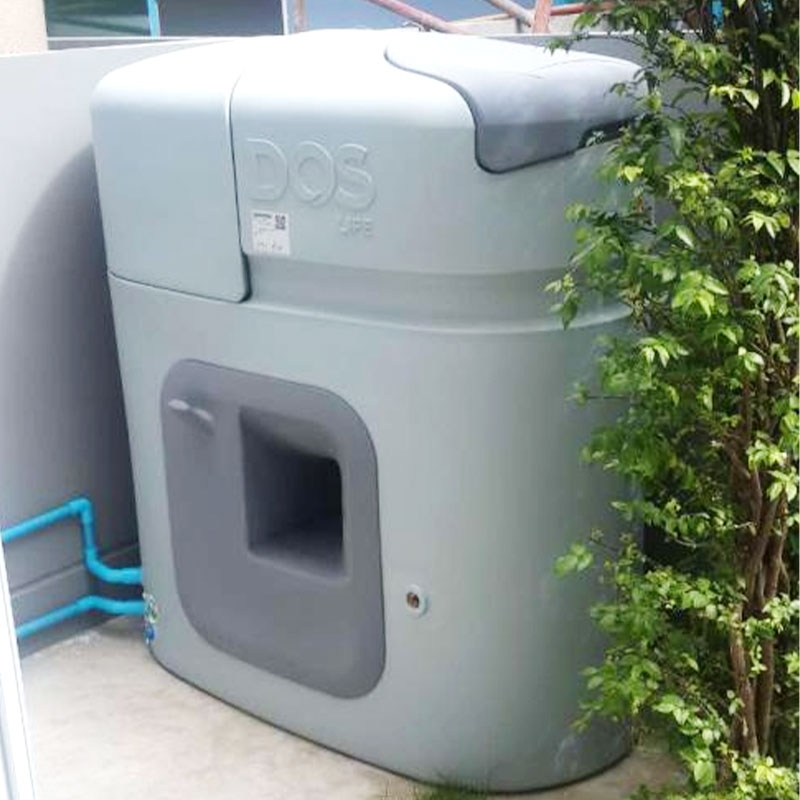 Large Water Tank Storage Container Mold for Seamless Rotomolded TanksDesigned for industrial and agricultural storage, this mold enables seamless, joint-free plastic water tanks with uniform wall thickness, reducing finishing requirements and failure points.View Product →
The market trend toward lightweight components reinforces the need for machines that can run more mold sets per shift. When a new part program is scoped, the annual volume, part complexity, and mold material should come before the machine model.
The mold is half of the productivity equation
Rotational molding machines produce stress-free parts with uniform wall distributions, but only when the mold stays thermally balanced over thousands of cycles. Cast aluminum offers excellent thermal conductivity, which suits complex geometries that need rapid heating and cooling. Fabricated steel offers higher rigidity at elevated temperatures, which makes it suitable for long parts or higher-pressure production conditions.
Annual mold throughput is a useful indicator of capacity and process maturity. Jiangsu ZHROTO Mould Co., Ltd. reports an annual mold capacity above 800 sets, an annual plastic products capacity above 3,600 tons, a production workshop of more than 12,000 square meters, and 17 or more CNC machining and rotomolding machines. These figures indicate experience with holding tolerances across different tooling types.
A newer application area is hydrogen storage and transport. Hydrogen gas cylinder molds demand dimensional accuracy and repeatable wall thickness control because the pressure vessel and its protective housing need a consistent wall profile. Mold precision and material selection decide whether a batch is accepted or rejected.
 Precision Hydrogen Gas Cylinder Rotational Molding MoldEngineered for hollow plastic hydrogen cylinders, this mold ensures uniform wall thickness and dimensional accuracy, supporting safe and repeatable production for hydrogen storage applications.View Product →
Risks that show up after the machine is installed
The first hidden risk is the machine-mold interface. Bolt patterns, turntable sizes, and arm loads vary among machine brands. A mold ordered without these dimensions may need rework on the installation day, delaying the schedule and increasing cost.
The second risk is wall thickness tolerance. Many buyers define a nominal thickness but do not specify allowable variation. A 10 to 20 percent deviation is common if the mold is not properly vented or if the mold wall thickness does not follow the intended heating path. That difference can cause premature failure in a fuel tank or float.
The third risk is surface treatment. A reliable mold release system helps parts come out cleanly. Choosing the wrong release agent or skipping post-polishing reduces output and adds manual cleaning. A fourth risk is maintenance. Long runs with high-temperature heating cycles stress welds and inserts. A supplier offering preventive maintenance can turn that risk into a routine cost.
Understanding the manufacturing and quality system of the mold maker is the practical way to reduce these risks. You can find more information about our company profile and factory setup on our About page.
Frequently asked questions about rotational molding machine market
Q1: What is the difference between rock and roll and shuttle rotomolding machines?
Rock and roll machines rotate the mold around two axes and are often selected for long, heavy products. Shuttle machines move the mold between stations, which improves material handling and increases throughput when multiple molds are in circulation.
Q2: How does the mold material affect piece cost and cycle time?
Cast aluminum molds heat up and cool down faster than steel molds, which usually shortens the cycle time. Steel molds provide higher durability for long runs or abrasive materials. The cost difference is recovered through improved cycle time or a longer maintenance interval.
Q3: What wall thickness tolerance can a buyer reasonably specify?
A practical starting point is a 10 to 20 percent variation on nominal thickness for standard PE parts. Tight control requires better mold venting, a thermal analysis, and a well-designed rotation speed profile. For sensitive parts, you should ask for a sample run and verify the wall distribution before mass production.
Q4: How should a buyer evaluate a mold supplier for a new production project?
Review the mold maker's annual capacity, workshop scale, machine list, and ISO 9001, 14001, and 45001 certifications. Ask for a specific mold application that matches your product shape and material. A supplier that produces both molds and rotomolded parts, such as Jiangsu ZHROTO Mould, can verify the design in its own production environment before delivering the mold. The team also has experience in technical development and production for large public projects, which is a useful signal for complex tooling.
Q5: Is the growth of the machine market a reason to purchase equipment now?
The growth signal is relevant, but timing should be driven by your own order pipeline. If the planned parts demand stable volumes for three to five years, purchasing a machine is justified. If the part portfolio is still uncertain, the lower-risk move is to work with a contract holder that owns both machines and in-house mold capabilities.
Market reports and equipment brochures provide a useful map, but the real cost and quality outcome is decided after the first mold is installed. Start by clarifying the applications, estimate annual volume and wall thickness requirements, and align machine specifications with a mold supplier that has demonstrated tooling and production experience. That sequence makes the final investment decision far more predictable.

We provide customers with one-stop services ranging from product design, mold manufacturing to finished product production.
-
 +86-18006248936
-
 ricky.t@zhroto.com
-
 No.9 Jiangyuan Road, Luotang Street, Jiangyan District, Taizhou City,Jiangsu Province, China
Copyright © Jiangsu Zhroto Mould Co., Ltd. Rights Reserved.Custom Rotational Plastic Molding Factory
