
 en
en 中文简体
中文简体 русский
 Español
 Deutsch
 Polskie
 REQUEST A QUOTE


How temperature control affects cold chain insulation box mold quality
Temperature control is one of the most important factors in producing reliable insulated containers for food distribution, pharmaceuticals, biological materials, and other temperature-sensitive goods. In rotational molding, heating and cooling conditions influence powder melting, material distribution, wall consistency, dimensional stability, and final surface quality. Therefore, the relationship between temperature management and cold chain insulation box mold quality should be considered from the earliest engineering stage rather than only during production.
A high-quality mold must transfer heat consistently while maintaining dimensional accuracy through repeated heating and cooling cycles. Forged 6061T6 aluminum alloy is particularly suitable for this purpose because of its high strength, smooth surface, clean structure, corrosion resistance, and long service life. A mirror-finished mold cavity can further improve demolding performance and help maintain the accuracy of the finished container. For projects requiring premium appearance and stable production, cold chain insulation box mold solutions can be engineered around these material and process requirements.
1. Standard Rotomolded Insulation Box Molds
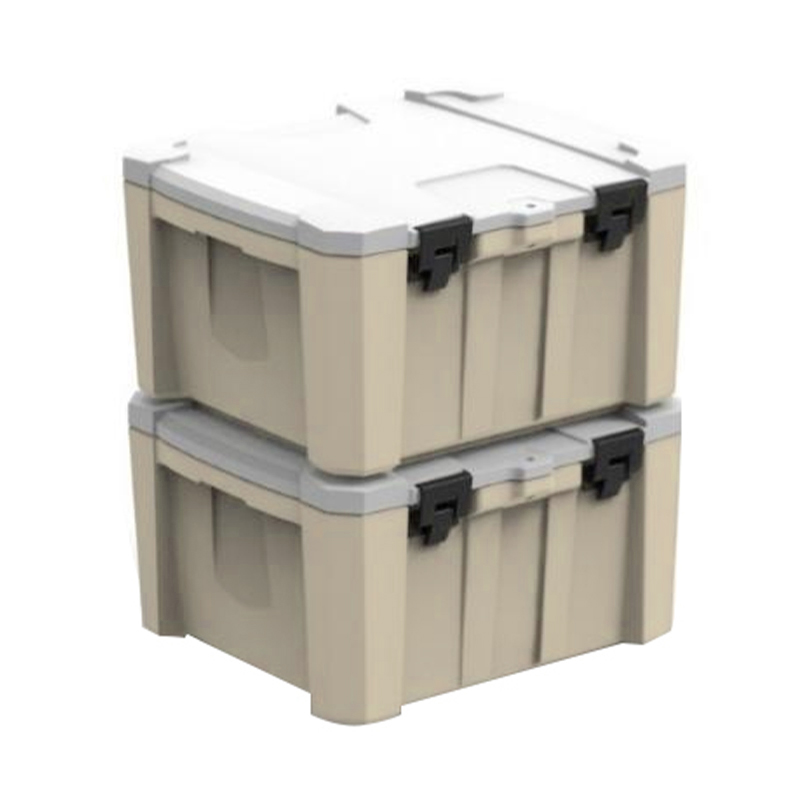
Standard insulation box molds are designed for general cold-chain applications where dependable thermal performance, structural strength, and repeatable production are required. Their typical products include insulated storage boxes, food transport containers, portable cold-storage boxes, and commercial ice chests. The mold must support uniform heating so that the polymer powder melts evenly across corners, walls, ribs, and other geometric features. Poor temperature distribution can create thin areas, incomplete fusion, surface defects, or inconsistent wall thickness.
For this product category, 6061T6 aluminum provides an effective combination of rigidity, thermal responsiveness, corrosion resistance, and repairability. Its good weldability allows localized repair during mold manufacturing when necessary, helping maintain structural integrity. The mirror-finished cavity also reduces resistance during demolding. These characteristics are valuable in rotomolded cooler tooling, where repeated production cycles require stable cavity dimensions and dependable release characteristics.
Compared with more specialized container molds, standard molds normally prioritize production flexibility and balanced manufacturing cost. They can be adapted for conventional gas-heated rotational molding machines as well as modern electric-heated equipment. The design should nevertheless account for heating direction, cooling behavior, mold thickness, reinforcement locations, and the product's intended wall structure.
- Suitable for food transport, outdoor storage, catering, and general cold-chain logistics.
- Supports seamless one-piece rotational molding without conventional weld seams in the finished plastic body.
- Provides practical compatibility with different rotational molding machine configurations.
- Allows customized cavity geometry, handles, ribs, openings, and reinforcement structures.
2. High-Performance Thermal Container Molds
High-performance thermal container molds are intended for applications where temperature retention, dimensional consistency, and premium appearance are more demanding. Typical uses include professional food distribution, pharmaceutical logistics, specialized transportation, and commercial reusable containers. In these applications, the mold is not simply a forming tool; it is an important part of a controlled manufacturing system. Stable heat transfer helps the polymer form a consistent shell around the insulation structure while reducing variations between production batches.
The cavity surface is particularly important in thermal container manufacturing. A mirror-finished 6061T6 aluminum surface can provide a smooth product appearance and facilitate demolding. The high degree of customization available with forged aluminum construction allows designers to develop specific cavity structures according to product dimensions, insulation arrangements, reinforcement requirements, and ergonomic features. Compared with basic cooler tooling, this category places greater emphasis on process repeatability and precise thermal management.
Electric-heated rotational molding technology can provide further process control for this category. Independent heating zones can help address products with complex shapes or different thermal requirements across the mold. More precise temperature management also places higher demands on mold design and thermal conductivity performance. Consequently, mold engineering should consider not only the final geometry but also how heat reaches every important cavity region.
| Category | Primary Focus | Typical Application | Key Mold Advantage |
| Standard insulation box mold | Reliable general production | Food and outdoor storage | Flexible and durable |
| High-performance thermal container mold | Thermal and dimensional consistency | Professional cold-chain logistics | Precise cavity and heat management |
| Heavy-duty ice chest mold | Impact resistance and long service life | Commercial and outdoor use | Robust construction and reinforcement |
3. Heavy-Duty Ice Chest and Commercial Storage Molds
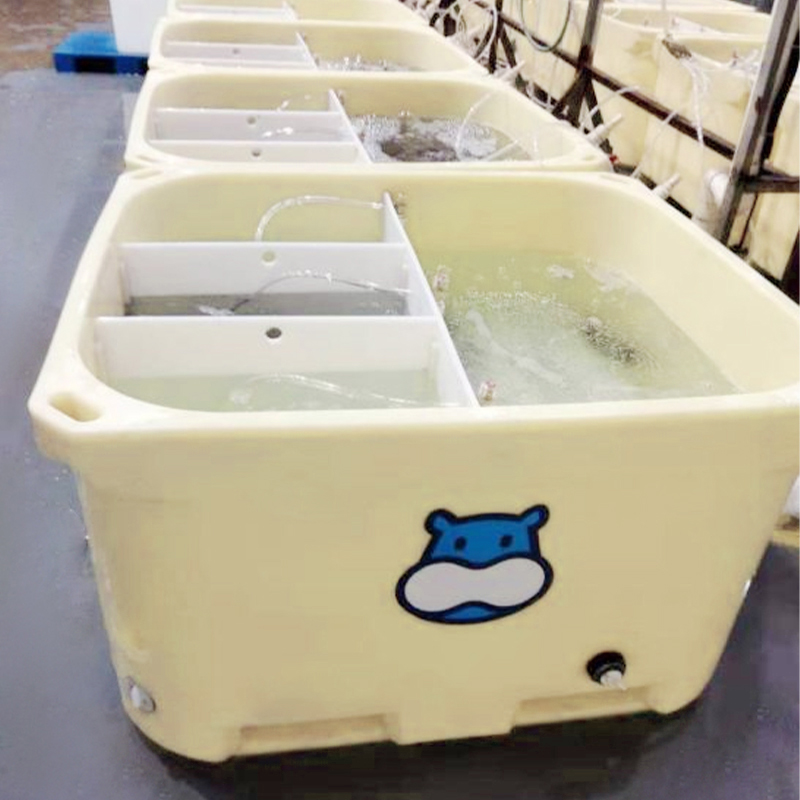
Heavy-duty ice chest molds are developed for demanding environments where containers may experience frequent handling, outdoor exposure, repeated loading, and long production cycles. Commercial catering, fishing-related storage, outdoor events, transportation, and industrial food handling are representative applications. Compared with standard boxes, these products often require reinforced corners, thicker structural areas, integrated handles, locking features, or other protective geometry.
In plastic ice chest production, temperature consistency remains essential because heavier structural areas can respond differently during heating and cooling. A well-designed aluminum mold helps provide more predictable thermal behavior and supports consistent plastic fusion. The strength of forged 6061T6 aluminum is also valuable when a mold must withstand repeated handling and thermal cycling. If repairs are required during manufacturing, its weldability provides an additional practical advantage.
This category differs from premium thermal containers mainly in its emphasis on mechanical durability and field use. The mold design may include additional reinforcement and structural details while preserving the smooth cavity finish required for efficient demolding. Careful testing is necessary to verify that the finished product maintains its intended shape and surface quality after repeated production cycles.
- Review the product concept, dimensions, structure, insulation requirements, and operating environment.
- Optimize the product geometry for rotational molding, including corners, ribs, handles, openings, and demolding areas.
- Develop the three-dimensional engineering model and confirm the mold structure before manufacturing.
- Machine the 6061T6 aluminum mold using appropriate CNC processes and inspect critical dimensions.
- Conduct mold trials, validate samples, evaluate production performance, and provide technical recommendations for stable operation.
Temperature Control and Mold Manufacturing Quality
Temperature control affects mold quality in several connected ways. During heating, the mold must support predictable heat transfer so that plastic material melts and distributes properly. During cooling, controlled heat removal helps minimize distortion and preserves the intended geometry. Excessive or uneven thermal exposure can increase production variation, while insufficient heating may cause incomplete fusion and weak areas. Therefore, mold geometry, aluminum construction, surface treatment, machine type, and production parameters should be considered as one integrated system.
Since 2023, Jiangsu Zhroto Mould Co., Ltd. has expanded its capabilities for electric-heated rotational molding. This approach supports more precise temperature management, independent heating zones, and improved process control. The company reports temperature control accuracy of approximately plus or minus 1 to 2 degrees Celsius, thermal efficiency above 95 percent, and potential energy reductions of 30 to 50 percent under suitable production conditions. These capabilities are especially relevant to insulated containers where consistent processing is important.
Integrated Engineering and Quality Validation
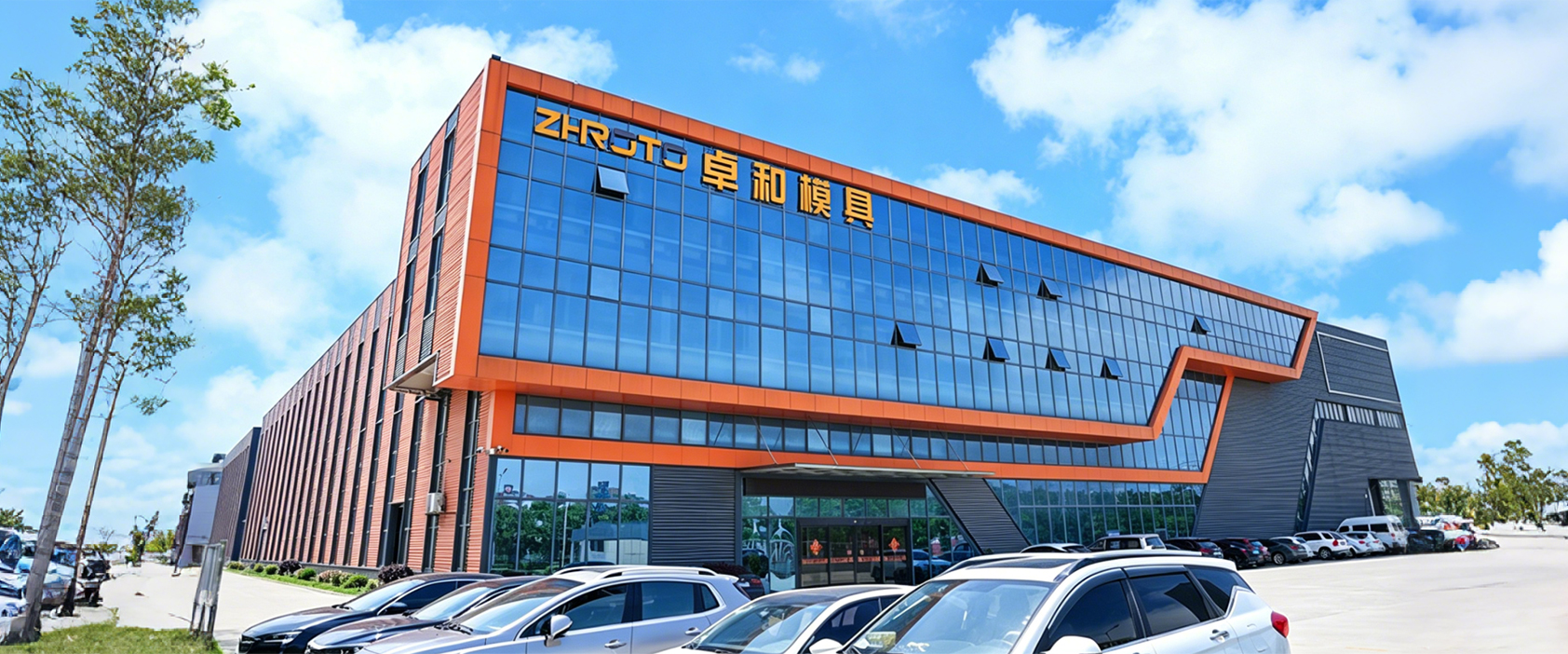
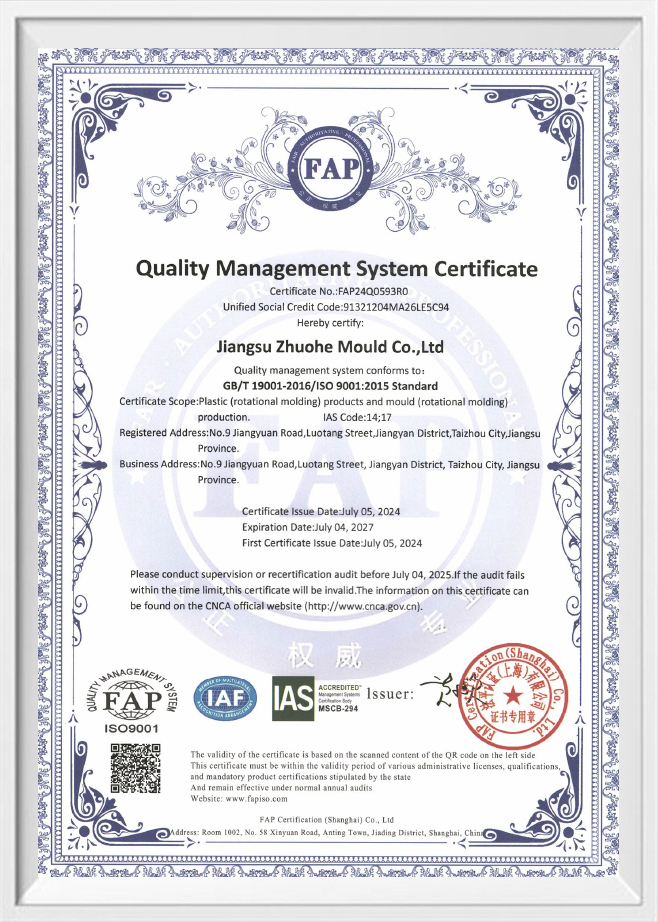
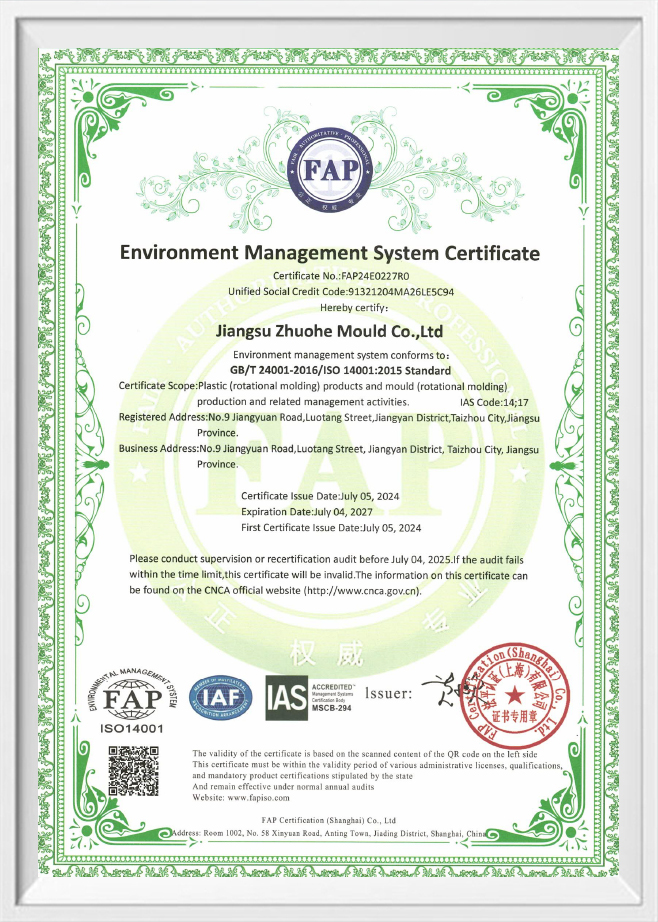
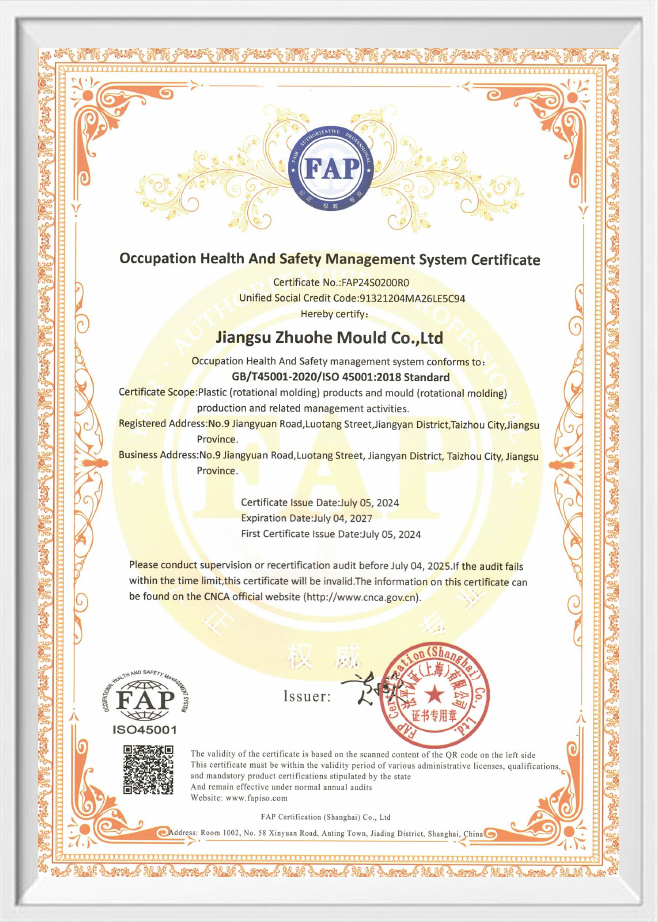
A reliable mold project should progress from product evaluation to design optimization, three-dimensional modeling, mold confirmation, precision manufacturing, testing, inspection, acceptance, and production support. Jiangsu Zhroto Mould Co., Ltd. operates an integrated workflow covering these stages. Its production facility in Jiangyan District, Taizhou City includes more than 12,000 square meters of standardized workshops, supporting large-scale mold machining, rapid prototyping, and production requirements. The company has also obtained ISO 9001:2015, ISO 14001:2015, and ISO 45001:2018 management system certifications.
With an annual output exceeding 800 mold sets, the company provides solutions for conventional gas-heated machines and electric-heated rotational molding systems. Its engineering services cover complex curved-surface machining, mold trial validation, material recommendations, dimensional inspection, production technical support, and maintenance advice. This integrated capability allows temperature-control considerations to be addressed during mold development rather than treated as an isolated production problem.
Conclusion
Temperature control is closely connected with the quality, consistency, and service life of rotational molding tools used for insulated containers. Standard molds emphasize production flexibility, high-performance thermal container molds focus on controlled processing and dimensional stability, while heavy-duty ice chest molds prioritize structural durability and repeated use. Across all three categories, forged 6061T6 aluminum, mirror-finished cavities, accurate machining, and appropriate heating technology provide a strong foundation for dependable manufacturing.
For demanding projects, the most effective approach is to coordinate mold material, cavity design, heating method, cooling strategy, sample validation, and production support from the beginning. Jiangsu Zhroto Mould Co., Ltd. combines rotational molding engineering, CNC manufacturing, testing, and technical support to develop customized tooling for different cold-chain applications.
Frequently Asked Questions
Q1: Why is 6061T6 aluminum suitable for insulation box molds?
6061T6 aluminum offers high strength, good corrosion resistance, smooth surface finishing, and useful weldability. Its characteristics make it suitable for repeated rotational molding cycles and customized cavity structures.
Q2: How does temperature control affect rotomolded cooler tooling?
Stable temperature management promotes more uniform plastic melting, reduces production variation, supports consistent wall formation, and helps protect dimensional accuracy during repeated heating and cooling cycles.
Q3: What is the difference between standard and heavy-duty insulation box molds?
Standard molds are generally optimized for flexible everyday production, while heavy-duty molds emphasize reinforced geometry, mechanical durability, and reliable performance under demanding commercial or outdoor conditions.
Q4: Can the mold be used with electric-heated rotational molding machines?
Yes. Properly engineered molds can be developed for electric-heated equipment. Independent heating zones and improved temperature control can be particularly beneficial for complex insulated container geometries.
Q5: What services can Jiangsu Zhroto Mould Co., Ltd. provide?
The company provides project evaluation, product optimization, 3D engineering, mold design, precision CNC manufacturing, material and process recommendations, mold testing, quality inspection, delivery support, production guidance, and ongoing maintenance advice.
 +86-18006248936
  ricky.t@zhroto.com
  No.9 Jiangyuan Road, Luotang Street, Jiangyan District, Taizhou City,Jiangsu Province, China