
 en
en 中文简体
中文简体 русский
 Español
 Deutsch
 Polskie
 REQUEST A QUOTE



Durability standards for military box mold manufacturing
Military equipment cases must withstand demanding handling, transportation, storage, and environmental conditions. For this reason, mold quality directly influences the structural reliability, dimensional consistency, sealing performance, and service life of the finished container. A well-designed military box mold must therefore be engineered around both the intended application and the requirements of rotational molding. Material selection, surface finish, wall distribution, corner geometry, heating behavior, and machining accuracy all contribute to the final result. In modern production, manufacturers increasingly expect molds to deliver repeatable quality across long production cycles rather than simply producing an acceptable first sample.
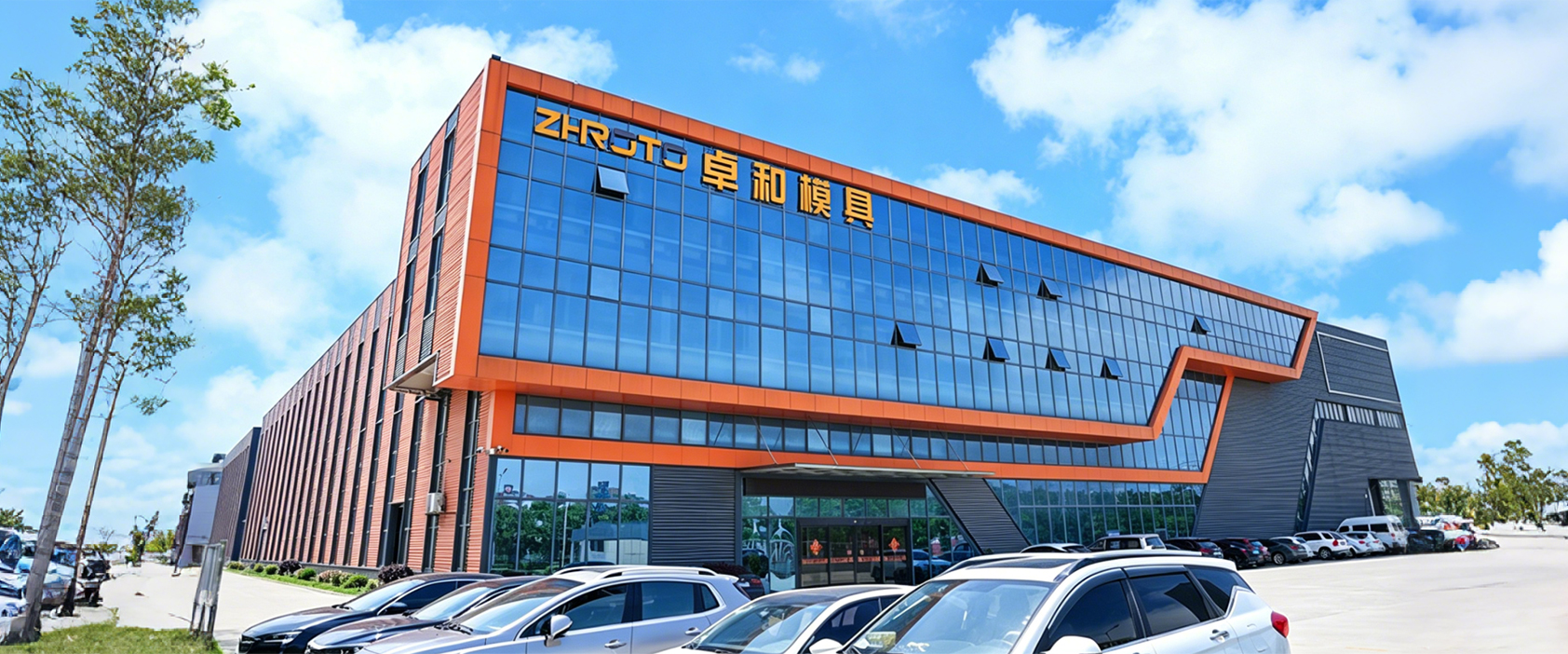
Jiangsu Zhroto Mould Co., Ltd. specializes in rotational molding mold design, manufacturing, product processing, and integrated technical solutions. Founded in 2015, the company moved to a modern factory in Jiangyan District, Taizhou City, in 2021. Its facility covers 18,000 square meters, including more than 12,000 square meters of standardized workshops. With an annual output exceeding 800 sets of molds, the company supports customers across industrial equipment, automotive components, agricultural machinery, outdoor facilities, water treatment, and other sectors. This broad manufacturing experience provides a practical foundation for developing durable molds for demanding container applications.
Heavy-Duty Military Transport Case Molds
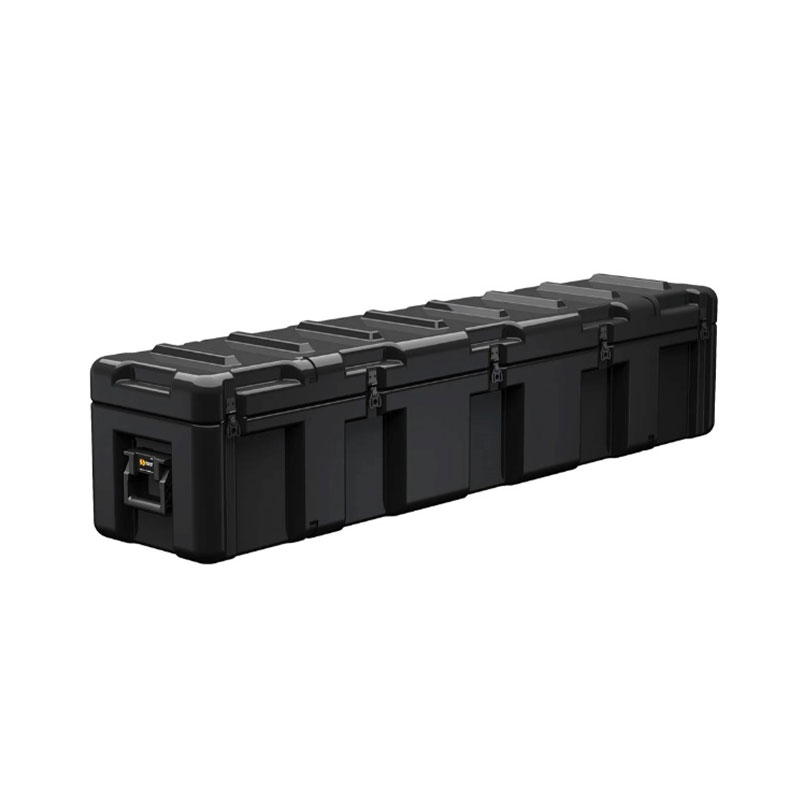
Heavy-duty transport cases are designed to protect equipment during repeated movement, loading, unloading, and field deployment. Their molds must create robust hollow structures with consistent wall distribution and carefully controlled corners. A heavy duty transport container typically requires substantial structural strength without unnecessary material concentration, because uneven wall thickness can affect both product quality and production efficiency. Mold geometry therefore needs to support reliable polymer distribution throughout the cavity during rotational molding.
For this category, 6061-T6 forged aluminum alloy is particularly suitable for rotational mold construction. Its dense internal structure and defect-free surface quality help minimize surface imperfections during mold manufacturing. The alloy also offers high strength and durability, while its good moldability supports customized cavity configurations. Effective polishing further enables smooth mold surfaces, which can contribute to cleaner product release and consistent exterior appearance.
Compared with lighter-duty storage cases, transport-oriented designs place greater emphasis on impact resistance, corner durability, reinforced mounting areas, and dimensional stability. The mold must reproduce these structural details accurately while remaining compatible with the intended rotomolding equipment. ZHROTO provides project evaluation, product structure optimization, CAD-based 3D engineering, precision CNC machining, mold testing, sample validation, and final inspection to address these requirements as an integrated process.
- Reinforced corners and load-bearing areas can be incorporated directly into the mold design.
- Large curved surfaces can be machined with high precision for consistent product geometry.
- Surface polishing can support reliable release and improved exterior finish.
- Trial production allows dimensional and structural performance to be evaluated before final acceptance.
Rugged Tactical Equipment Case Tooling
Tactical equipment cases differ from general transport containers because they often need to accommodate sensitive instruments, communication equipment, field tools, or specialized components. Their design may include customized compartments, protective interfaces, handles, hinges, fastening areas, and sealing features. Rugged tactical case tooling must reproduce these details consistently while maintaining sufficient structural rigidity across the complete shell.
A major durability consideration is the transition between flat sections and curved surfaces. Abrupt geometric changes can create undesirable material distribution during molding, while poorly positioned details may complicate demolding or weaken the finished shell. Engineering analysis and 3D modeling are therefore important before machining begins. Product dimensions, intended loading conditions, assembly requirements, and rotomolding process characteristics should all be reviewed at the design stage.
6061-T6 forged aluminum alloy offers an effective balance of strength, durability, surface quality, and machinability for this type of tooling. Its internal density helps support stable mold construction, while its surface characteristics are favorable for precision finishing. Because military applications frequently require customized configurations, the ability to machine complex curved surfaces and detailed cavity features is another important advantage.
ZHROTO has extensive experience with large-scale mold machining and supports both conventional gas-heated and electric-heated rotational molding machines. Since 2023, the company has invested in electric-heated rotomolding technology, where more precise temperature control and independent heating zones place additional demands on mold design and thermal performance. This capability is useful when a tactical case requires tightly managed production conditions.
Key Engineering Considerations
- Review the case's intended equipment, dimensions, structural loads, and operating environment.
- Optimize corners, ribs, interfaces, and other structural details for rotational molding.
- Develop and confirm a detailed 3D mold model before precision manufacturing.
- Machine the mold using appropriate CNC processes and verify critical dimensions.
- Conduct mold trials and sample validation before production release.
Waterproof Equipment Case Production Molds
Waterproof equipment cases require particular attention to sealing interfaces, mating surfaces, lid geometry, and dimensional accuracy. The objective of waterproof equipment case production is not simply to create a hollow plastic shell, but to establish a repeatable manufacturing foundation for cases that can protect contents from moisture and environmental exposure. Mold accuracy is especially important around sealing areas because small dimensional inconsistencies can influence the final fit between components.
In this category, mold surface quality and geometric consistency are closely connected. A smooth cavity surface can support stable product release, while accurately machined interfaces help maintain repeatable dimensions from one production cycle to another. The mold design should also account for handles, hinges, fastening points, drainage considerations, and protective structures without creating unnecessary complexity in the rotational molding process.
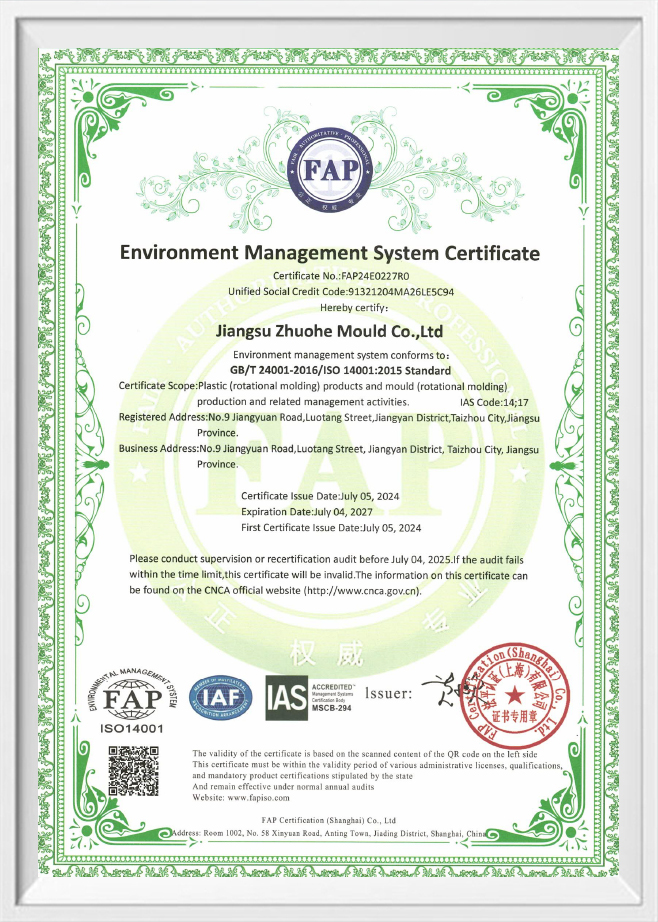
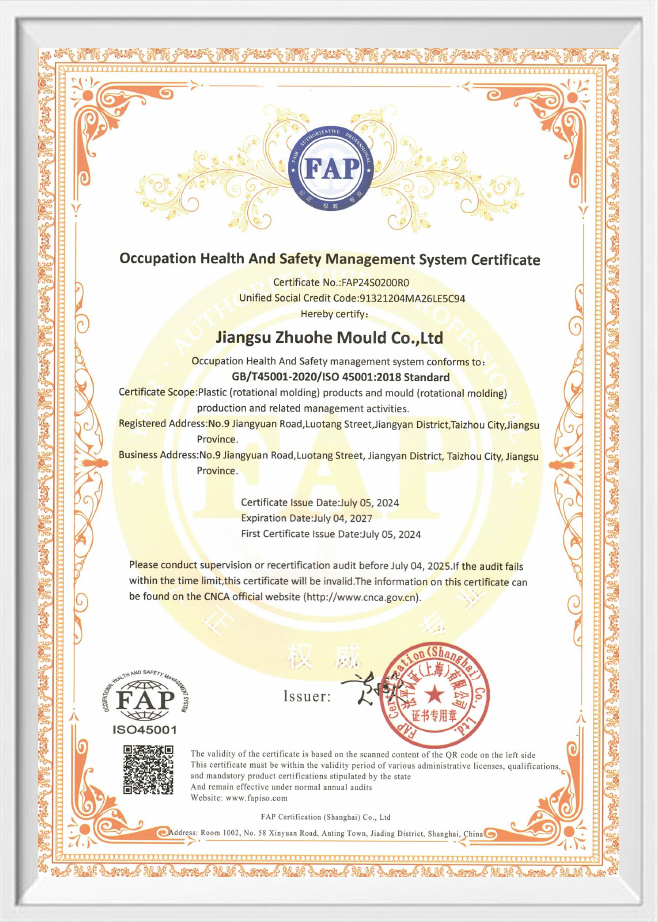
The manufacturing approach used by Jiangsu Zhroto Mould Co., Ltd. integrates design confirmation, material and process recommendations, CNC manufacturing, trial production, quality inspection, acceptance, and technical support. Its ISO 9001:2015, ISO 14001:2015, and ISO 45001:2015 certifications provide a structured management foundation for quality, environmental, and occupational safety processes. For customers developing customized cases, this one-stop workflow can reduce coordination between separate engineering and manufacturing suppliers.
| Product category | Primary focus | Key mold requirements | Typical application |
| Heavy-duty transport cases | Structural durability | Strong corners, stable geometry, durable cavity | Field transportation and storage |
| Tactical equipment cases | Customization and protection | Complex interfaces, precision details, optimized surfaces | Specialized instruments and equipment |
| Waterproof equipment cases | Environmental protection | Accurate sealing interfaces and dimensional control | Sensitive equipment and outdoor deployment |
Across these categories, military box mold engineering should always begin with the finished product rather than the mold alone. Product size, wall requirements, structural features, heating method, production volume, and service conditions all influence tooling decisions. A mold intended for conventional gas-heated equipment may require a different thermal design approach from one developed for an electric-heated machine with zoned temperature management.
Gas-Heated and Electric-Heated Mold Compatibility
Conventional gas-heated rotational molding remains widely applicable to large hollow products because of its proven process flexibility and broad equipment compatibility. Electric-heated systems, however, provide more precise temperature management and independent zoned heating capability. ZHROTO's electric-heated mold development experience addresses these changing requirements, with temperature control accuracy of approximately 1 to 2 degrees Celsius, thermal efficiency above 95 percent, and potential energy consumption reductions of 30 to 50 percent under suitable production conditions. These capabilities make process-specific mold engineering increasingly important for high-quality container production.
For manufacturers evaluating tooling durability, the most important consideration is not simply the initial purchase cost. Long-term value depends on machining accuracy, surface quality, process compatibility, maintenance requirements, trial validation, and the mold's ability to maintain repeatable performance throughout production. A properly engineered mold reduces the risk of dimensional variation and helps establish a stable manufacturing process.
Durability Evaluation and Manufacturing Support
A reliable mold development program should connect engineering decisions with measurable production requirements. Mold acceptance should include dimensional inspection, surface assessment, trial samples, structural evaluation, and confirmation that the tooling performs correctly on the customer's intended equipment. This approach is particularly important for military box mold projects because the final products may face repeated handling and demanding service conditions.
Zhroto Mould has established a complete development workflow covering project consultation, product optimization, 3D engineering, mold design confirmation, precision manufacturing, material recommendations, testing, quality inspection, acceptance, production support, and maintenance advice. This process allows customers to move from an initial concept or existing drawing toward production-ready tooling with fewer technical gaps. Ongoing support can also help customers optimize production stability after delivery.
For customized military and industrial cases, tooling durability should be considered together with production efficiency. High-quality 6061-T6 forged aluminum alloy provides a strong foundation, while precision machining and suitable surface finishing help maintain cavity quality. When combined with systematic validation, these characteristics support dependable long-term tooling performance.
Conclusion
Durability standards for military case molds extend beyond material strength. They include dimensional precision, structural design, surface quality, thermal compatibility, manufacturability, testing, and long-term technical support. Heavy-duty transport cases prioritize structural resilience, tactical cases emphasize customized protection, and waterproof cases require accurate interfaces and environmental protection. Each category benefits from a tooling strategy tailored to its specific product requirements.
For manufacturers seeking dependable rotational molding solutions, 6061-T6 forged aluminum alloy, precision CNC machining, controlled mold finishing, and comprehensive sample validation provide a strong technical foundation. Jiangsu Zhroto Mould Co., Ltd. combines these capabilities with professional engineering services and experience in both gas-heated and electric-heated rotational molding systems. The result is a complete approach designed to support reliable production, customized development, and consistent mold performance.
Frequently Asked Questions
Q1: What makes a military box mold durable?
Durability depends on suitable mold material, accurate machining, robust structural design, smooth surfaces, reliable thermal performance, and appropriate maintenance. 6061-T6 forged aluminum alloy is well suited to demanding tooling because of its strength, durability, dense internal structure, and good machinability.
Q2: How does tactical case tooling differ from heavy-duty transport tooling?
Tactical case tooling generally places greater emphasis on customized interfaces, equipment protection, detailed geometry, and specialized mounting features. Heavy-duty transport tooling focuses more strongly on structural strength, reinforced areas, and reliable performance during repeated transportation and handling.
Q3: Why is mold accuracy important for waterproof equipment cases?
Accurate mold geometry helps maintain consistent dimensions around mating and sealing interfaces. This supports repeatable assembly and reduces the risk of variation that could compromise the intended protective function of the finished case.
Q4: What services does Zhroto Mould provide for customized case molds?
Zhroto Mould provides project evaluation, product design optimization, 3D modeling, mold design confirmation, CNC manufacturing, material and process recommendations, mold testing, sample validation, quality inspection, delivery, production support, and maintenance advice. The company can work from a product concept, existing drawings, or a new product development requirement.
Q5: Can the molds support both gas-heated and electric-heated rotomolding?
Yes. The company develops molds compatible with conventional gas-heated rotational molding machines as well as electric-heated systems. Electric-heated applications require closer attention to temperature control, zoned heating, thermal efficiency, and mold design, and these factors can be incorporated during engineering development.
 +86-18006248936
  ricky.t@zhroto.com
  No.9 Jiangyuan Road, Luotang Street, Jiangyan District, Taizhou City,Jiangsu Province, China