
 en
en 中文简体
中文简体 русский
 Español
 Deutsch
 Polskie
 REQUEST A QUOTE





Design trends in rockery fence mold and landscaping tooling
Modern landscape projects increasingly require decorative elements that combine natural visual appeal, structural stability, repeatable production, and efficient installation. Rockery fences are a practical example because they can create boundaries, guide pedestrian movement, define garden zones, and enhance the visual character of outdoor spaces. In this context, rockery fence mold technology has become an important part of reliable landscape product manufacturing. Cast aluminum alloy is particularly suitable for this application because it offers excellent moldability, supports complex surface textures, and can be processed into customized shapes. Its good thermal conductivity also supports faster heat dissipation during molding, helping maintain mold stability and extend service life.
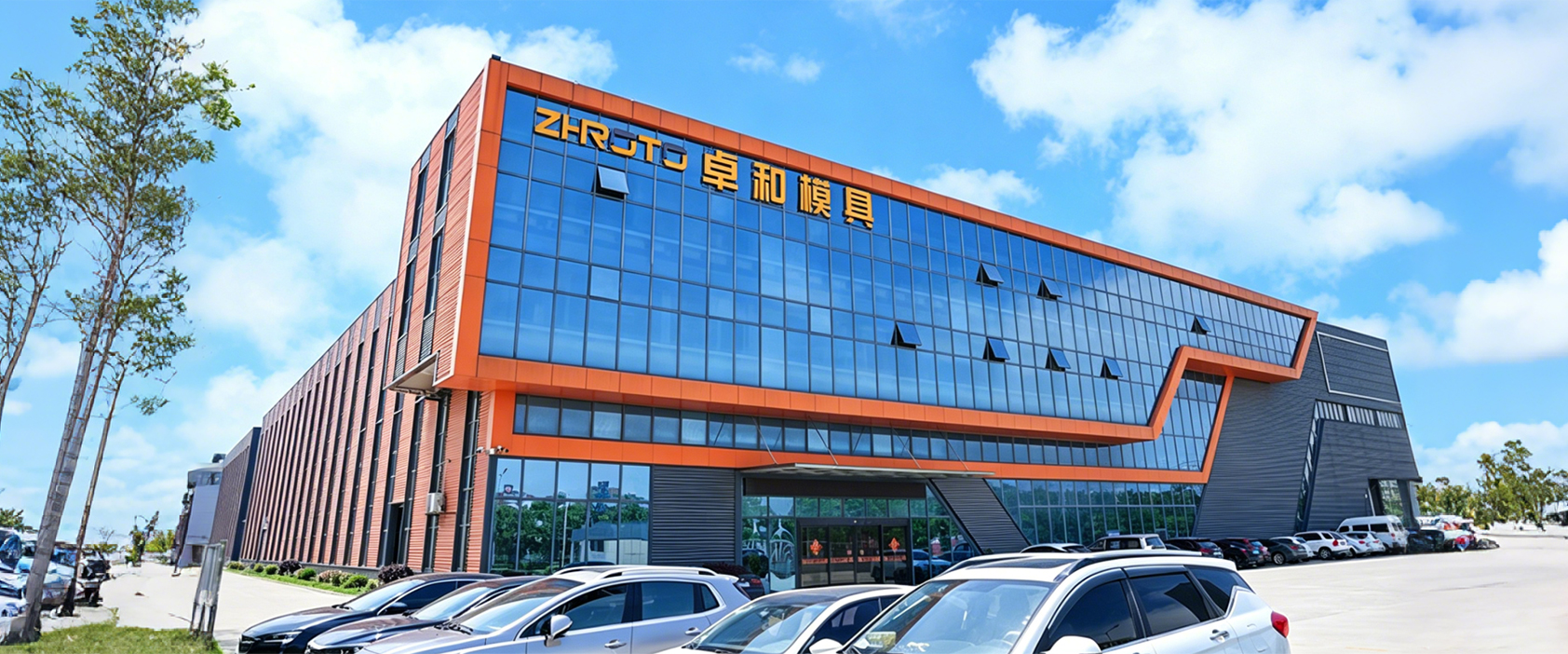
Current design trends are moving beyond simple geometric fencing toward textures inspired by stone, rock formations, plants, and traditional garden architecture. This shift places greater demands on mold engineering. A successful mold must reproduce decorative details while maintaining consistent dimensions and sufficient structural strength. Jiangsu Zhroto Mould Co., Ltd., founded in 2015, specializes in rotational molding mold design, manufacturing, product processing, and integrated technical solutions. Its experience across outdoor facilities and other large hollow products provides a practical foundation for developing customized landscape tooling.
1. Natural Rock Texture Fence Tooling
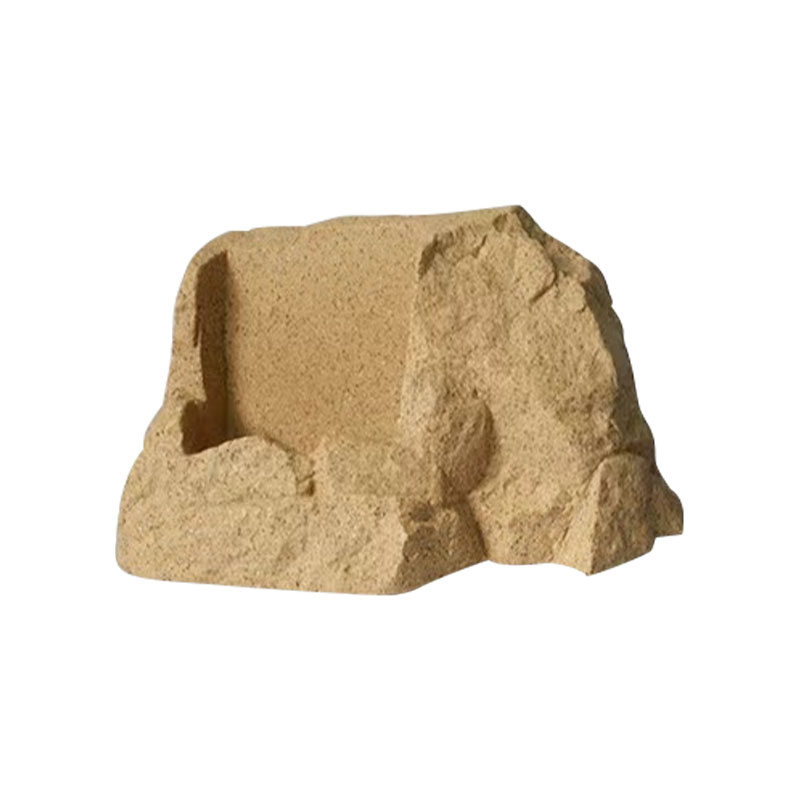
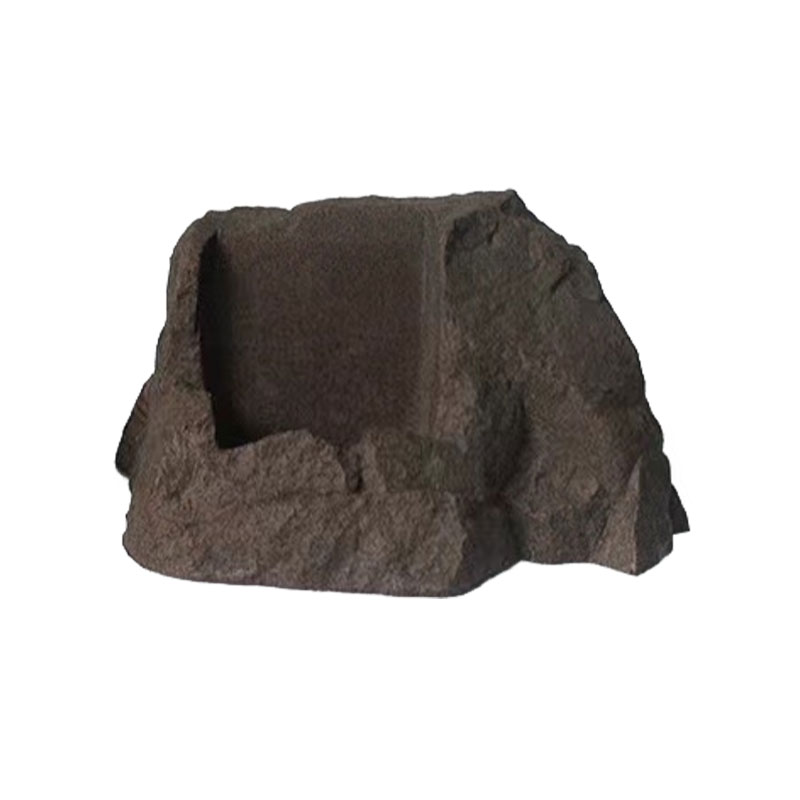
Natural rock texture fence tooling is positioned for projects where the finished fence needs to visually integrate with gardens, rockeries, parks, courtyards, and other landscape environments. The defining feature is the reproduction of irregular stone surfaces rather than perfectly uniform panels. Designers can introduce ridges, recessed areas, layered textures, and organic contours into the mold surface. A well-engineered artificial rock landscaping tooling solution allows manufacturers to create repeatable decorative forms without making every finished component appear artificially identical.
Cast aluminum alloy is valuable for this category because its high moldability makes complex contours and decorative surfaces easier to manufacture. The material also provides effective heat transfer during the molding process. This is particularly useful when the tooling contains different wall profiles or detailed surface patterns. Compared with simpler decorative fence tooling, natural rock tooling places greater emphasis on surface fidelity, corner transitions, draft considerations, and long-term dimensional stability. The result should combine an attractive appearance with a stable structure and strong durability.
Typical applications include garden boundaries, courtyard partitions, scenic-area landscaping, park pathways, and decorative retaining zones. For customized projects, the tooling can be developed around drawings, product concepts, dimensions, and intended installation conditions. Complex curved surfaces can be incorporated while maintaining production consistency, making this category suitable for projects where visual differentiation is an important design objective.
- Suitable for rockery gardens, parks, courtyards, and scenic landscaping.
- Supports irregular stone textures and customized decorative profiles.
- Aluminum alloy construction facilitates detailed machining and efficient heat dissipation.
- Designed for repeatable production with stable dimensions and structural characteristics.
2. Decorative Plastic Fence Mold Systems
The second major trend focuses on lightweight decorative fencing that combines visual styling with practical manufacturing requirements. A decorative plastic fence mold is positioned for landscape products that need consistent shapes, manageable weight, and efficient repeat production. Instead of reproducing only natural rock, this category can incorporate architectural lines, ornamental borders, simulated stone blocks, curved sections, and mixed decorative motifs.
The primary technical challenge is balancing decorative complexity with manufacturing efficiency. Excessively deep textures may complicate demolding or create inconsistent material distribution, while overly simple surfaces can reduce the visual value of the finished fence. Mold design therefore needs to consider product geometry, surface transitions, fastening areas, and production requirements at the same time. Jiangsu Zhroto Mould Co., Ltd. provides a structured workflow covering project consultation, product design optimization, 3D modeling, mold confirmation, precision manufacturing, trial validation, inspection, and delivery. This integrated approach helps connect the decorative concept with practical production requirements.
Compared with natural rock texture tooling, decorative plastic fence systems generally offer more flexibility in styling. They can be developed for modern residential landscapes, public gardens, commercial outdoor spaces, recreational facilities, and customized courtyard projects. The mold can also be refined through sample validation before final production. This makes the category especially useful when customers need to confirm the appearance and structural performance of a new landscape product before committing to larger production volumes.
A further trend is the integration of decorative functions with practical installation features. Fence sections may include connection points, reinforcement areas, or interfaces for other landscape components. Good mold engineering should treat appearance, manufacturability, and installation compatibility as one integrated design problem.
| Product category | Primary design focus | Typical applications | Main tooling advantage |
| Natural rock texture fencing | Stone-like surfaces and organic contours | Rockeries, parks, gardens | Detailed surface reproduction |
| Decorative plastic fencing | Ornamental and customized profiles | Courtyards, residential landscapes | Flexible styling and repeatability |
| Architectural landscape molding | Structural and architectural integration | Public spaces and commercial landscapes | Complex geometry and customization |
3. Outdoor Architectural Molding for Landscape Integration
The third trend is the integration of fencing with broader landscape architecture. Rather than treating a fence as an isolated component, designers increasingly use it as part of a coordinated visual system involving planters, pathways, seating, partitions, decorative walls, and other outdoor structures. Outdoor architectural molding therefore needs to accommodate both decorative appearance and functional integration. Profiles may be curved, stepped, layered, or designed to transition naturally into adjacent landscape elements.
This category differs from basic fence tooling because dimensional relationships become more important. Connection areas, repeated modules, transitions between sections, and installation interfaces should be considered during the early engineering stage. Jiangsu Zhroto Mould Co., Ltd. has an annual output of more than 800 mold sets and provides professional solutions for both conventional gas-heated rotational molding equipment and electric-heated systems. Its capabilities include large-scale mold machining, complex curved-surface processing, rapid prototyping, mass production support, and mold trial validation.
For larger landscaping programs, the company can support projects from initial concept evaluation through product optimization, CAD-based 3D engineering, precision CNC manufacturing, testing, quality inspection, and technical support. Since 2023, its investment in electric-heated rotational molding technology has also emphasized more accurate temperature management, independent heating zones, and improved process control. These capabilities are relevant when mold design requires careful consideration of thermal performance and production stability.
Compared with decorative fence tooling focused primarily on appearance, architectural landscape tooling emphasizes system-level compatibility. A successful design should allow repeated sections to maintain visual continuity while preserving practical production and installation requirements. This approach supports customized landscape projects where the fence must function as both a boundary and an architectural feature.
Engineering priorities for integrated landscape tooling
- Review the product concept, dimensions, structure, application environment, and production requirements.
- Optimize the product structure for manufacturability, surface quality, and stable molding.
- Develop detailed three-dimensional engineering data and confirm the mold structure.
- Manufacture the tooling through appropriate precision machining processes and conduct trial production.
- Inspect dimensions and samples, complete acceptance, and provide production and maintenance guidance.
Across these categories, rockery fence mold design is increasingly influenced by customization, realistic textures, modular installation, and production efficiency. The best tooling is not simply capable of creating an attractive surface; it must also support stable manufacturing, predictable product quality, and long-term operational reliability.
For customers developing new landscape products, Zhroto Mould can provide integrated technical assistance from mold concept development to finished-product validation. Its ISO 9001:2015, ISO 14001:2015, and ISO 45001:2018 management system certifications support a structured approach to quality, environmental management, and occupational safety. The company also provides mold maintenance advice and ongoing technical support after delivery, helping customers improve production stability and extend tooling service life.
Frequently Asked Questions
Q1: What makes natural rock texture tooling different from decorative fence tooling?
Natural rock texture tooling emphasizes irregular stone-like surfaces and organic contours, while decorative fence tooling generally provides greater freedom for architectural, ornamental, and customized profiles. The appropriate choice depends on the landscape style, product structure, and required appearance.
Q2: Why is aluminum alloy suitable for landscape mold manufacturing?
Cast aluminum alloy provides high moldability, supports complex shapes and textures, and offers good thermal conductivity. These characteristics make it practical for customized landscape tooling where detailed surfaces and stable molding performance are important.
Q3: What applications are suitable for artificial rock landscaping tooling?
It is suitable for rockeries, gardens, parks, courtyards, scenic areas, decorative boundaries, and other outdoor environments where products need a natural stone-inspired appearance combined with repeatable production.
Q4: How can Zhroto Mould support a customized landscape tooling project?
Zhroto Mould can support project evaluation, product optimization, 3D engineering, mold design, CNC manufacturing, trial production, sample validation, quality inspection, delivery, production guidance, and maintenance support. This provides customers with a complete tooling development pathway rather than isolated mold manufacturing.
Q5: What is the role of outdoor architectural molding in modern landscaping?
It allows fences and other landscape components to be developed as coordinated architectural elements. This approach can improve visual continuity, support customized designs, and integrate decorative structures with practical installation requirements.
 +86-18006248936
  ricky.t@zhroto.com
  No.9 Jiangyuan Road, Luotang Street, Jiangyan District, Taizhou City,Jiangsu Province, China