
 en
en 中文简体
中文简体 русский
 Español
 Deutsch
 Polskie
 REQUEST A QUOTE


Why rotomolding dominates flowerpot gardening mold production
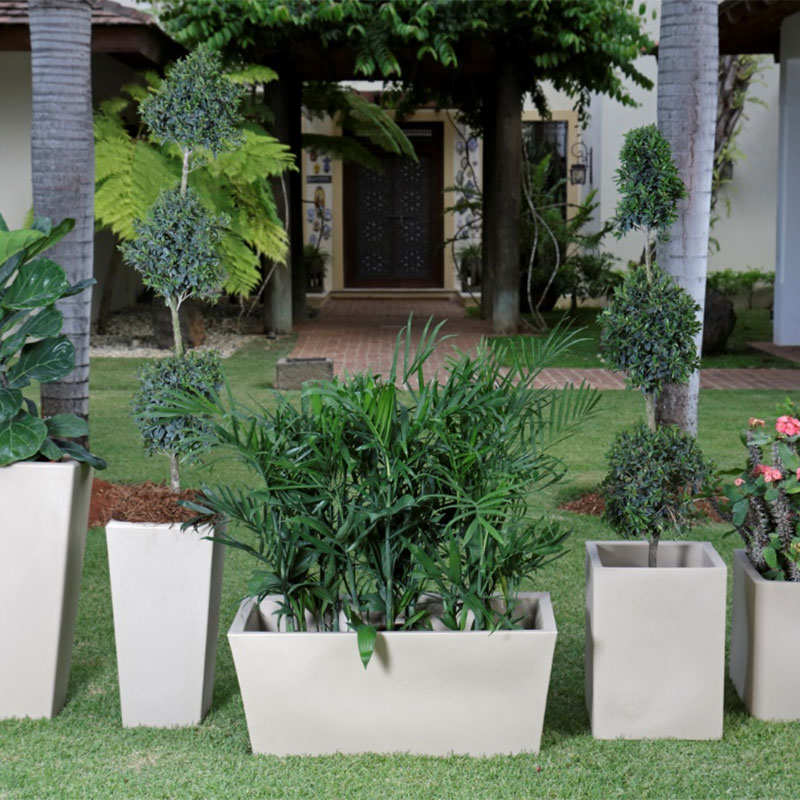
Rotational molding has become an important manufacturing method for producing durable, hollow plastic gardening products with complex shapes and consistent wall structures. Among these applications, flowerpots require more than basic container geometry. They increasingly demand large dimensions, distinctive textures, decorative patterns, integrated details, and reliable outdoor performance. This is why a well-engineered flowerpot gardening mold is central to product quality. Cast aluminum alloy is particularly suitable for this application because it provides excellent moldability and supports a wide range of product forms. By creating different textures on the mold's inner surface, manufacturers can transfer smooth, textured, sand-surfaced, patterned, wave-like, logo, stone-like, or gypsum-like finishes directly to the finished planter.
The growing demand for commercial landscaping, public-space decoration, residential gardening, hotels, and outdoor facilities has also increased interest in large plastic planter manufacturing. Compared with conventional production approaches, rotational molding provides greater freedom for hollow products while reducing the need for complex assembly. The mold becomes the foundation for both appearance and dimensional consistency, making appropriate mold design a decisive factor in production efficiency.
1. Gas-Heated Rotomolding Molds for Standard Flowerpots
Gas-heated rotomolding molds are a proven solution for producing conventional and large hollow flowerpots. They are designed to work with established rotational molding machines and are widely applicable to containers, tanks, agricultural components, outdoor products, and gardening products. For flowerpot production, the mold rotates through heating and cooling stages while plastic material forms against the internal surface. This process supports seamless hollow structures and is especially useful when a planter must combine lightweight construction with adequate structural strength.
One of the major rotational molding benefits for planters is the freedom to develop rounded corners, deep cavities, wide openings, and other forms that would be difficult to manufacture economically using some alternative processes. Cast aluminum alloy also allows manufacturers to create highly detailed internal mold surfaces. A smooth surface can produce a clean modern appearance, while textured or sand-like surfaces can create a natural visual effect. Manufacturers can even develop imitation stone and gypsum textures and subsequently sand the mold surface to achieve a distinctive decorative finish.
This category is particularly appropriate for landscaping projects requiring repeated production of standardized planters. Typical applications include residential gardens, parks, commercial entrances, hotels, nurseries, and outdoor public facilities. For customers requiring a balance between production reliability and investment efficiency, conventional gas-heated molds provide broad equipment compatibility and practical manufacturing performance.
- Suitable for standard and large hollow planter structures.
- Compatible with conventional gas-heated rotational molding machines.
- Supports smooth, textured, patterned, and decorative internal surfaces.
- Suitable for repeated production and large-volume landscaping projects.
2. Electric-Heated Rotomolding Molds for Precise Production
Electric-heated rotational molding represents a more advanced production direction for applications requiring precise thermal management. Since 2023, Jiangsu Zhroto Mould Co., Ltd. has invested in electric-heated rotomolding technology and related manufacturing capabilities. Compared with conventional gas-heated systems, electric heating provides more precise temperature management and independent zoned heating, placing greater demands on mold design and thermal conductivity. These characteristics are valuable when a flowerpot contains different wall thicknesses, deep sections, decorative surfaces, or complex geometries.
For custom garden mold design, thermal behavior should be considered during engineering rather than after manufacturing. The mold must support stable heat transfer while maintaining the required geometry and surface quality. Electric-heated systems can provide temperature control accuracy within approximately 1 to 2 degrees Celsius, thermal efficiency above 95 percent, and potentially 30 to 50 percent lower energy consumption under suitable production conditions. These advantages make electric-heated molds attractive for manufacturers seeking tighter process control and improved energy management.
The difference between electric-heated and gas-heated molds is therefore not simply the heating source. Electric systems require mold designs that respond effectively to controlled heating zones. This is particularly useful for premium decorative planters where surface appearance, dimensional stability, and repeatability are important. For advanced flowerpot gardening mold projects, the mold designer must consider product geometry, heating behavior, cooling requirements, demolding, and production conditions as one integrated engineering system.
| Category | Gas-Heated Mold | Electric-Heated Mold | Custom Complex Mold |
| Main positioning | Reliable conventional production | Precise thermal management | Complex and specialized products |
| Heating control | Conventional process control | Zoned and precise control | Designed around product requirements |
| Typical applications | Standard planters | Premium decorative planters | Large or unusual planter designs |
| Primary advantage | Broad compatibility | Improved process precision | Maximum design flexibility |
3. Custom Molds for Large and Decorative Planters
The third category focuses on customized molds for large, highly decorative, or structurally complicated planters. These products often require more than a simple cylindrical or rectangular cavity. Designers may request irregular profiles, oversized dimensions, deep cavities, decorative waves, logos, natural stone appearances, or special surface patterns. In these projects, custom garden mold design directly influences manufacturability, appearance, demolding, and production stability.
This category is closely connected with large plastic planter manufacturing because large hollow products place greater demands on mold rigidity, machining accuracy, thermal performance, and handling. A professional mold manufacturer should optimize the product structure before machining begins. Three-dimensional CAD modeling, engineering review, CNC machining, trial production, sample validation, and dimensional inspection can reduce the risk of costly modifications after the mold enters production.
Jiangsu Zhroto Mould Co., Ltd. provides integrated services covering project consultation, product optimization, 3D engineering design, mold confirmation, precision manufacturing, material recommendations, trial validation, quality inspection, delivery, production support, and maintenance advice. With an annual output exceeding 800 sets of molds and extensive experience in large-scale mold machining, the company can support complex curved surfaces, rapid prototyping, and mass production requirements.
The principal distinction of customized molds is flexibility. While standard molds prioritize repeatable production, custom solutions prioritize the relationship between a specific product concept and its manufacturing process. This makes them particularly suitable for architectural landscaping, branded outdoor environments, public art-inspired planters, commercial projects, and distinctive residential gardening products. Properly developed flowerpot gardening mold solutions can therefore transform surface texture and geometry into important product features rather than treating them as secondary decoration.
Key development considerations
- Review the planter's dimensions, structure, application environment, and production quantity.
- Optimize the product geometry for rotational molding, including wall transitions and demolding requirements.
- Develop detailed CAD models and confirm the mold structure before manufacturing.
- Select suitable mold materials and surface treatments according to the required appearance.
- Complete CNC machining, mold trials, sample validation, inspection, and final acceptance.
4. Why Rotomolding Is Well Suited to Flowerpot Production
Rotational molding dominates many hollow planter applications because it combines design freedom, seamless construction, and efficient production of large products. Unlike methods that depend heavily on assembling multiple sections, rotational molding can create a single hollow component with integrated geometry. This characteristic is especially useful for outdoor planters exposed to handling, transportation, moisture, and changing environmental conditions.
Another advantage is surface customization. Because the finished product reflects the internal mold surface, designers can incorporate different visual effects without treating every decorative feature as a separate manufacturing operation. Smooth finishes can support minimalist products, while textured, sand-surfaced, wave-like, logo, stone-like, and gypsum-inspired finishes can create stronger visual differentiation. This is one of the most practical rotational molding benefits for planters for manufacturers serving diverse landscaping markets.
For companies developing new planter products, the mold should be regarded as part of the product engineering system rather than merely a production tool. A carefully developed mold can improve dimensional consistency, simplify production, support repeatable surface quality, and reduce manufacturing complications. This approach becomes increasingly important as products grow larger or incorporate more sophisticated decorative structures.
5. Integrated Mold Engineering and Manufacturing Support
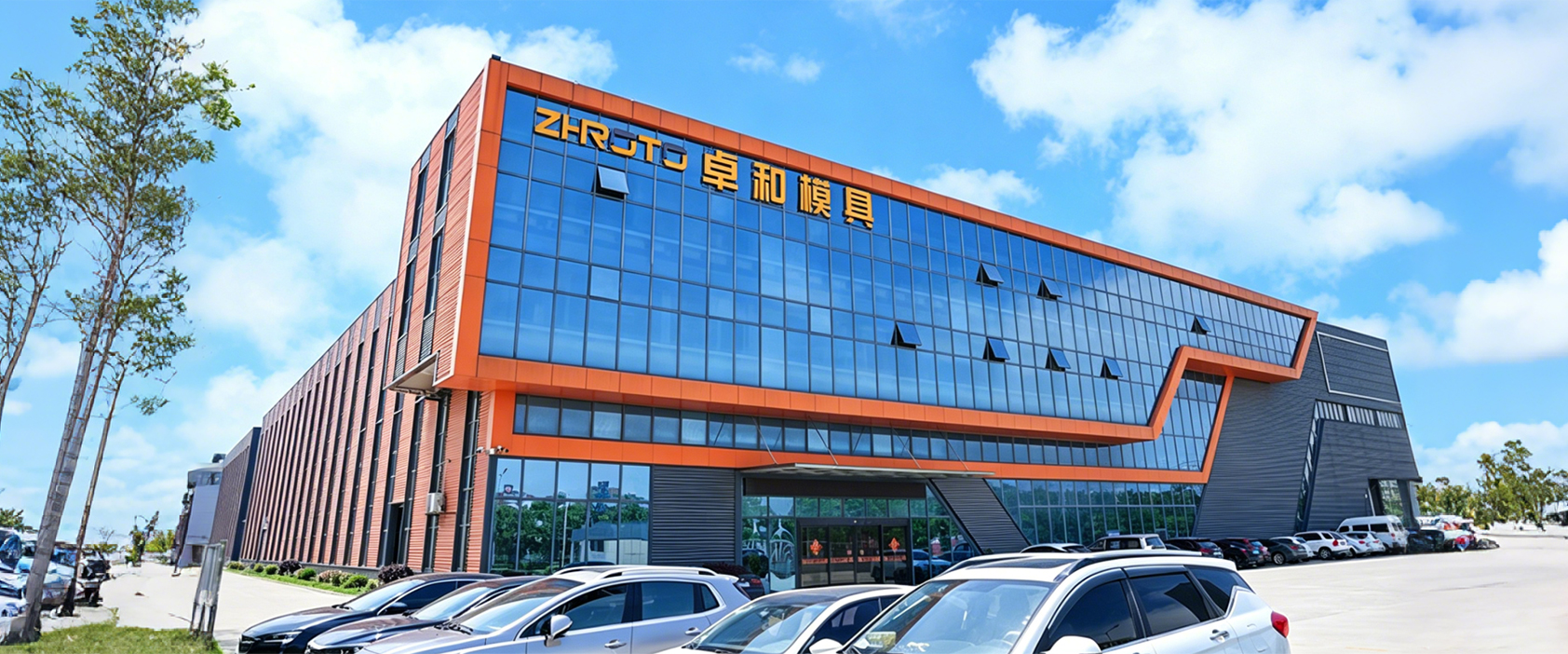
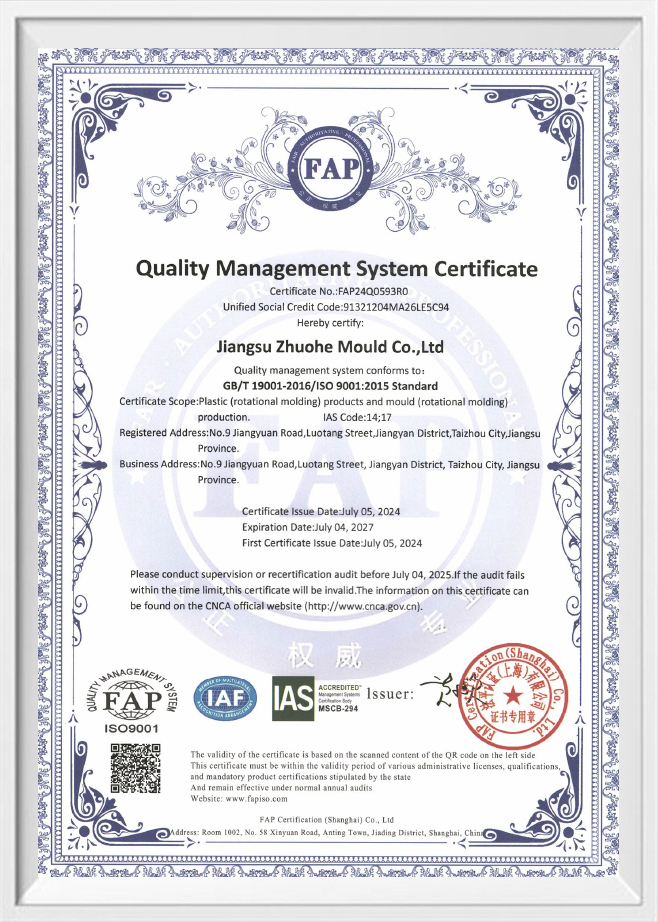
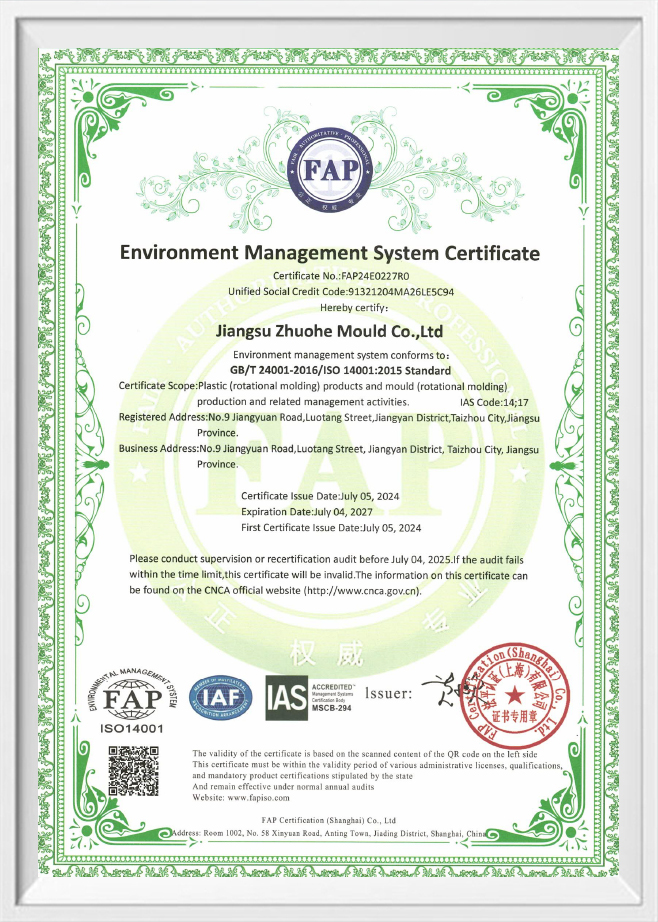
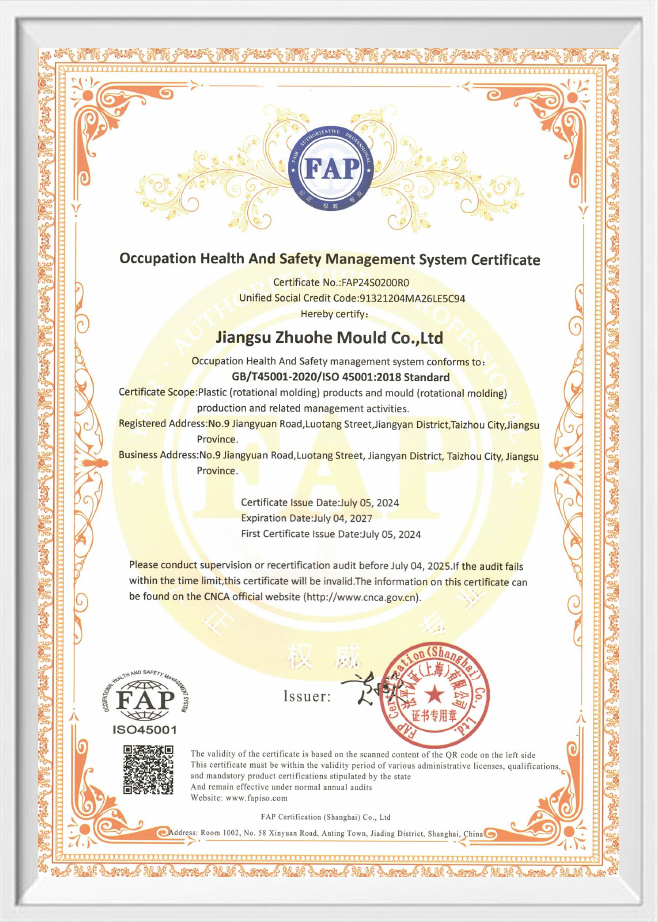
Jiangsu Zhroto Mould Co., Ltd., founded in 2015, specializes in rotational molding mold design, rotomolded product processing, and integrated technical solutions. Its modern facility in Jiangyan District, Taizhou City includes more than 12,000 square meters of standardized production workshops within an 18,000-square-meter site. The company's management systems have obtained ISO 9001:2015, ISO 14001:2015, and ISO 45001:2015 certifications.
Its engineering capabilities cover both conventional gas-heated molds and electric-heated rotational molding molds. For electric-heated applications, the company emphasizes precise temperature control, independent heating zones, high thermal efficiency, and improved process management. For conventional production, its molds provide broad machine compatibility and practical solutions for tanks, containers, agricultural equipment, industrial components, and other large hollow products.
Customers developing a new flowerpot gardening mold can benefit from an engineering workflow that begins with product consultation and continues through design optimization, CAD development, precision CNC machining, mold testing, sample evaluation, quality inspection, and production support. This integrated approach helps ensure that custom garden mold design is aligned with the actual rotational molding process rather than being developed only from an appearance perspective.
Frequently Asked Questions
Q1: Why is rotational molding suitable for large flowerpots?
Rotational molding is well suited to large hollow products because it can produce seamless structures with flexible geometry and relatively uniform wall formation. It also provides substantial freedom for oversized and decorative planter designs, making it a practical solution for large plastic planter manufacturing.
Q2: What surface effects can be created with a rotational molding flowerpot mold?
The internal mold surface can be developed with smooth, textured, sand-surfaced, patterned, wave-like, logo, stone-like, or gypsum-inspired effects. These details are transferred to the finished planter during rotational molding, allowing manufacturers to create distinctive decorative products.
Q3: Should I choose a gas-heated or electric-heated mold?
The choice depends on the production equipment, product geometry, process requirements, and desired level of temperature control. Gas-heated molds offer proven compatibility and broad application, while electric-heated systems provide more precise thermal management and zoned heating capabilities.
Q4: Can Zhroto support a planter from concept to finished mold?
Yes. Jiangsu Zhroto Mould Co., Ltd. provides project consultation, product design optimization, 3D modeling, mold engineering, CNC manufacturing, trial production, sample validation, quality inspection, delivery, production technical support, and mold maintenance advice. This makes the company suitable for customers seeking an integrated rotational molding solution.
Q5: What makes customized planter molds different from standard molds?
Customized molds are developed around specific dimensions, geometry, surface effects, production equipment, and application requirements. They provide greater flexibility for unusual shapes and decorative features. Proper custom garden mold design can help convert a unique product concept into a stable and repeatable rotational molding process.
 +86-18006248936
  ricky.t@zhroto.com
  No.9 Jiangyuan Road, Luotang Street, Jiangyan District, Taizhou City,Jiangsu Province, China