 en
 中文简体
 русский
 Español
 Deutsch
 Polskie
 REQUEST A QUOTE

 Home / News / Industry News / Rotational Molding Product Development: Mold Design, Materials & Timeline
Rotational Molding Product Development: Mold Design, Materials & Timeline
Content
- 1 Start With the Part: Design for Rotational Molding
- 2 Mold Material and Construction: Cost, Precision, and Lifetime
- 3 Material Selection: Match the Resin to the Service Life
- 4 Prototyping, Sampling, and the Road to Series Production
- 5 An Integrated Development Partner: Mold Making and Production Under One Roof
- 6 Frequently Asked Questions
Get the development phase right and the rest of the project is execution. Get it wrong, and every later stage — sampling, testing, production ramp-up — becomes damage control. In rotational molding, the outcome of product development is decided in the first few weeks, because the mold is effectively the product's DNA: it controls wall thickness, surface finish, dimensional consistency, cycle time, and even the final mechanical behavior of the resin.
As a mold builder that also runs rotomolding production, we see the same pattern in every project, from automotive fuel tanks to water storage containers: clients who focus only on the part geometry get costly surprises, while clients who focus on the tool from day one meet their specification on the first or second sampling run. This guide explains the practical sequence of rotational molding product development — design for manufacturability, mold material selection, polymer choice, sampling, and series production — and shows where most projects gain or lose time and money.
Start With the Part: Design for Rotational Molding
Before cutting aluminum or steel, a design-for-manufacturability (DFM) review should turn the part geometry into concrete tooling requirements. The mold cavity is the inverse of the finished part, and it imposes limits that appear only at the sampling stage if they are ignored too early.
Wall thickness is a controlled range, not a single number
Rotational molding produces hollow parts with nominal wall thickness typically between 3 mm and 12 mm in polyethylene. Product development should specify both the nominal thickness and the acceptable deviation, because a variation of plus or minus 10 to 20 percent is a realistic target when the mold is well designed. Ribs, bosses, and tight radii disrupt powder flow and create thin spots; the mold design can compensate with vents, locally adjusted clearances, and carefully placed cooling features, but only if the problem is anticipated.
Draft angles and corner radii
Rotomolding is more forgiving than injection molding, but parallel walls still make demolding difficult and can cause warpage. A minimum draft angle of 1 to 2 degrees is recommended, with more on tall or deep parts. Internal corners should have a radius of 3 mm or more; sharp internal corners produce local thinning and stress concentration that often appear as cracks years later.
Shrinkage determines the cavity dimensions
Linear polyethylene shrinkage ranges from roughly 1.5% to 3.5%, depending on resin grade, cooling rate, and geometry. The moldmaker must either machine the cavity oversized by the predicted shrinkage or run first samples and correct. This is where production experience matters: historical data from similar shapes dramatically reduces the number of correction rounds.
| Parameter | Typical Value | Development Impact |
|---|---|---|
| Wall thickness | 3–12 mm | Sets strength, weight, and material cost |
| Draft angle | 1–2 degrees minimum | Prevents demolding defects and warpage |
| Corner radius | 3 mm or more | Reduces stress concentration and thin spots |
| Shrinkage allowance | 1.5%–3.5% | Defines cavity dimensions and accuracy |
| Parting line flash | 0.1–0.5 mm | Affects sealing, appearance, and finishing effort |
Mold Material and Construction: Cost, Precision, and Lifetime
The mold material is a cost decision with a long tail. Aluminum molds are lightweight, conduct heat well, and are easier to machine, which makes them the default for prototypes, medium-volume production, and complex shapes. Steel molds, especially CNC-machined or fabricated versions, offer better durability for high-volume runs and resistance to abrasive resin systems. There is also the choice between cast and machined molds: cast aluminum suits complex organic shapes, while CNC-machined molds deliver tighter tolerances and more controllable cooling distribution.
For safety-related automotive parts, mold construction deserves extra scrutiny. A vehicle fuel tank mold must produce consistent wall thickness across a large contour, integrate openings for filler necks and vents, and survive repeated production cycles without dimensional drift. Getting this right at the tooling stage is what separates a one-time sample success from a product that remains stable at high volumes.
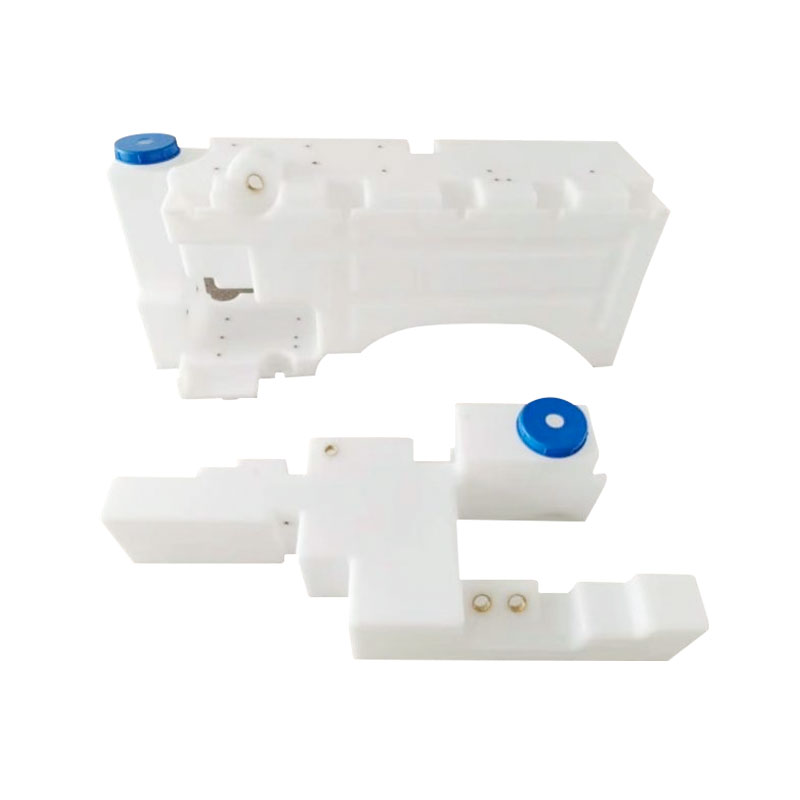 Rotational Mold for One-Piece Automotive Fuel TanksThis tooling produces seamless plastic fuel tanks with uniform wall thickness, supporting lighter weight and better fuel economy. It is relevant here because the surrounding discussion stresses mold durability and consistent dimensions for high-volume safety-critical parts.View Product →
Surface finish inside the cavity transfers directly to the product. Polished cavities release parts more easily and deliver smooth surfaces; textured finishes hide scratches but require tighter release management. Cooling design is equally important, because uneven cooling creates residual stress and warpage. For demanding parts, water-cooled or forced-air-cooled mold designs shorten cycle time and stabilize dimensions across seasons and shift conditions.
Material Selection: Match the Resin to the Service Life
Most rotomolded products are made from LLDPE or HDPE powders, but the base resin is only half of the decision. The additive package — UV stabilizers, antioxidants, color masterbatches, food-grade formulations, flame retardants, and antistatic compounds — determines whether the product survives outdoor exposure, chemical contact, or repeated cleaning. Every additive changes the sintering behavior, so a mold that runs perfectly with one powder grade can produce surface defects with another.
In water storage and treatment, the requirements are even stricter. The inner surface must be free of porosity, the material must meet food-contact expectations for potable water, and the mold must produce a seamless, leak-free wall. Product development should therefore treat material qualification and mold trials as one activity, not two.
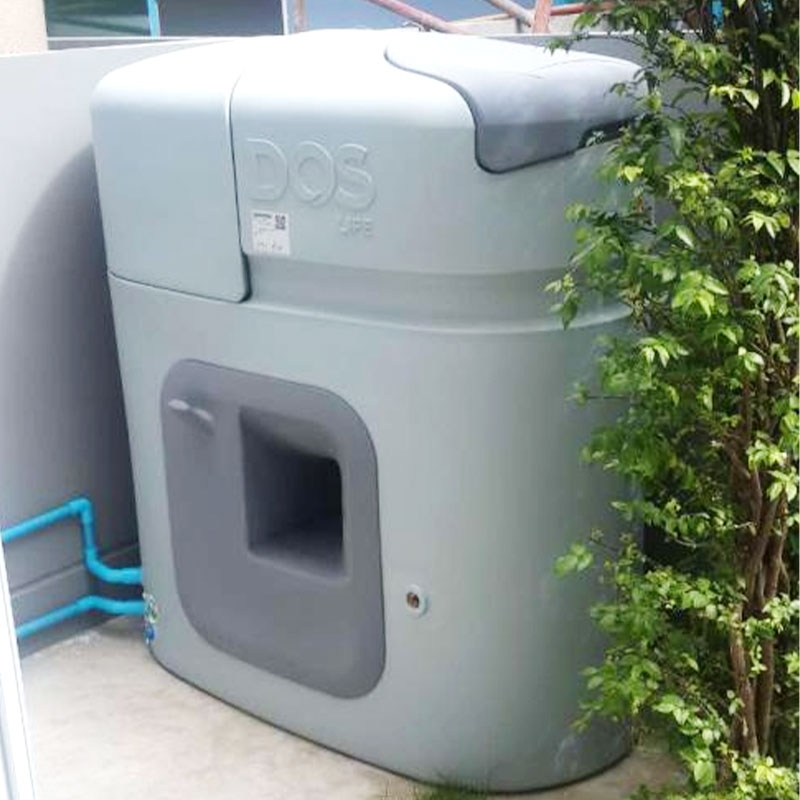 Rotational Mold for Large Seamless Water Storage TanksEngineered for one-piece rotational casting, this mold creates leak-free containers with uniform walls and no weld seams. The context highlights strict inner-surface quality and food-contact expectations, making this tooling central to successful water storage product development.View Product →
For vehicle fuel tanks, permeation control is a compliance issue, not only a performance preference. Evaporative emission requirements mean the development team must combine low-permeability resin grades with a mold design that supports uniform wall thickness and controlled cooling. If a supplier has no prior experience with these requirements, that is a procurement risk worth addressing before the contract is signed.
Outdoor and agricultural parts add another layer: UV stabilizers and impact modifiers are not optional when a product stands in the sun for a decade or takes repeated hits from livestock and field equipment.
Prototyping, Sampling, and the Road to Series Production
A typical development flow has six steps, and the number of iteration rounds determines final cost more than any single quote item.
- DFM review and final CAD validation
- Mold construction — typically 3 to 8 weeks depending on complexity
- First sampling and dimensional measurement
- Wall-thickness mapping and functional testing
- Process parameter optimization, including heating and cooling profiles
- Series production with documented process control
Most products require two to four sampling rounds before release. Common defects — porosity, incomplete sintering, warpage, and surface voids — can almost always be traced back to tooling design: vent placement, parting line geometry, or cooling rates. The most efficient fix is a tooling modification followed by a new trial, which is exactly why having mold making and rotomolding production under one roof shortens the loop so dramatically.
In rotational molding, the cheapest mold is rarely the cheapest project. Development cost is dominated by iteration rounds, and every iteration is controlled by the mold.
Buyer mistake Ordering a mold without a sampling agreement is the most common procurement error. The first article is the real deliverable of any tooling project, and a responsible development partner prices the agreement around achieving it.
An Integrated Development Partner: Mold Making and Production Under One Roof
ZHROTO operates as both a rotomolding mold manufacturer and a rotomolding component producer. This combination removes the traditional handover problem between tooling makers and molding shops. When the same engineers design the mold, machine it, run the first articles, and adjust the process, questions do not travel back and forth by email; issues found during sampling are fixed on the mold in the same building and re-verified on the same machine the same week.
The company has supported product development across demanding sectors since 2015. Its team participated in technical development for the 2008 Beijing Olympics, the 2010 Shanghai Expo, and defense-related projects — applications where delivery reliability and dimensional consistency are non-negotiable. In 2021, operations moved to a dedicated 18,000 m² facility in Taizhou, Jiangsu, with more than 12,000 m² of standardized workshops.
The same production floor supports hydrogen energy storage and transport, where rotomolded frames and protective housings must fit precisely around pressure vessels and absorb impact without cracking. For hydrogen-related parts, mold design must accommodate exacting insert placement and uniform wall control — capabilities that come from real production data rather than theoretical mold drawings.
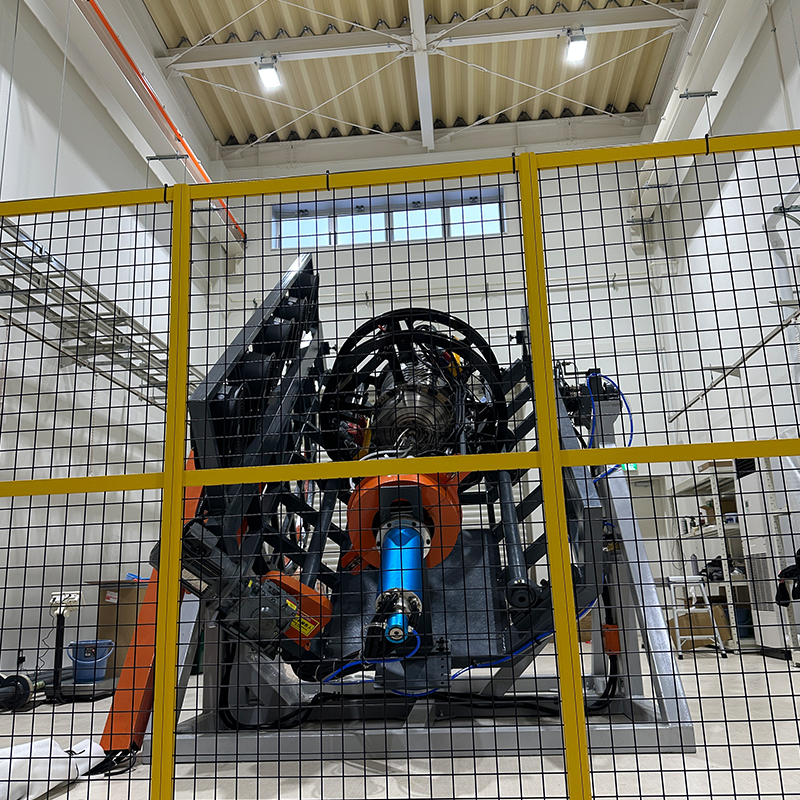 Rotational Molding Mold for Hydrogen Gas CylindersThis precision mold is designed for hollow plastic hydrogen cylinders with uniform wall thickness and reinforced structure for repeated cycles. It fits the preceding discussion on hydrogen storage housings, where exact insert placement and controlled cooling are critical for safe, reliable parts.View Product →
If your requirement is non-standard, custom development is not an exception at ZHROTO — it is the normal path. The engineering team works directly with customers during the DFM review, guarantees trials on production machines, and documents every process parameter for repeatable series output. That is the practical difference between buying a mold and executing real rotational molding product development.
Frequently Asked Questions
Q1: What is the typical timeline for rotational molding product development?
A straightforward part usually takes 4 to 10 weeks from DFM review to approved first article. Complex parts with inserts, tight tolerances, or permeation requirements can take 12 to 16 weeks, with mold construction as the critical path.
Q2: How much does rotomolding tooling cost?
Tooling cost depends mainly on mold size, material (aluminum versus steel), and complexity. Aluminum molds for medium-sized parts are usually the most cost-effective option; steel molds cost more initially but last longer at high production volumes. A DFM review before quoting is the only reliable way to compare prices fairly.
Q3: Can rotational molding achieve tight tolerances?
Yes, within the realistic limits of the process. A common expectation is plus or minus 0.5% to 1% of the nominal dimension, with wall thickness controlled by powder charge weight and mold design. When tighter accuracy is needed, post-machining or CNC-trimmed mounting surfaces are the standard solution.
Q4: How many prototype iterations are normally needed?
Most products need two to four sampling rounds. A mold maker that also runs production can reduce this by using data from similar parts, mapping wall thickness on the first sample, and correcting the mold before the second trial.

We provide customers with one-stop services ranging from product design, mold manufacturing to finished product production.
-
 +86-18006248936
-
 ricky.t@zhroto.com
-
 No.9 Jiangyuan Road, Luotang Street, Jiangyan District, Taizhou City,Jiangsu Province, China
Copyright © Jiangsu Zhroto Mould Co., Ltd. Rights Reserved.Custom Rotational Plastic Molding Factory
