
 en
en 中文简体
中文简体 русский
 Español
 Deutsch
 Polskie
 REQUEST A QUOTE


Best Materials for Off-Road Bumper Mold Manufacturing
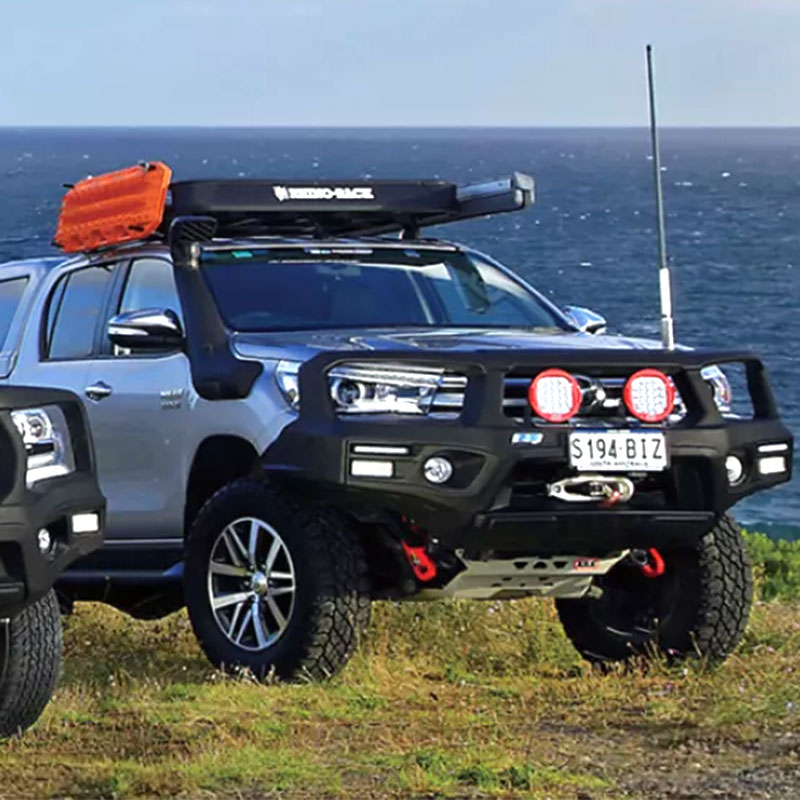
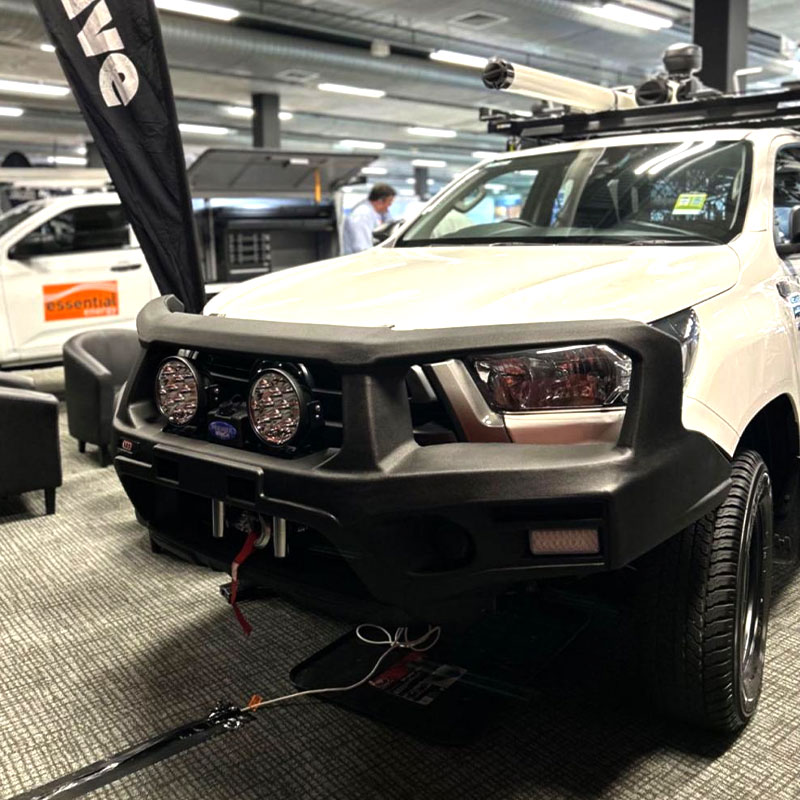
Off-road vehicles operate in environments where bumper systems must withstand repeated impacts, vibration, abrasion, moisture, mud, temperature changes, and demanding mechanical loads. For this reason, selecting the right tooling material is a critical part of successful off-road bumper mold manufacturing. A suitable mold must provide dimensional stability, efficient heat transfer, reliable service life, and sufficient precision while remaining practical for large automotive components.
Rotational molding is particularly suitable for large and extra-large hollow automotive parts. Its relatively simple mold structure and comparatively low tooling cost make it possible to manufacture products in different sizes and shapes. During production, the material is gradually heated and distributed over the mold surface as the mold rotates, creating a seamless structure with consistent wall coverage. This process supports the production of durable bumpers with strong impact resistance and an attractive finished surface.
Aluminum Molds for Large Off-Road Bumpers
Aluminum is one of the most practical materials for large off-road bumper mold applications because it combines low weight, good thermal conductivity, machinability, and reasonable tooling durability. These characteristics are especially valuable when the mold must be large enough to accommodate a complete bumper profile with deep contours, integrated mounting areas, reinforced sections, and complex styling details.
The excellent thermal conductivity of aluminum supports relatively uniform heating and cooling during rotational molding. This is important because uneven thermal conditions can influence material distribution and surface quality. A properly engineered aluminum mold can help maintain consistent processing conditions across large curved surfaces. CNC machining also enables accurate reproduction of detailed geometries, making aluminum suitable for applications where appearance and dimensional accuracy are both important.
Compared with heavier tooling materials, aluminum is easier to handle during mold installation, maintenance, and production changes. This can be a significant advantage for bumper manufacturers producing several product variants. It also supports fast prototyping and design modifications when a vehicle program is still being developed.
- Good thermal conductivity for stable rotational molding cycles.
- Suitable for large curved surfaces and complex bumper geometries.
- Compatible with precision CNC machining and rapid prototype development.
- Relatively low tooling weight simplifies handling and maintenance.
For manufacturers requiring heavy duty plastic molding, aluminum tooling provides a useful balance between production performance and manufacturing flexibility. It is particularly effective when bumper appearance, moderate-to-high production volume, and repeatable dimensional quality are major priorities.
Steel Tooling for Heavy-Duty Production
Steel tooling is positioned differently from aluminum tooling. It is normally selected when long-term durability, mechanical robustness, and resistance to repeated production cycles are more important than minimizing mold weight. In demanding industrial environments, steel can provide a rigid tooling structure capable of supporting repeated handling and extended service requirements.
For automotive exterior tooling, steel may be considered when the mold design requires particularly strong structural support or when production conditions involve frequent use. Its strength can be beneficial for large molds that are repeatedly installed, removed, transported, or exposed to demanding operating procedures. However, steel tooling generally requires greater attention to thermal management because its thermal behavior differs significantly from aluminum.
The main advantage of steel is therefore not simply material strength. Its value comes from its ability to support stable, repeatable production over a long tooling life. For high-volume programs, the initial tooling investment can be evaluated against expected production duration, maintenance requirements, and the number of molding cycles. Steel can be particularly appropriate when tooling replacement would cause significant production disruption.
When manufacturing bumpers for severe off-road applications, tooling durability must also be considered together with the final product material. A strong mold alone cannot create a reliable bumper. The mold geometry, wall thickness control, material selection, heating profile, cooling procedure, and quality inspection process must work together.
- Review bumper dimensions, structural features, and expected production volume.
- Determine whether aluminum or steel provides the more suitable tooling balance.
- Optimize mold geometry for material distribution and rotational molding performance.
- Validate trial samples for dimensional accuracy, surface finish, and structural consistency.
- Establish maintenance and production support procedures before mass production.
For manufacturers seeking heavy duty plastic molding capability, steel can therefore serve as a long-life tooling option when production demands justify its additional weight and manufacturing complexity.
High-Performance Materials for Impact-Resistant Rotomolded Bumpers
Tooling material is only one part of bumper performance. The final bumper must also be produced from a material that can tolerate impact, vibration, environmental exposure, and repeated deformation. Common rotational molding polymers can be selected and processed according to the required combination of toughness, stiffness, surface appearance, chemical resistance, and operating conditions.
The concept of impact resistant rotomolding materials is particularly important for off-road bumpers because the component may encounter stones, branches, uneven terrain, loading equipment, and accidental contact with obstacles. A suitable polymer should distribute impact energy effectively while maintaining structural integrity. Material selection should also consider UV exposure, moisture, temperature variation, and long-term outdoor use.
Rotational molding offers an important advantage because the process can produce seamless hollow structures without conventional assembly joints across the main molded body. Uniform material distribution is essential to achieving the expected performance. Proper mold design therefore needs to account for corners, ribs, mounting locations, radii, and other areas where material behavior can differ during processing.
Compared with rigid tooling-focused approaches, a complete rotomolding solution considers both mold and product materials as one engineering system. This is especially valuable for bumpers that need an effective combination of durability, impact resistance, appearance, and manufacturability.
| Tooling or material category | Main characteristics | Typical application focus |
| Aluminum tooling | Lightweight, thermally conductive, highly machinable | Large bumpers, prototypes, medium and high-volume production |
| Steel tooling | High rigidity and long-term mechanical durability | Long production runs and demanding tooling environments |
| Impact-resistant polymers | Toughness, deformation tolerance, environmental resistance | Off-road bumpers and other exterior protective components |
In practice, the best solution is not determined by material name alone. The engineering team must consider the bumper's geometry, production quantity, heating equipment, target cycle behavior, surface requirements, and expected service environment. This integrated approach makes impact resistant rotomolding materials more effective when combined with appropriately designed tooling.
Integrated Mold Design and Manufacturing Solutions
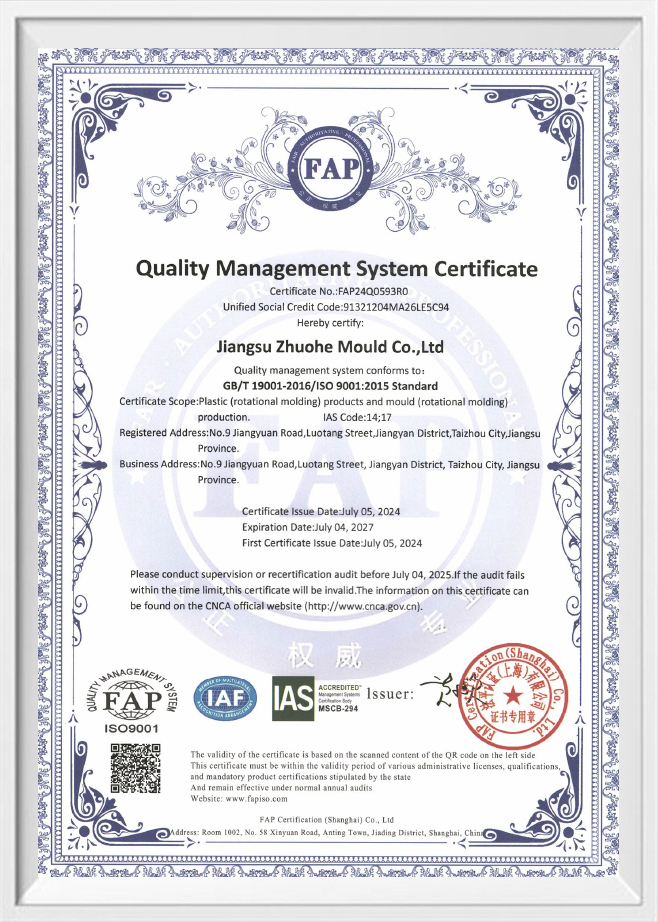
Material selection becomes more valuable when supported by an experienced tooling development process. Jiangsu Zhroto Mould Co., Ltd. specializes in rotational molding mold design and manufacturing, rotomolded product processing, and integrated technical solutions. The company has developed capabilities covering project consultation, product optimization, 3D engineering, mold manufacturing, testing, inspection, delivery, and production support.
For automotive exterior tooling, the development process begins by understanding the bumper's application, dimensions, structure, and production requirements. Product geometry can then be optimized for rotational molding before detailed CAD modeling and mold design confirmation. This approach helps ensure that the tooling is not simply accurate as a machined object but also practical for actual production.
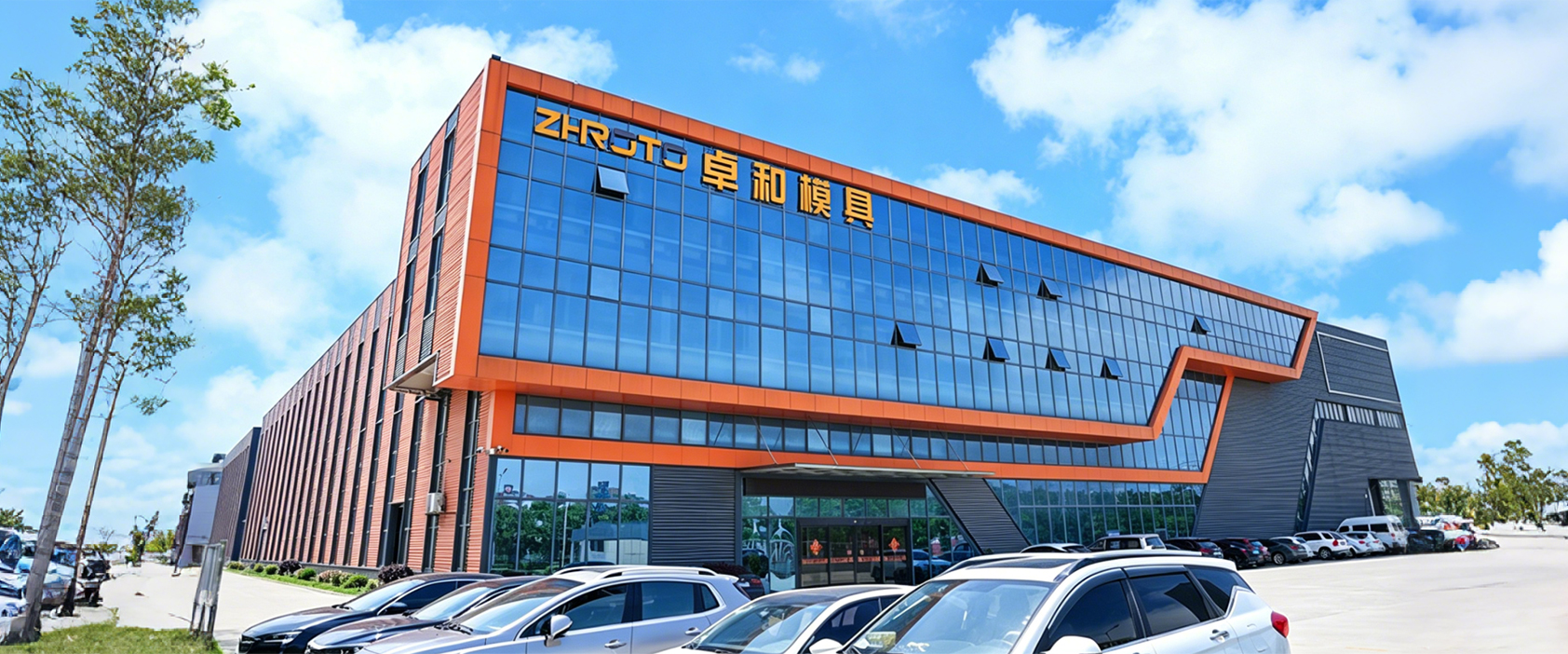
Jiangsu Zhroto Mould Co., Ltd. operates a modern manufacturing facility with standardized production workshops and an annual output exceeding 800 mold sets. Its products serve automotive, industrial, agricultural, water treatment, outdoor, and other application fields. Experience in large-scale mold machining supports the development of complex curved surfaces and large hollow components such as off-road bumpers.
The company's capabilities also include both conventional gas-heated rotational molding molds and electric-heated rotational molding solutions. Electric-heated systems require more precise consideration of thermal conductivity and zoned heating. Temperature control accuracy, thermal efficiency, and process management therefore become important design considerations when developing advanced tooling.
Why Rotational Molding Is Suitable for Large Bumpers
Rotational molding is well suited to large automotive components because the tooling structure can remain comparatively simple even when the finished part is large and geometrically complex. Material is gradually melted and distributed against the mold surface through rotation and heating, allowing manufacturers to create seamless hollow products with controlled wall coverage.
This process also provides flexibility for customized bumper designs. Different styling profiles, dimensions, mounting structures, and surface treatments can be incorporated into the mold design. For manufacturers developing new vehicle platforms or specialized off-road products, this flexibility can reduce barriers to prototype development and product modification.
A professionally engineered off-road bumper mold should therefore be evaluated as part of the complete production system rather than as an isolated tooling component. Mold material, mold geometry, heating method, polymer selection, sample validation, and production support all influence the final result.
How to Select the Best Mold Material
Choosing between aluminum, steel, and other tooling approaches requires a project-specific assessment. A prototype or medium-volume bumper project may benefit from aluminum because of its machinability and thermal characteristics, while a long-running production program may justify a more durable steel solution. The final polymer must then be selected according to impact requirements and the expected outdoor environment.
Jiangsu Zhroto Mould Co., Ltd. provides material and process recommendations as part of its integrated development workflow. Trial molding and sample validation are used to evaluate product performance and dimensional accuracy before final acceptance. The company also provides production technical support and mold maintenance advice to improve long-term production stability.
The most reliable approach is to assess the entire project through several connected factors:
- Finished bumper size, geometry, and structural requirements.
- Expected production volume and tooling service life.
- Required impact resistance and environmental durability.
- Heating equipment and thermal management requirements.
- Surface appearance and dimensional accuracy.
- Prototype, testing, maintenance, and future modification requirements.
When these factors are evaluated together, manufacturers can select tooling that provides an appropriate balance between performance, cost, production efficiency, and durability. This is the foundation of reliable automotive exterior tooling for demanding off-road applications.
Frequently Asked Questions
Q1: What material is best for an off-road bumper mold?
Aluminum is often suitable for large rotational molding bumpers because it offers good thermal conductivity, machinability, and manageable tooling weight. Steel can be preferable for projects where extended tooling durability and high production volume are the primary priorities.
Q2: Why are impact-resistant materials important for off-road bumpers?
Off-road bumpers can experience repeated impacts, vibration, abrasion, and environmental exposure. Impact resistant rotomolding materials help the finished component tolerate these conditions while maintaining structural integrity and functional performance.
Q3: How does rotational molding benefit large bumper production?
Rotational molding is well suited to large hollow parts because the material is distributed progressively over the mold surface during heating and rotation. The process supports seamless structures, flexible product geometry, and efficient production of large automotive components.
Q4: What services can Jiangsu Zhroto Mould Co., Ltd. provide?
The company provides project evaluation, product optimization, 3D modeling, mold design, CNC manufacturing, material and process recommendations, trial molding, quality inspection, delivery, production technical support, and mold maintenance advice. These services create an integrated path from product concept to stable production.
Q5: Can the mold be developed for electric-heated rotational molding equipment?
Yes. Advanced electric-heated rotational molding requires careful attention to thermal conductivity, heating zones, and process control. Appropriate mold engineering can support more precise thermal management and efficient production of large automotive components.
Ultimately, the best off-road bumper mold is the one designed around the complete application rather than selected solely according to tooling material. By combining appropriate mold construction, reliable polymer selection, optimized geometry, precision manufacturing, and trial validation, manufacturers can achieve durable and consistent bumper production for demanding off-road environments.
 +86-18006248936
  ricky.t@zhroto.com
  No.9 Jiangyuan Road, Luotang Street, Jiangyan District, Taizhou City,Jiangsu Province, China