 en
en 中文简体
中文简体 русский
 Español
 Deutsch
 Polskie
 REQUEST A QUOTE

 Home / News / Industry News / Rotational Molding Advantages: Key Benefits for Durable Hollow Plastic Parts
 Rotational Molding Advantages: Key Benefits for Durable Hollow Plastic Parts
Content
- 1 What Are the Real Advantages of Rotational Molding?
- 2 Design Freedom and Uniform Wall Thickness
- 3 Lower Tooling Cost and More Economical Low Volumes
- 4 Durability, Impact Resistance, and Seamless Construction
- 5 Material Selection and Performance Tuning
- 6 Rotomolding vs. Other Processes: A Quick Comparison
- 7 When Should You Choose Rotational Molding?
- 8 Frequently Asked Questions
What Are the Real Advantages of Rotational Molding?
If you are sourcing a hollow plastic part that needs to hold up under stress, resist corrosion, and keep its shape over years of outdoor use, rotational molding is likely one of the first processes to evaluate. The biggest advantage of rotomolding is not a single feature but a combination: seamless walls, uniform thickness, low tooling cost, and design freedom for large parts. That combination makes it especially attractive for tanks, fuel systems, buoys, furniture, and industrial housings.
To understand why these advantages matter in practice, it helps to compare rotomolding with injection molding or blow molding. The process starts with a hollow mold that is heated while rotating on two axes. Powdered resin melts and coats the interior surfaces, producing one continuous piece with no weld lines, no gates, and no internal stress points. That simple mechanism explains many of the benefits buyers care about.
Design Freedom and Uniform Wall Thickness
Rotational molding gives design teams a level of geometric freedom that is difficult to match with other processes. Because the mold rotates rather than forcing material through a runner or gate, the resin can reach deep corners, undercuts, and complex contours without the flow marks or short shots common in injection molding. Wall thickness is also inherently uniform. The powder particles cling to the mold surface evenly, and for most parts you can hold a consistent wall throughout the shape. At corners and radii, material naturally builds up, which is a real structural benefit.
In practical terms, this means you can design a custom kayak mold with a hull that is strong where it needs to be, while keeping overall weight low. The same principle applies to fuel tanks, medical housings, and large recreational parts. If your product has tight tolerance requirements, experienced mold designers can still meet them through careful tooling design and wall thickness control. You can see specific design considerations in our overview of the rotational molding process.
 Custom Kayak Mold for Seamless Rotomolded HullsThis one-piece rotomolding mold creates seamless kayak hulls from 3-meter recreational to 5-meter touring models, offering cost-effective tooling for low-volume production.View Product →
Lower Tooling Cost and More Economical Low Volumes
For many procurement teams, the decisive factor is the mold investment. Unlike injection molding, which requires expensive steel tooling and high clamping pressure, rotomolding molds are often fabricated from fabricated sheet steel or cast aluminum. Tooling can be 50 to 80 percent less expensive than injection molds, depending on size and complexity. For product launches, prototypes, or annual volumes below a few thousand units, this cost advantage makes rotational molding the preferred route.
A manufacturer that can handle both mold making and part production saves even more. Companies with an in-house mold shop and CNC capability can shorten lead times and avoid double sourcing. For example, a water tank storage container mold can be designed, machined, and validated in a single production flow, which reduces communication overhead and keeps quality consistent. If you already have an existing part, a mold maker can often retrofit or adjust the tooling more easily than with injection molds.
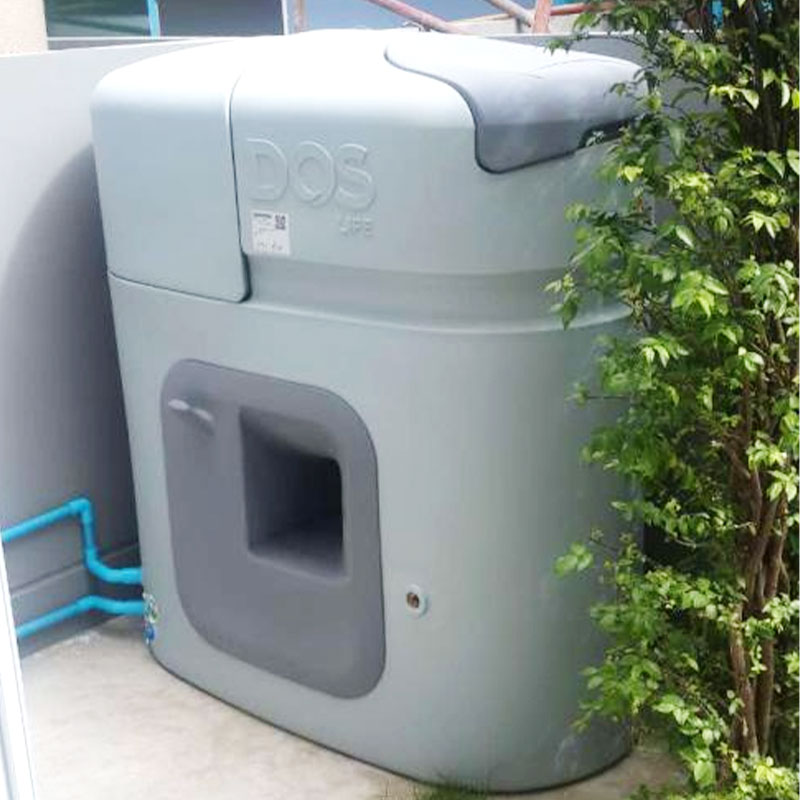 Rotomolding Mold for Large Water Storage TanksDesigned for one-piece, weld-free plastic tanks, this mold ensures uniform wall thickness and durability for industrial, agricultural, and civil water storage applications.View Product →
Durability, Impact Resistance, and Seamless Construction
The finished rotomolded product has excellent durability because the mold produces a single piece with no weld lines, no injection gate, and no internal stress. In high-impact or outdoor environments, this matters. A seam can become a crack path; rotomolding removes that risk. Rotomolded parts also resist UV weathering, chemicals, and moisture well when the right resin and additives are used.
Take a fuel tank for a truck or a storage container for corrosive liquids. In both cases, long-term leak resistance and structural integrity are critical. An automobile fuel tank mold is a good example of how rotomolding creates a seamless, stress-free container that meets demanding requirements. The thick corners and uniform wall help the part survive vibration, impact, and temperature changes without developing weak points.
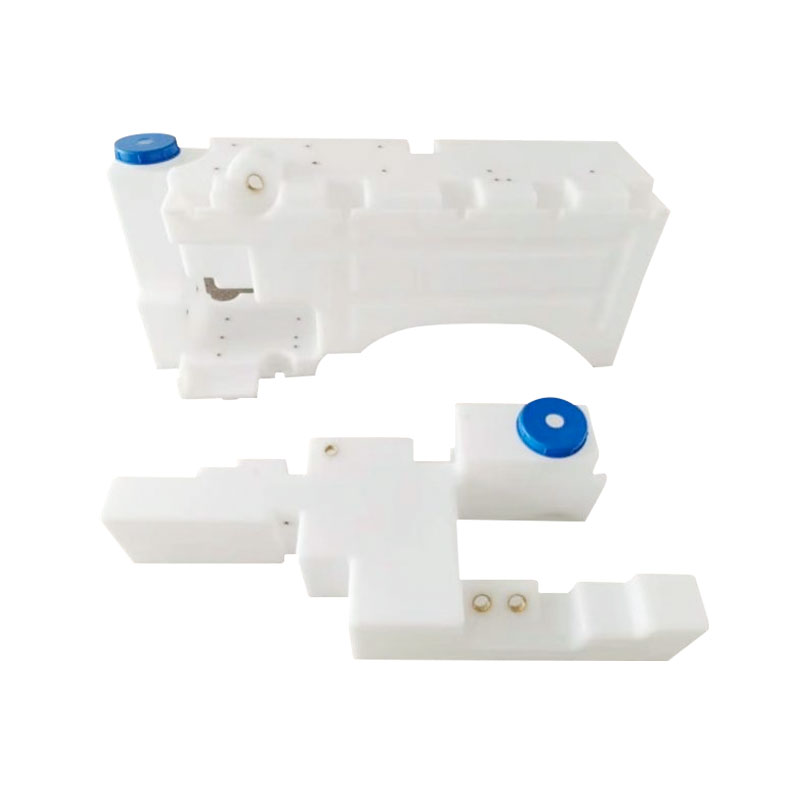 Automobile Fuel Tank Mold for Lightweight Plastic TanksThis rotomolding mold produces complex, seamless plastic fuel tanks that fit chassis spaces, reduce weight by up to half, and improve safety and fuel economy.View Product →
Material Selection and Performance Tuning
Rotomolding supports a useful range of thermoplastics, though not as many as injection molding. Polyethylene is the workhorse, available in high-density, low-density, and crosslinkable grades. You can also use polypropylene, nylon, and PVC in specialized applications. The practical advantage is that you can tailor material properties using UV stabilizers, flame retardants, and colorants without major mold changes.
This flexibility means a single tool can produce parts for different environments. The same mold can run a food-grade polyethylene for a drinking water tank, or an impact-modified grade for an industrial float. When a product needs both stiffness and toughness, the molder can tune the resin and the cooling cycle to meet those needs.
Rotomolding vs. Other Processes: A Quick Comparison
The following table shows how rotational molding compares with injection molding and blow molding on the factors that most often drive a sourcing decision.
| Factor | Rotational Molding | Injection Molding | Blow Molding |
|---|---|---|---|
| Tooling cost | Low to moderate | High | Moderate |
| Wall thickness | Uniform, thicker corners | Very precise | Thinner walls |
| Part size | Large to very large | Small to medium | Medium to large |
| Stresses in part | Low, no weld lines | Higher, gate marks | Some, possible seams |
| Best for | Durable hollow parts | High-volume, tight-tolerance parts | Bottles and containers |
Of course, rotational molding has limitations too. Cycle times are longer, material choices are narrower, and labor intensity can be higher than injection molding. For extremely high-volume, thin-wall consumer products, injection molding is hard to beat. But for large, rugged, lower-volume parts, the advantages often outweigh these drawbacks.
When Should You Choose Rotational Molding?
Start with the shape and the environment. If you need a large hollow part with low internal stress, seamless construction, and good impact resistance, rotomolding is a strong fit. If you are producing only a few hundred or a few thousand units per year, the lower tooling cost becomes even more compelling.
The main purchase consideration is not whether rotomolding is better in general; it is whether the process matches your specific part. Ask your supplier about mold material, expected mold life, and wall thickness control. A reputable manufacturer will share data on tolerances, draft angles, and previous projects. If you have a design ready, speak with a team that can provide an upfront assessment. You can contact our engineering team with your CAD file or sketch and get a practical recommendation on whether rotational molding is best for your application.
Frequently Asked Questions
Q1: What is the main advantage of rotational molding?
The main advantage is the ability to produce large, seamless, hollow plastic parts with uniform wall thickness and low internal stress, at a much lower tooling cost than injection molding.
Q2: How thick can rotomolded walls be?
Typical wall thicknesses range from 2 mm to 25 mm or more. The process builds material naturally at corners, which increases impact resistance.
Q3: Is rotational molding economical for small production runs?
Yes. Because the tooling is significantly cheaper, even runs of 100 to 1,000 units can be cost-effective compared with injection molding, which needs high volumes to justify the mold investment.
Q4: What materials are used in rotational molding?
Polyethylene is most common, but polypropylene, nylon, and PVC are also used. Additives can improve UV resistance, flame retardancy, and impact strength.

We provide customers with one-stop services ranging from product design, mold manufacturing to finished product production.
-
 +86-18006248936
 -
 ricky.t@zhroto.com
 -
 No.9 Jiangyuan Road, Luotang Street, Jiangyan District, Taizhou City,Jiangsu Province, China
Copyright © Jiangsu Zhroto Mould Co., Ltd. Rights Reserved.Custom Rotational Plastic Molding Factory
