
 en
en 中文简体
中文简体 русский
 Español
 Deutsch
 Polskie
 REQUEST A QUOTE



How wall thickness impacts water tank storage container mold strength
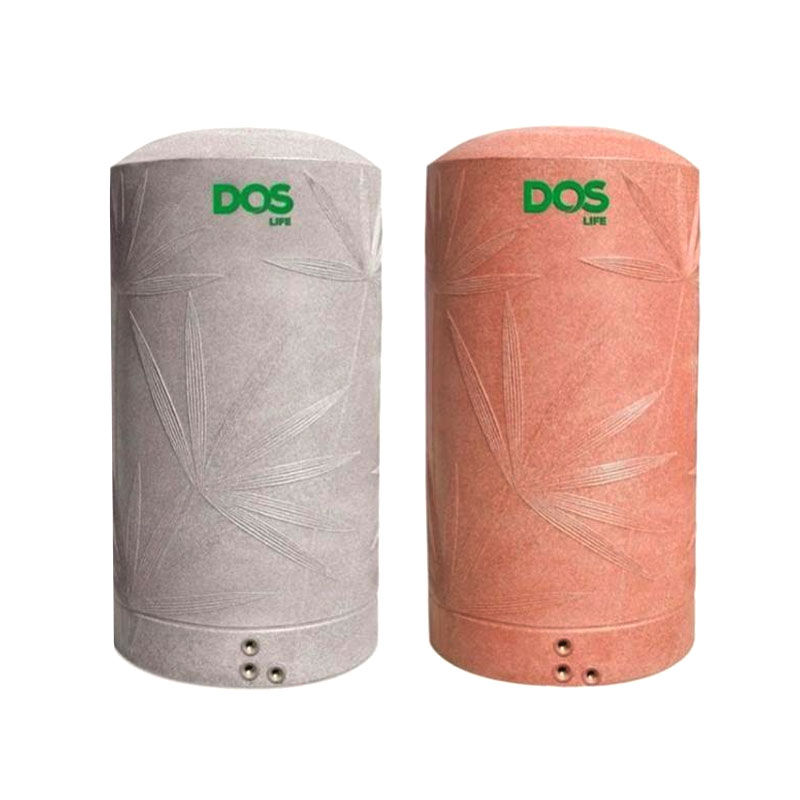
Wall thickness is one of the most important design considerations when developing large hollow plastic tanks. It affects structural strength, impact resistance, dimensional stability, weight, production consistency, and long-term service performance. In rotational molding, the mold does not directly determine the finished wall thickness alone; instead, mold geometry, material distribution, heating conditions, powder loading, and cycle control work together. A well-designed water tank storage container mold provides the foundation for consistent material coverage and helps manufacturers produce seamless tanks with reliable mechanical performance.
The product is designed for rotational molding applications involving cylindrical, rectangular, and customized storage vessels. During the process, molten plastic coats the internal cavity while the mold rotates, creating a hollow product without weld seams or conventional parting lines. This construction is particularly valuable for water storage, agricultural irrigation, industrial liquid containment, and outdoor infrastructure. Therefore, understanding the relationship between wall thickness and mold design is essential for achieving dependable heavy duty rotomolding strength.
Large Water Storage Tank Mold Systems
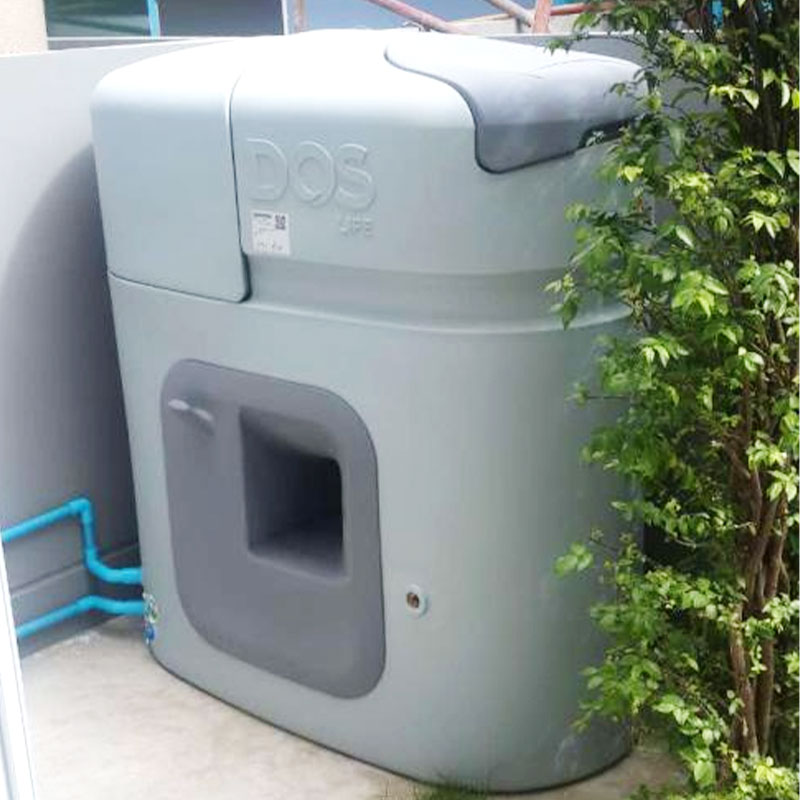
Large water storage tank molds are designed for products where capacity, structural stability, and resistance to outdoor conditions are primary requirements. A water tank storage container mold in this category normally incorporates carefully controlled curved surfaces, reinforced transition areas, suitable demolding angles, and sufficient clearance around fittings. The mold cavity must support uniform plastic distribution because significant variations in wall thickness can create weak zones or unnecessary material accumulation.
Large tanks are commonly used for agricultural irrigation, rainwater collection, municipal water storage, construction sites, and industrial facilities. Their size means that the finished container can experience considerable hydrostatic loading, especially when completely filled. For this reason, wall thickness must be considered together with tank geometry. Rounded corners and smoothly transitioned surfaces can reduce localized stress concentrations, while properly positioned reinforcement features can improve rigidity without unnecessarily increasing overall material consumption.
Compared with smaller containers, large tanks place greater demands on mold fabrication accuracy and thermal behavior. Jiangsu Zhroto Mould Co., Ltd. provides engineering services covering product evaluation, 3D modeling, mold confirmation, precision manufacturing, testing, and production support. Its large-scale machining capabilities are suitable for complex curved surfaces and customized hollow products.
- Large-capacity water storage and irrigation applications.
- Seamless construction for reduced potential leakage points.
- Customized openings, fittings, ribs, and mounting structures.
- Compatibility with conventional gas-heated and electric-heated rotational molding equipment.
Liquid Storage Reservoir Tooling for Industrial Applications
Industrial liquid storage products require more than simple container geometry. The tooling must accommodate the intended liquid, operating environment, connection locations, transportation requirements, and cleaning procedures. liquid storage reservoir tooling is therefore developed around the complete product function rather than wall thickness alone. Proper cavity design helps establish predictable material distribution around corners, bases, sidewalls, and integrated structural features.
Typical applications include industrial water reservoirs, process-liquid containers, agricultural tanks, wastewater equipment, and other non-pressurized storage systems. In these applications, excessive wall thickness can increase product weight, material usage, and cycle requirements, while insufficient thickness may reduce rigidity and impact resistance. A balanced design aims for sufficient thickness in load-bearing areas while avoiding unnecessary material accumulation elsewhere.
For customized liquid storage reservoir tooling, engineering evaluation should begin with the actual service environment. Designers need to understand whether the container will remain stationary, be transported frequently, operate outdoors, or experience repeated filling and emptying. These factors influence rib placement, base geometry, handling points, and the appropriate wall-thickness distribution. The resulting mold should support consistent production rather than merely reproducing an idealized drawing.
Why Uniformity Matters
Uniform wall distribution is particularly important around the bottom and corner regions of a reservoir. These areas often require greater structural attention because the tank geometry changes direction and loads can become concentrated. Rotational molding tooling can be engineered with appropriate radii and transitions to encourage more stable material coverage. This approach improves consistency while maintaining the advantages of seamless hollow construction.
Industrial Plastic Container Molding
industrial plastic container molding covers a broad family of rotationally molded products, including storage tanks, equipment housings, agricultural containers, and specialized hollow vessels. Unlike a single-purpose tank design, this product category emphasizes adaptability. The mold may need to accommodate unusual dimensions, integrated handles, threaded areas, mounting points, drain structures, or reinforced sections.
The major advantage of rotational molding is its ability to produce large hollow components with relatively low tooling complexity compared with many conventional molding approaches. Because the finished product is formed as a continuous shell, there are no welded seams within the main body. This can simplify post-production finishing and help reduce potential leakage paths. Nevertheless, the mold must be carefully engineered because the quality of the final container depends strongly on cavity geometry and process consistency.
Jiangsu Zhroto Mould Co., Ltd., founded in 2015, has developed capabilities covering rotational mold design, CNC machining, product processing, mold testing, quality inspection, and technical support. The company operates a modern facility in Taizhou with standardized production workshops and an annual output exceeding 800 mold sets. Its solutions cover applications including water tanks, vehicle fuel tanks, agricultural equipment, industrial components, and other large hollow products.
| Product category | Primary focus | Typical applications | Key tooling consideration |
| Large water tanks | Capacity and rigidity | Irrigation, water storage | Uniform coverage and reinforced geometry |
| Liquid reservoirs | Containment and durability | Industrial and agricultural liquids | Corner transitions and fitting locations |
| Industrial containers | Customization and versatility | Equipment and infrastructure | Complex surfaces and integrated features |
Heavy Duty Rotomolding Strength and Electric-Heated Mold Technology
For demanding applications, heavy duty rotomolding strength depends on coordinated mold engineering and process control. Wall thickness should not be viewed as an isolated specification. A thicker shell does not automatically create a better tank if material distribution is inconsistent or if the geometry creates weak transitions. Instead, the mold should promote balanced coverage while allowing production engineers to optimize heating and cooling conditions.
Electric-heated rotational molding introduces additional opportunities for process control. Jiangsu Zhroto Mould Co., Ltd. has invested in electric-heated rotational molding technology since 2023. Its solutions support zoned heating and more precise temperature management, creating a stronger connection between mold design and production control. This is particularly useful for large tanks where different areas of the cavity may respond differently during heating.
The company states that its electric-heated solutions can provide temperature control accuracy within the range of plus or minus 1 to 2 degrees Celsius, independent zoned heating, thermal efficiency above 95 percent, and reduced energy consumption. These capabilities can support more consistent processing when the product requires controlled wall distribution. For conventional production, gas-heated molds remain widely applicable because of their equipment compatibility and established production characteristics.
- Evaluate the tank application, dimensions, load conditions, and required service environment.
- Optimize the product geometry for rotational molding and establish appropriate wall-thickness targets.
- Develop detailed CAD models and confirm mold construction before machining.
- Manufacture the mold using suitable precision machining methods.
- Conduct mold trials, inspect samples, and adjust the production process when necessary.
How Mold Engineering Controls Wall Thickness
A reliable water tank storage container mold must account for product shape, powder loading, rotation, heating, cooling, and demolding. Mold surfaces that are too complex can make material distribution more difficult, while poorly designed transitions may encourage localized buildup or thinning. Engineers therefore review the entire cavity before production and identify regions where structural reinforcement or geometry refinement is necessary.
Mold maintenance also affects long-term consistency. Surface damage, deformation, contamination, or dimensional changes can gradually influence finished products. Regular inspection and appropriate maintenance help preserve dimensional accuracy and stable production. The goal is not simply to make a thick plastic shell, but to create a controlled and repeatable manufacturing system capable of producing containers with dependable strength.
Frequently Asked Questions
Q1: How does wall thickness affect water tank strength?
Greater wall thickness can improve rigidity and resistance to impact, but uniform distribution is equally important. Excess material in one region does not compensate for insufficient material in another. Mold geometry and rotational molding process control must therefore work together.
Q2: What is the role of liquid storage reservoir tooling?
liquid storage reservoir tooling provides the cavity geometry required to produce seamless hollow reservoirs with controlled material distribution. It can be customized for different capacities, fittings, reinforcement features, and installation environments.
Q3: When is industrial plastic container molding appropriate?
industrial plastic container molding is suitable for large hollow products requiring customized geometry, durable construction, and seamless rotationally molded shells. Common uses include tanks, agricultural containers, industrial equipment components, and outdoor products.
Q4: How does Zhroto Mould support customized projects?
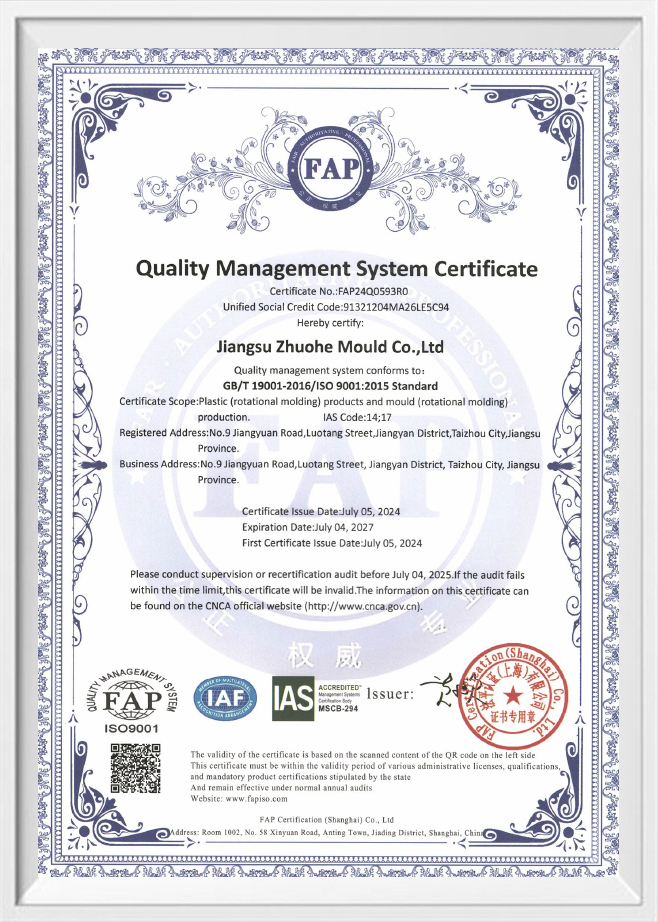
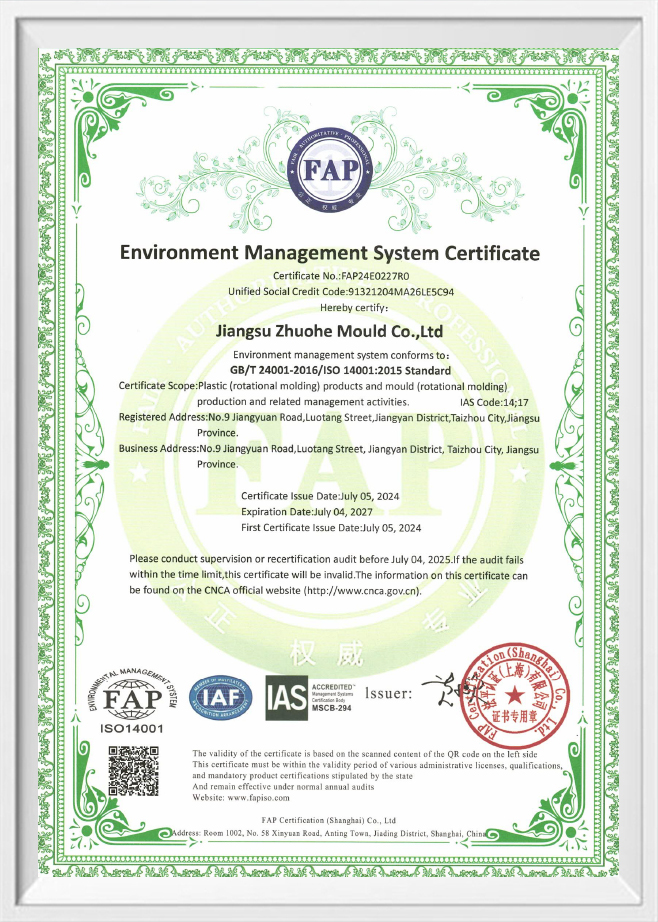
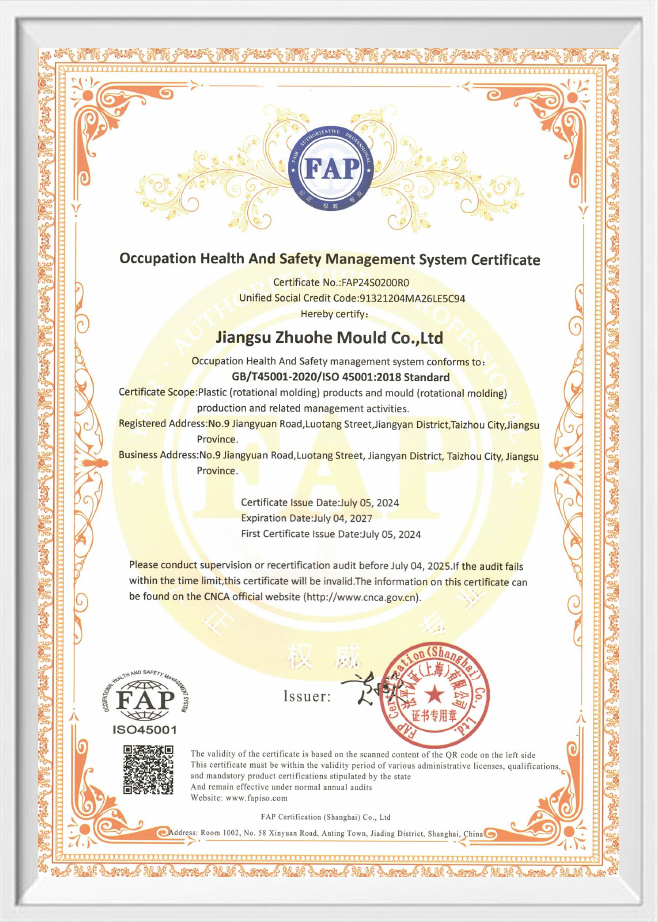
Jiangsu Zhroto Mould Co., Ltd. provides support from project consultation and product optimization through 3D engineering, precision mold manufacturing, sample validation, quality inspection, delivery, and production assistance. Its ISO 9001, ISO 14001, and ISO 45001 certifications support a structured approach to quality, environmental management, and occupational safety.
Q5: Can the same tooling approach support different tank designs?
Rotational molding tooling can be customized for cylindrical, rectangular, and specialized vessel geometries. However, each product should be evaluated independently because capacity, fittings, structural features, installation conditions, and required heavy duty rotomolding strength can vary significantly.
 +86-18006248936
  ricky.t@zhroto.com
  No.9 Jiangyuan Road, Luotang Street, Jiangyan District, Taizhou City,Jiangsu Province, China