 en
en 中文简体
中文简体 русский
 Español
 Deutsch
 Polskie
 REQUEST A QUOTE

 Home / News / Industry News / Rotational Molding Technologies: Process, Materials, Design & Quality Control Guide
 Rotational Molding Technologies: Process, Materials, Design & Quality Control Guide
Content
A production manager looking for a cost-efficient way to produce a seamless, double-walled hollow part will quickly discover that rotational molding technologies offer the most practical path forward. Unlike injection or blow molding, this process delivers uniform wall thickness, low residual stress, and molded-in features that eliminate secondary assembly operations. The conclusion is straightforward: if your product is larger than a cubic meter, needs complex internal geometry, or must withstand outdoor weathering, rotational molding should be at the top of your shortlist.
How Rotational Molding Technologies Work
Rotational molding operates through a four-stage cycle. A precisely weighed charge of polymer powder goes into a cold hollow mold, then the mold is closed and moved into an oven while rotating biaxially around two perpendicular axes. As the mold heats, the powder gradually melts and coats the interior surface. After the polymer fully fuses, the mold is transferred to a cooling chamber where air or water reduces the temperature below the material's softening point. Finally, the mold opens and the finished part is removed with no need for trimming or gate removal.
Rotation speed typically runs from 4 to 20 RPM per axis, using a deliberate axis ratio around 4:1. This offset prevents polymer pooling, which means the process creates no weld lines, no gate marks, and virtually no internal stress concentration. Because the mold coating relies on gravity and rotation rather than pressure, that single mechanical difference explains most of the benefits associated with this manufacturing method.
For a deeper look at how this process supports a full range of products, visit the rotomolding overview on this site.
Mold Design and Tooling Technologies
The mold itself decides the quality of the finished part. In practice, manufacturers choose between cast aluminum and fabricated steel. Cast aluminum is the preferred option for complex geometries and medium production runs because it offers excellent heat transfer and reproduces fine surface textures. Fabricated steel molds are favored for large tanks or simpler geometries where dimensional stability outweighs thermal efficiency.
Wall thickness must be engineered around the polymer's shrink rate. Modern mold designs include intentional wall-thickness variations that compensate for material flow during the heating phase. Draft angles should begin at 1 to 2 degrees for smooth release, increasing to 3 degrees when internal ribs or undercuts are present. An experienced mold maker also vents the tool near the parting line, preventing internal air pressure from causing flash or incomplete fusion.
Take agricultural water tanks as one example. These products require a seamless, double-walled structure that stays rigid under repeated filling and draining cycles. A well-engineered water tank mold needs precise venting and a machining tolerance of 0.2 mm or better to hold wall thickness in spec. This is exactly the kind of mold that a production team should evaluate before committing to a tooling partner. Explore water tank storage container molds for a closer look at how this tooling category is built.
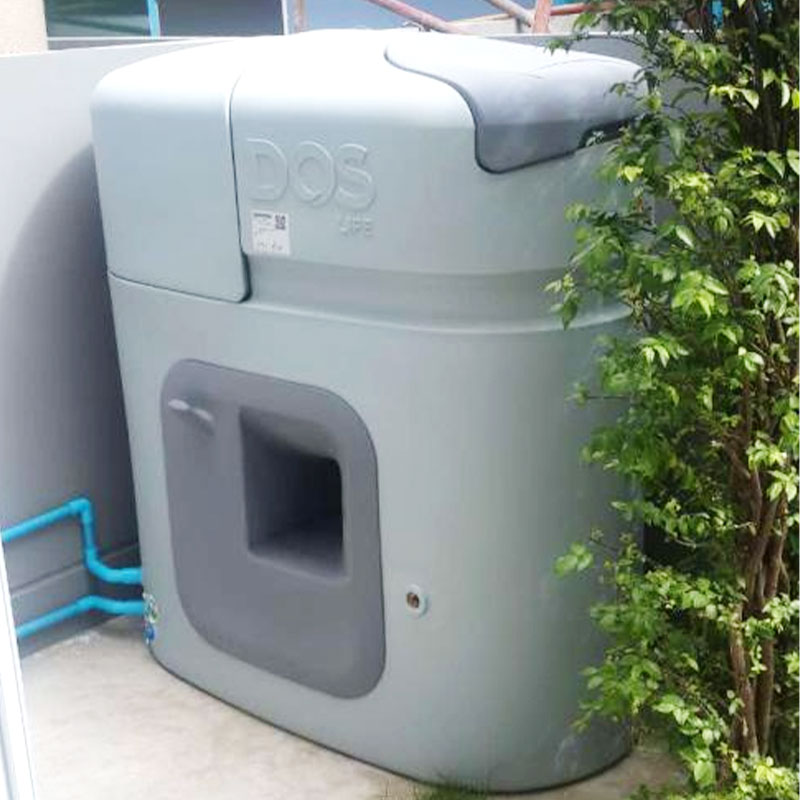 Rotational Mold for Large Seamless Water Storage TanksThis mold produces seamless, one-piece plastic containers with consistent wall thickness, ideal for agricultural and industrial water storage. It supports various geometries and eliminates joints, reducing failure points and finishing work.View Product →
Materials and Process Control
The largest share of rotationally molded parts uses polyethylene, particularly LLDPE and HDPE. PE delivers strong chemical resistance, UV stability, and low-temperature impact strength. PVC plastisols are used for flexible small-body products, nylon serves fuel-bearing components, and polypropylene handles higher-temperature environments. Selecting the right resin influences both wall thickness distribution and the likelihood of sink marks.
A polymer with a high melt flow index flows easily but may demand faster rotation to avoid pooling. A low-MFI resin needs a longer heating window, which forces the process engineer to adjust oven temperature and time in parallel. Modern shops rely on automated data logging for repeatability, tracking oven temperature (typically 250 to 350°C), oven time, rotation speed, and cooling profile on every batch.
| Material | Key Advantages | Typical Applications |
|---|---|---|
| LLDPE | Impact strength, stress cracking resistance | Water tanks, buoys, playground equipment |
| HDPE | Stiffness, chemical resistance | Fuel tanks, industrial containers |
| PP | Heat and chemical resistance | Automotive parts, appliance housings |
Advantages and Limitations
Rotational molding produces seamless, stress-free parts with uniform walls in the 2 to 25 mm range. Tooling costs are considerably lower than injection molding because the mold is never subjected to high internal pressure. Design freedom is excellent: bosses, ribs, threads, and inserts can be molded in place, which cuts down on secondary work.
On the other hand, the material menu is narrower than what injection molding offers. Cycle times are long, often 20 to 60 minutes, which is why the process is best suited to small-to-medium production quantities. Wall thickness can also shift by up to 5 percent when mold and process variables are not optimized. Addressing these constraints during the design phase prevents expensive iteration loops once production starts.
Innovation, Quality, and Applications
Rotational molding technologies have evolved rapidly. High-velocity forced-air ovens now provide precise temperature zoning, and servomotor-driven rotation allows infinitely adjustable axis ratios. CNC machining cuts cooling channels directly into the mold backside, shrinking cycle time by as much as 20 percent. These advancements improve both mold life and the consistency of every part produced.
A quality-driven supplier should carry ISO 9001:2015 for quality management, ISO 14001:2015 for environmental management, and ISO 45001:2015 for occupational health and safety. Those certifications verify that the facility follows strict, controlled manufacturing procedures rather than ad-hoc methods.
Applications span several industries. Hydrogen storage and transport rely on rotationally molded liners and protective housings that can handle pressure cycles without cracking. See hydrogen gas cylinder rotational molding molds for a direct view of this tooling category. The same technology supports automotive components such as fuel tanks, where polyethylene offers weight reduction and corrosion resistance compared with stamped steel. Explore automobile fuel tank molds when evaluating a manufacturing partner who can serve that segment. Agricultural machinery, water treatment equipment, and outdoor furniture also depend on rotational molding thanks to its inherent weathering resistance and structural integrity.
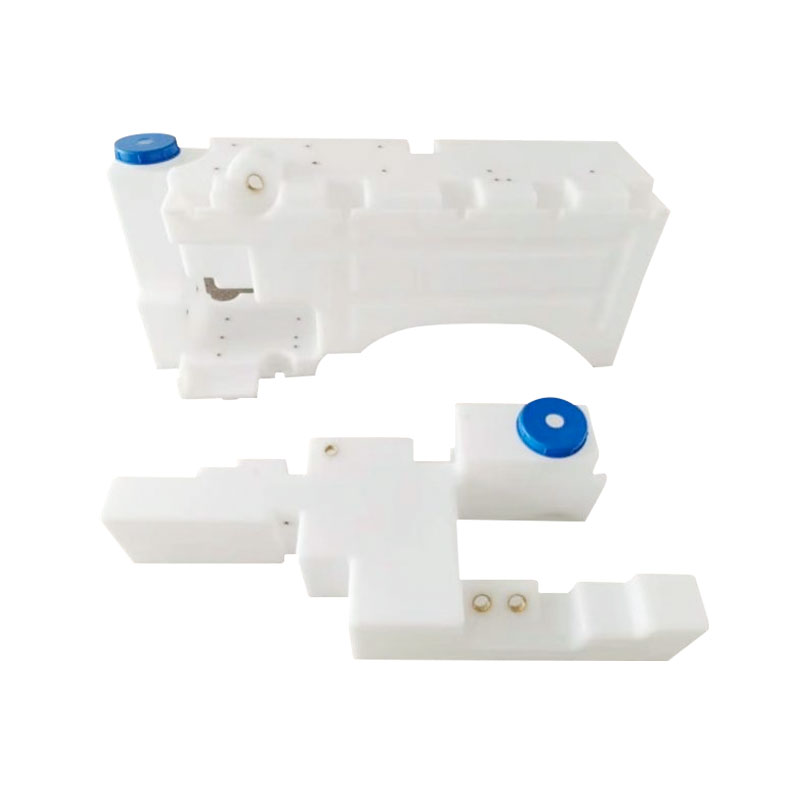 Rotational Mold for Automotive Fuel TanksThis mold enables one-piece, seamless fuel tanks that fit complex vehicle chassis shapes. Compared to metal, it reduces weight by up to half, improves safety, and enhances fuel economy.View Product →
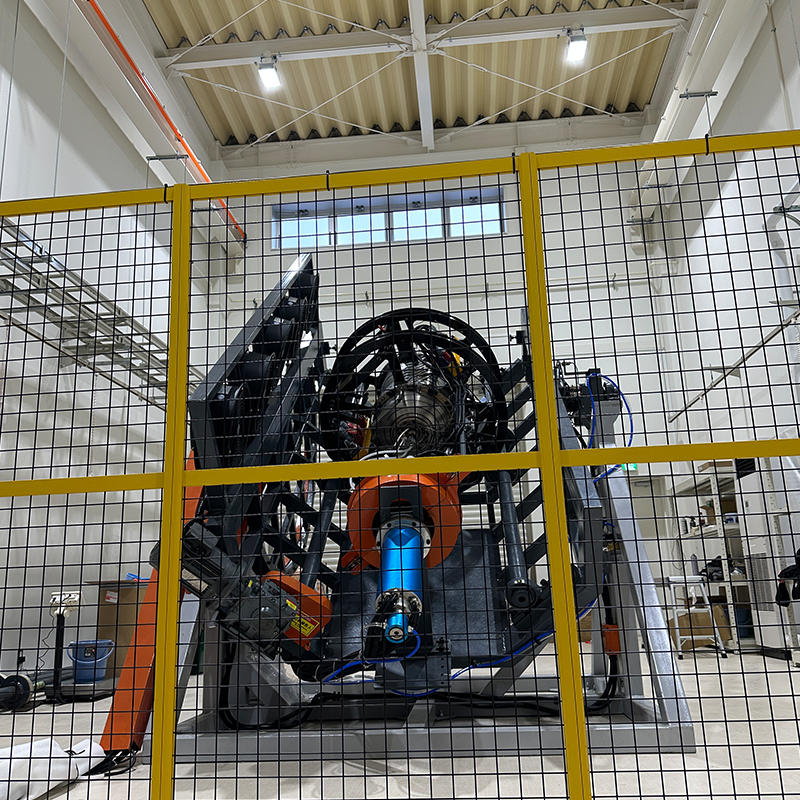 Precision Rotational Mold for Hydrogen Gas CylindersDesigned for hydrogen storage applications, this mold ensures uniform wall thickness and dimensional accuracy in hollow plastic cylinders. It suits medium to large scale production where safety and repeatability are critical.View Product →
Frequently Asked Questions
Q1: What products are made using rotational molding?
Water tanks, fuel tanks, kayaks, playground equipment, navigation buoys, furniture, and industrial containers are representative examples. The technology is especially valuable for large hollow products where uniform wall thickness is difficult to achieve through pressure-based molding.
Q2: How does rotational molding compare to injection molding?
Injection molding is faster and more cost-efficient for high-volume, small parts. Rotational molding offers significantly lower tooling costs, stress-free parts, and the ability to manufacture oversized or complex hollow shapes that injection molding cannot produce economically.
Q3: What should buyers consider before choosing a supplier?
Evaluate mold-making capacity, CNC machining capability, in-house testing, and certifications such as ISO 9001. Ask for wall-thickness consistency data, surface finish expectations, and delivery lead times before comparing quotes.
Choosing a Rotational Molding Partner
Before you commit to a supplier, focused due diligence on mold engineering and production execution will save significant money and time. Ask whether the supplier designs molds in-house with full CNC capability. Confirm whether they can produce both the mold and the finished part under one roof, because a single accountable source reduces communication errors and shortens time to market.
Look for a team with proven experience in complex projects, as the company profile illustrates. The right partner should also be willing to co-develop a custom solution instead of pushing a standardized product. When a supplier controls the entire chain—mold geometry, material selection, and rotation parameters—you gain better repeatability, faster technical support, and a more predictable result across production batches.

We provide customers with one-stop services ranging from product design, mold manufacturing to finished product production.
-
 +86-18006248936
 -
 ricky.t@zhroto.com
 -
 No.9 Jiangyuan Road, Luotang Street, Jiangyan District, Taizhou City,Jiangsu Province, China
Copyright © Jiangsu Zhroto Mould Co., Ltd. Rights Reserved.Custom Rotational Plastic Molding Factory
