 en
en 中文简体
中文简体 русский
 Español
 Deutsch
 Polskie
 REQUEST A QUOTE

 Home / News / Industry News / Rotational Molding vs Blow Molding: Key Differences and How to Choose the Right Process
 Rotational Molding vs Blow Molding: Key Differences and How to Choose the Right Process
Content
- 1 Quick Comparison: Rotational Molding vs Blow Molding
- 2 How Each Process Works
- 3 Key Differences That Matter for Sourcing
- 4 When Rotational Molding Is the Better Choice
- 5 When Blow Molding Makes More Sense
- 6 How to Decide Between Rotational and Blow Molding
- 7 Frequently Asked Questions
- 8 Final Recommendation
When you need a hollow plastic part, the choice between rotational molding and blow molding comes down to three practical factors: production volume, wall thickness, and design complexity. This guide compares the two processes on those factors so you can decide with confidence.
Quick Comparison: Rotational Molding vs Blow Molding
Here is a high-level view of how the two processes stack up on the factors that matter most in a sourcing decision.
| Factor | Rotational Molding | Blow Molding |
|---|---|---|
| Cycle time | 30-90 minutes per part | Less than 1 minute per part |
| Tooling cost | Lower (cast aluminum molds) | Higher (steel molds) |
| Wall thickness | Uniform, 3-20 mm | Thinner, 0.5-3 mm |
| Part size | Excellent for large parts | Good for medium parts |
| Design flexibility | High, molded-in inserts | Limited, simple geometries |
| Material options | PE, PP, PVC, nylon | PE, PP, PET, PVC |
| Typical applications | Fuel tanks, water tanks, buoys | Bottles, containers, ducts |
| Production volume | Low to medium volumes | High volumes |
How Each Process Works
Rotational Molding: Low Pressure, Uniform Walls
Rotational molding starts by charging a hollow metal mold with powdered plastic. The mold is then heated while rotating on two perpendicular axes. As the plastic melts, it coats the interior walls of the mold evenly. After cooling, the mold is opened and the finished part is removed. Because the process runs at ambient pressure, the final part has very low internal stress and a uniform wall thickness.
Blow Molding: Fast Cycles, Air Pressure
Blow molding begins with an extruded tube of molten plastic called a parison. The parison is placed inside a mold, then compressed air is injected to expand it against the mold walls. The part cools quickly and is ejected. High pressure and fast cycle times make blow molding ideal for high-volume production of thin-walled hollow parts.
In terms of tooling, rotomolds are often cast aluminum with a relatively simple outer shell construction. Blow molds are usually machined steel with integrated cooling channels. That difference explains much of the cost gap you will encounter when quoting a new part.
Key Differences That Matter for Sourcing
Here are the differences that actually affect your cost, lead time, and part quality.
If you are comparing a small annual volume, rotomolding's lower tooling cost usually wins. But as production volume climbs, blow molding's faster cycle time swings the total cost in its favor. The break-even point is where the one-time mold cost is amortized by the per-part savings from shorter cycles.
A simple rule of thumb: under roughly 5,000-10,000 parts per year, rotational molding often costs less overall. Above that, blow molding tends to become more economical.
Residual stress is another differentiator. Rotomolded parts cool slowly and evenly, so they carry little built-in stress. Blow-molded parts cool quickly under pressure, which can create subtle stress concentrations, especially near pinch-off lines. For parts exposed to impact or outdoor weather, that difference is worth serious consideration.
When Rotational Molding Is the Better Choice
Choose rotational molding when your part is large, thick-walled, complex, or needed in lower quantities. The process shines when you need:
- Large hollow parts such as fuel tanks, water tanks, and storage containers
- Thick walls from 3 mm to 20 mm with uniform distribution
- Complex shapes with molded-in inserts, threaded fixtures, or undercuts
- Low internal stress, which improves impact resistance and long-term durability
- Low to medium production volumes without high tooling investment
Automotive fuel tanks are a classic rotomolding application because they require a seamless, impact-resistant container with a consistent wall thickness and no welds. Our mold solutions are designed to deliver uniform wall distribution and reliable sealing in demanding automotive environments.
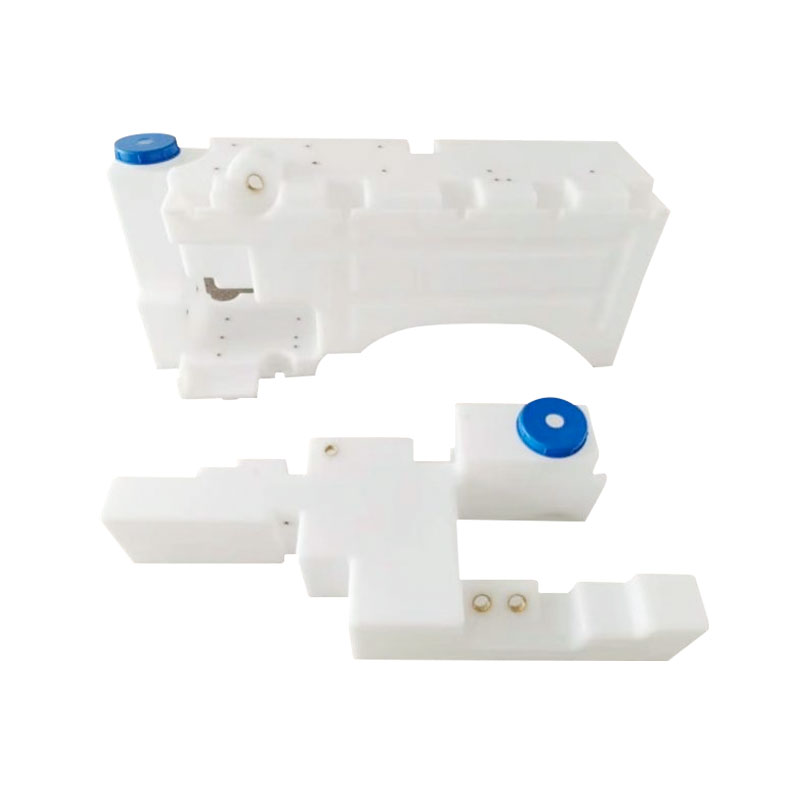 Automobile Fuel Tank Mold for Seamless Rotational MoldingThis mold enables one-piece automotive fuel tanks with uniform wall thickness and no welds. Its design maximizes capacity within chassis space, reduces weight versus metal, and improves fuel economy.View Product →
Large water tanks and storage containers are another strong fit. Rotomolding creates a single, seamless body with no welded seams, which is exactly what you need for reliable water containment.
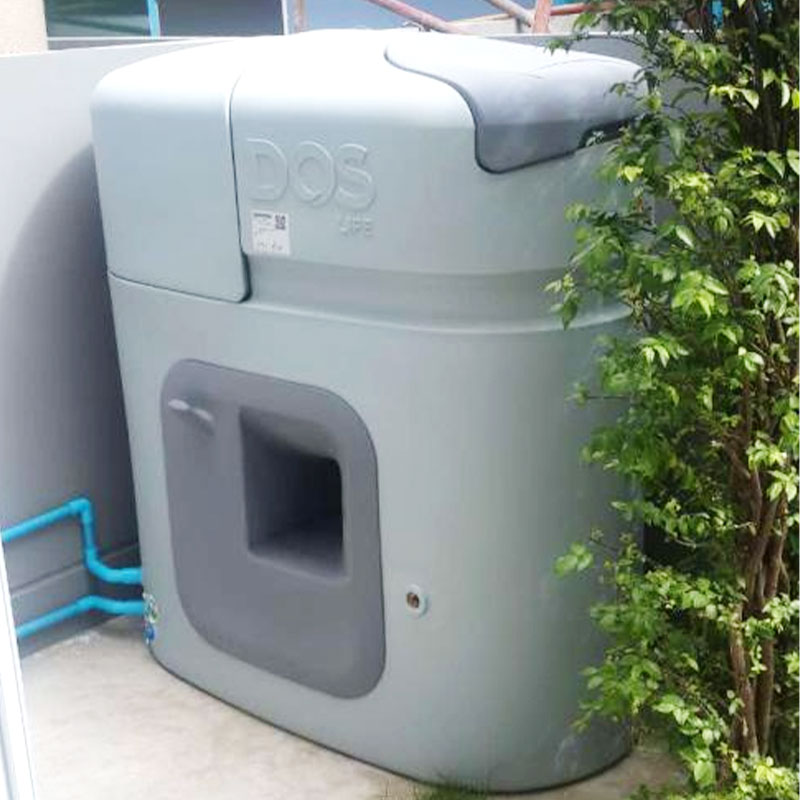 Water Tank Storage Container Mold for Large Seamless TanksThis mold produces large, seamless plastic storage tanks via rotational molding, ensuring consistent wall thickness and structural integrity for water containment in industrial, agricultural, and civil applications.View Product →
For a deeper look at how we design and build these molds, explore our rotomolding capabilities.
When Blow Molding Makes More Sense
Blow molding is often the better choice for high-volume, thin-walled parts where speed matters more than design freedom.
- Bottles, jars, and small containers for consumer goods
- Automotive ducts, fluid reservoirs, and small fuel tanks
- Transparent parts made from PET or other clear polymers
- High volumes above 10,000-20,000 parts per year
- Parts that need very thin walls (under 3 mm) and tight dimensional tolerances
The key trade-off is tooling investment. Blow molds are typically made of hardened steel and cost significantly more than cast aluminum rotomolds. But for long production runs, the shorter cycle time pays back that investment many times over.
How to Decide Between Rotational and Blow Molding
Walk through these questions to narrow down your process choice.
- What is your annual production volume? Under 5,000-10,000 units leans toward rotomolding; above that, consider blow molding.
- How thick should the wall be? Thick walls above 3 mm point to rotomolding; thin walls under 3 mm favor blow molding.
- Is the part very large or complex? Large geometries with inserts or undercuts favor rotomolding.
- Do you need transparent plastic? Blow molding supports clear materials; rotomolding typically uses opaque PE.
- What is your tooling budget? Lower budget and flexible design favor rotomolding.
Frequently Asked Questions
Q1: Is rotational molding stronger than blow molding?
Rotomolded parts generally have lower internal stress and more uniform wall thickness, which improves impact resistance and long-term durability. Blow-molded parts can also be strong, but they are more prone to stress concentration and pinch-off seams.
Q2: Which process is cheaper for my product?
For low to medium volumes, rotational molding is usually cheaper because tooling costs are lower. For very high volumes, blow molding wins on per-part cost because of its fast cycle time.
Q3: Can both processes produce the same product?
Some products, like kayaks and fuel tanks, can be made with either process. Rotational molding gives better wall thickness control and one-piece construction, while blow molding gives thinner walls and faster turnaround.
Q4: What materials are used in each process?
Rotational molding mostly uses polyethylene (PE) in powder form, along with some PP, PVC, and nylon. Blow molding uses HDPE, LDPE, PET, and other thermoplastics, including transparent grades.
Final Recommendation
The right process depends on your part geometry, material requirements, production volume, and tooling budget. If you are designing a large hollow part with thick walls or complex features in low to medium volumes, rotational molding is likely the smarter choice.
At Jiangsu ZHROTO Mould, we design and build rotational molding molds and manufacture finished rotomolded products. Our team brings deep experience across automotive fuel tanks, water tanks, hydrogen storage, and industrial equipment. Learn more about our manufacturing team and our ISO 9001, ISO 14001, and ISO 45001 quality certifications.

We provide customers with one-stop services ranging from product design, mold manufacturing to finished product production.
-
 +86-18006248936
 -
 ricky.t@zhroto.com
 -
 No.9 Jiangyuan Road, Luotang Street, Jiangyan District, Taizhou City,Jiangsu Province, China
Copyright © Jiangsu Zhroto Mould Co., Ltd. Rights Reserved.Custom Rotational Plastic Molding Factory
