 en
en 中文简体
中文简体 русский
 Español
 Deutsch
 Polskie
 REQUEST A QUOTE

 Home / News / Industry News / Rotational Molding Resin: How to Choose the Right Material for Your Parts and Mold
 Rotational Molding Resin: How to Choose the Right Material for Your Parts and Mold
Content
- 1 Why Resin Selection Comes Before Mold Design
- 2 Main Resin Families for Rotational Molding
- 3 How to Match Resin Properties to Your Application
- 4 What to Verify Before You Buy Rotational Molding Resin
- 5 The Mold Design Side: How Resin Choice Affects Tooling
- 6 Frequently Asked Questions About Rotational Molding Resin
- 6.0.1 Q1: What is the most common resin for rotational molding?
- 6.0.2 Q2: Can the same resin be used for water tanks and fuel tanks?
- 6.0.3 Q3: How does resin shrinkage affect mold dimensions?
- 6.0.4 Q4: Does resin choice affect whether the mold is aluminum or steel?
- 6.0.5 Q5: What is XLPE and when should I choose it?
When a buyer starts a rotational molding project, the first question is usually about mold price. The resin, however, is the real starting point. A 2,000-liter water tank and a 60-liter automotive fuel tank are both polyethylene parts, but the grades are not interchangeable. One must survive outdoor UV exposure and constant stress, while the other must pass strict fuel permeation limits. If you choose the resin after the mold is already designed, you are already behind.
Why Resin Selection Comes Before Mold Design
Conclusion up front: resin selection drives every technical parameter in the mold. Without the resin and its grade, no serious mold manufacturer can give an accurate quotation.
Shrink rate is the first issue. Linear low-density polyethylene (LLDPE) typically shrinks 2.0 to 2.5 percent, while high-density polyethylene (HDPE) can shrink 2.5 to 3.0 percent. Polypropylene (PP) sits closer to 1.5 to 2.0 percent. The mold cavity is machined to the finished part dimension plus the resin's shrink allowance. Design the tool for one resin and switch to another, and the part dimension shifts enough to fail a tolerance requirement on a sealed container.
Cooling behavior is the second issue. Polyethylene cools slowly, so the mold needs adequate venting and a clear path for heat to escape. Nylon (polyamide) requires a different heating profile and careful venting because it absorbs moisture from the air. The resin also sets the draft angle: PE generally works with 1.5 to 2 degrees of draft, while nylon may need up to 3 degrees.
The resin even influences the mold material. Aluminum molds are cost-effective for PE parts and transfer heat quickly. Steel molds handle abrasive or highly filled resins better and last longer for very high production runs. If you are still aligning your resin choice with process control for part quality, lock down the material first.
Main Resin Families for Rotational Molding
Polyethylene dominates rotational molding. It accounts for the vast majority of rotomolded parts because it balances impact strength, chemical resistance, and cost. Within the PE family, grade differences matter significantly. The table below compares the resin families you will encounter most often.
| Resin Family | Density (g/cm³) | Key Characteristics | Common Applications | Shrinkage |
|---|---|---|---|---|
| LLDPE | 0.910-0.925 | Excellent impact and ESCR | Water tanks, kayaks, toys | 2.0-2.5% |
| HDPE | 0.926-0.945 | Higher rigidity and strength | Fuel tanks, industrial parts | 2.5-3.0% |
| XLPE | about 0.930 | Superior creep and heat resistance | Chemical tanks, fuel tanks | 1.8-2.5% |
| PP | 0.900-0.910 | Stiffness at elevated temperature | Agricultural machinery parts | 1.5-2.0% |
| PA (Nylon) | 1.13-1.15 | High strength and abrasion resistance | Wear components, under-hood parts | 1.0-1.5% |
While PE is the default for most projects, the material must still fit the service environment. A part exposed to hot water, aggressive chemicals, or repeated impact at low temperatures needs a different grade than a simple storage container.
How to Match Resin Properties to Your Application
Matching the resin to the application is a practical exercise. You need to know the operating temperature, the chemical exposure, the expected impact events, and the service life. Here are the most common pairings.
LLDPE for Storage Tanks and Containers
Large water tanks and chemical storage containers are almost always best served by LLDPE. The material's environmental stress crack resistance (ESCR) is what keeps a 2,000-liter tank from cracking around the fitting area over years of cyclic loading. A typical LLDPE for this application has a density around 0.935 g/cm³ and a melt flow index in the range of 3 to 5. The mold must be built with a generous draft angle and a smooth interior to ensure reliable demolding of a large, one-piece part.
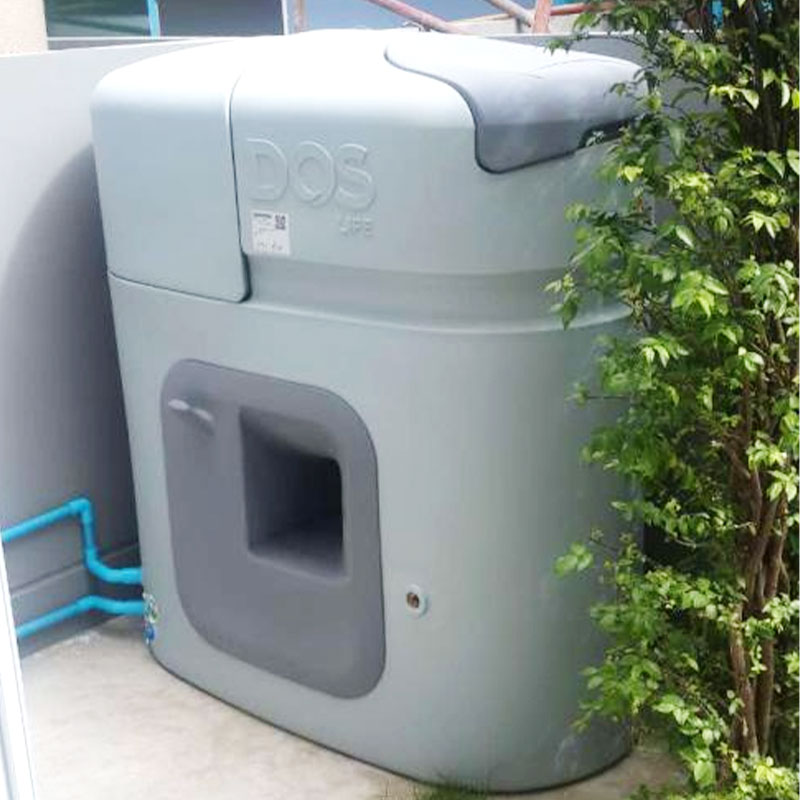 Rotational Mold for Large Water Storage ContainersThis mold enables seamless one-piece production of large tanks with uniform wall thickness, ideal for water and chemical storage in industrial and agricultural settings.View Product →
HDPE and XLPE for Automotive Fuel Tanks
Fuel tanks demand resin with high impact strength and low fuel permeation. High-density polyethylene is the standard choice for automotive fuel tanks, while crosslinked polyethylene (XLPE) offers even better creep resistance at elevated temperatures and is common for heavy-duty vehicles. One specification that matters here is permeation compliance with CARB or EPA standards. The mold design for a fuel tank billows out from the center and must account for a carefully controlled wall thickness, usually 3 to 5 mm, so the resin flows evenly and the part passes vapor emission tests.
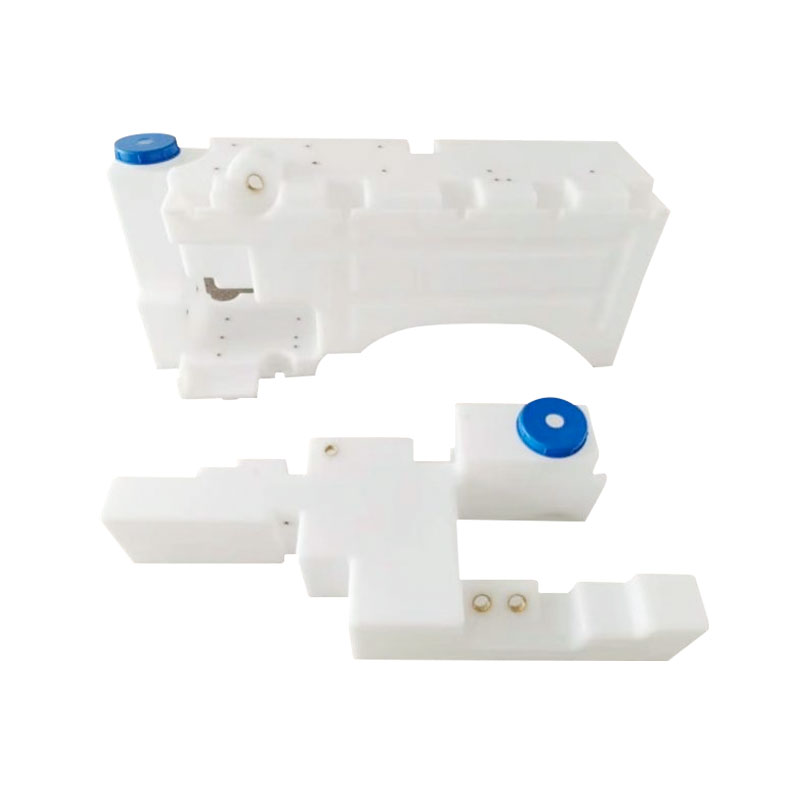 Automotive Fuel Tank Rotational MoldDesigned for one-piece fuel tanks, this mold produces complex shapes that fit vehicle chassis, reducing weight and improving fuel economy while meeting emission standards.View Product →
Polypropylene for Agricultural Machinery
Agricultural equipment parts often contact hot water, pesticides, or fertilizer solutions, which makes polypropylene a strong candidate. PP provides higher stiffness and better heat resistance than PE, but its low-temperature impact strength is weaker. A part expected to be dropped in cold weather may need an impact-modified PP grade or a switch to HDPE with an elastomer modifier. In the mold, PP typically requires less shrinkage allowance than HDPE but calls for careful gating and venting to avoid warpage on thin-walled sections.
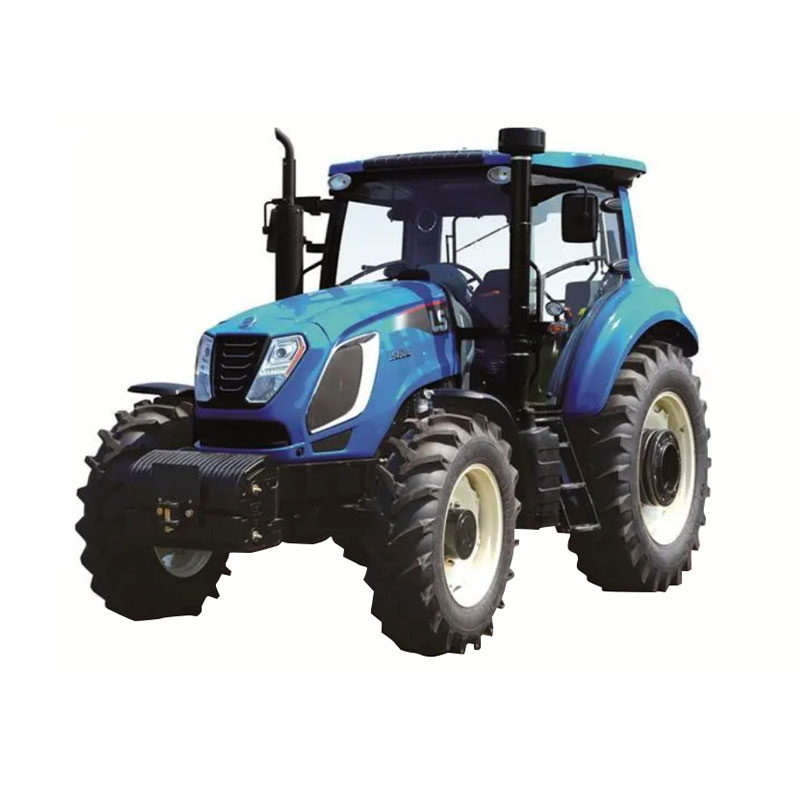 Agricultural Machinery Parts Rotational MoldThis mold creates durable, stress-free parts for agricultural equipment, ensuring long service life even in demanding field conditions with rapid product changeovers.View Product →
Nylon for Wear and Pull Forces
Nylon is the right choice when a part must resist repeated abrasion, receive threaded inserts, or hold its shape at elevated temperature. It requires a mold designed for higher processing temperature and precise moisture control, because nylon absorbs moisture from the air. For the right application, a nylon part offers durability that PE cannot match.
What to Verify Before You Buy Rotational Molding Resin
A resin data sheet is a starting point, not a guarantee. Buyers should ask for test records and verify the following items before committing a production material.
- Melt flow index (MFI) range: confirm it matches the wall thickness of your part. Thin walls need a higher MFI to flow into tight sections.
- Density: higher density gives stiffness and lower permeability, but it reduces impact strength. Your application must balance these two.
- Environmental stress crack resistance (ESCR): request the ASTM D1693 result and compare it with your part's service conditions.
- UV stabilization: for outdoor parts, check the UV package and ask for weathering data, not just a carbon black or HALS additive number.
- Food contact approval: if the part touches food or drinking water, confirm FDA 21 CFR 177.1520 or EU 10/2011 compliance.
- Permeation compliance: for fuel tanks, ask whether the resin meets CARB or EPA standards for whole-tank vapor emission.
- Powder quality: request particle size distribution and bulk density data. Inconsistent powder leads to air bubbles and weak fusion.
The Mold Design Side: How Resin Choice Affects Tooling
Resin choice changes the mold in practical ways. When a mold manufacturer receives the resin specification at the same time as the part drawing, the tooling can be designed correctly in one pass. The main alignment points follow.
Shrink allowance is the dimension correction. You must give the exact resin grade to the mold designer. As noted earlier, LLDPE, HDPE, PP, and nylon all have different shrinkage ranges. The mold cavity is machined with a shrink factor applied to every dimension, so a missing grade can turn a precise tool into scrap parts.
Draft angle and pull direction are the next items. A resin with a lower shrink rate can release with less draft, but the surface finish and the ejection system still need to match the material's behavior. For a rough outdoor product, 2 degrees of draft may be enough; for a smooth aesthetic product, the mold may need a polish and a slightly larger draft to avoid drag marks.
Cooling and venting are also resin-dependent. PE requires even cooling across the part to avoid warpage. Nylon needs effective venting because it releases gases during heating. If the mold loses heat too slowly, cycle time grows and part cost rises. The rotomolding process is a series of trade-offs, and the resin grade is the anchor for all of them.
Frequently Asked Questions About Rotational Molding Resin
Q1: What is the most common resin for rotational molding?
Polyethylene is the most common family. Linear low-density polyethylene (LLDPE) is used for the majority of rotomolded parts, from water tanks and containers to toys and recreational equipment. High-density polyethylene (HDPE) follows closely for applications that need higher stiffness and strength.
Q2: Can the same resin be used for water tanks and fuel tanks?
No. A water tank needs high environmental stress crack resistance and UV stability, but it does not need low permeation. A fuel tank must pass CARB or EPA permeation standards, so it requires a resin grade modified for that specific performance. The resin supplier should specify the grade, and the mold design must follow.
Q3: How does resin shrinkage affect mold dimensions?
Shrinkage is the amount the polymer contracts after it solidifies and cools. The mold cavity is machined larger than the final part dimension by the shrink percentage. For example, if the part length is 500 mm and the resin shrinks 2.5 percent, the cavity length is designed to about 512.5 mm to hit the target dimension after cooling.
Q4: Does resin choice affect whether the mold is aluminum or steel?
Yes. Aluminum molds transfer heat faster and are more economical for PE parts. Steel molds are preferred for high-volume production with abrasive or highly filled resins, because they resist wear and mechanical stress better over time.
Q5: What is XLPE and when should I choose it?
XLPE is crosslinked polyethylene. The molecular structure is joined into a three-dimensional network, which gives higher creep resistance, superior impact strength, and better performance at elevated temperatures. It is often used for fuel tanks, large chemical containers, and structural parts that face sustained loads.
Resin selection is not just a material specification. It is the input that decides whether your mold can be built correctly, your cycle time is acceptable, and your part performs at the rigors of its service life. A mold manufacturer that understands both the resin and the tooling side can save you from expensive rework.
At Jiangsu ZHROTO Mould Co., Ltd., our team supports clients from the resin decision through mold design and rotational molding production. Our 18,000-square-meter plant includes over 12,000 square meters of standardized workshop space, with capacity for more than 800 molds and 3,600 tons of plastic products per year. If you are working on a water tank, fuel tank, agricultural machinery part, or any other rotomolded product, share the resin you have in mind and we will help validate the mold design before you commit to tooling.

We provide customers with one-stop services ranging from product design, mold manufacturing to finished product production.
-
 +86-18006248936
 -
 ricky.t@zhroto.com
 -
 No.9 Jiangyuan Road, Luotang Street, Jiangyan District, Taizhou City,Jiangsu Province, China
Copyright © Jiangsu Zhroto Mould Co., Ltd. Rights Reserved.Custom Rotational Plastic Molding Factory
