
 en
en 中文简体
中文简体 русский
 Español
 Deutsch
 Polskie
 REQUEST A QUOTE


What sanitation standards apply to environmentally friendly mobile toilet mold
Mobile sanitation facilities must satisfy more than basic structural requirements. They need to support hygienic use, routine cleaning, odor control, drainage, durability, and safe operation in environments where permanent public infrastructure is unavailable. For this reason, environmentally friendly mobile toilet mold design must consider sanitation requirements from the earliest engineering stage. The same principle applies to portable restroom tooling, where mold geometry directly influences the cleanliness, strength, and maintainability of the finished enclosure. A well-designed mold also supports eco-friendly sanitation manufacturing by enabling efficient material use and durable products, while public washroom plastic mold solutions can be adapted for parks, scenic areas, construction sites, exhibitions, and other temporary-use environments.
Rotationally Molded Mobile Toilet Enclosures
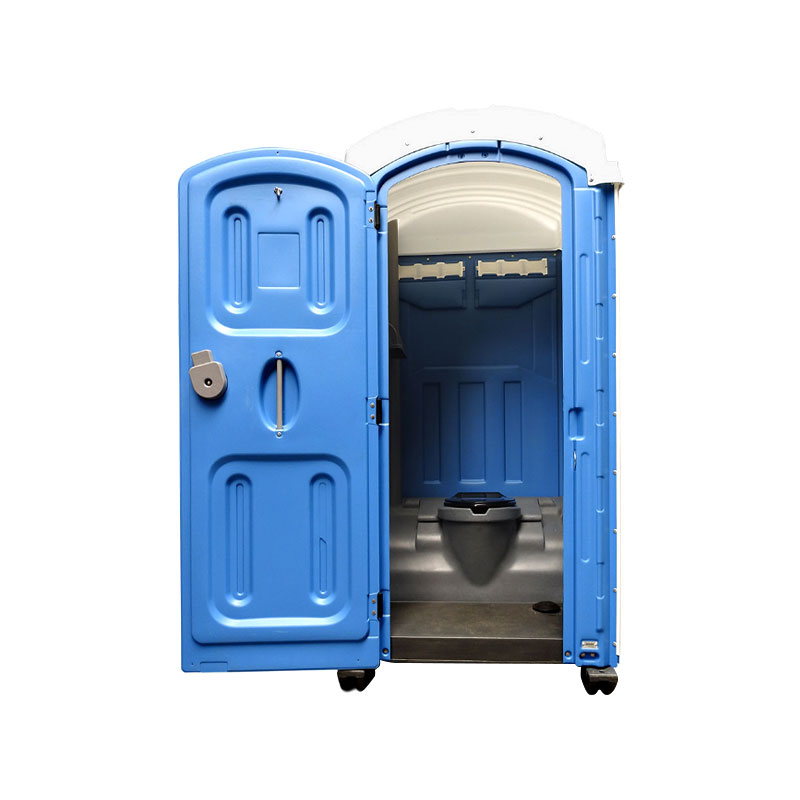
The first major category is the rotationally molded toilet enclosure. This type of product forms the exterior shell, roof, doors, wall sections, and related structural components of a self-contained mobile sanitation unit. Its primary sanitation objective is to create a durable enclosure with surfaces that can be cleaned repeatedly without excessive deterioration. Therefore, environmentally friendly mobile toilet mold tooling should provide controlled wall formation, smooth transitions, suitable corner radii, and sufficient structural reinforcement. These features reduce locations where dirt and cleaning residue can accumulate.
A rotational molding process is particularly suitable for large hollow plastic structures because it can produce seamless or highly integrated components without relying on numerous mechanical joints. For portable restroom tooling, this characteristic is valuable because fewer exposed joints can simplify routine washing and inspection. The finished enclosure must also withstand outdoor exposure, repeated handling, temperature changes, and contact with common sanitation chemicals. Mold designers therefore need to balance draft requirements, demolding performance, surface finish, and dimensional stability. Custom colors can also be incorporated to distinguish facilities according to location, procurement requirements, or operational purpose.
Typical applications include temporary public toilets at parks, tourist destinations, outdoor events, construction projects, and exhibition grounds. Compared with smaller internal sanitation components, enclosure tooling places greater emphasis on large curved surfaces and overall rigidity. eco-friendly sanitation manufacturing in this category is not limited to material selection; it also involves extending product service life and reducing premature replacement. Jiangsu Zhroto Mould Co., Ltd. has extensive experience in large-scale rotational mold machining and can develop complex curved surfaces through CAD engineering and CNC manufacturing. Its production capabilities support both conventional gas-heated and electric-heated rotational molding equipment.
- Large hollow structures can be manufactured with integrated strength and controlled wall formation.
- Smoothly designed surfaces support washing, inspection, and routine sanitation.
- Customized dimensions and colors can accommodate different public-use requirements.
- Durable plastic construction can reduce replacement frequency in demanding outdoor environments.
Portable Restroom Components and Hygiene-Focused Tooling
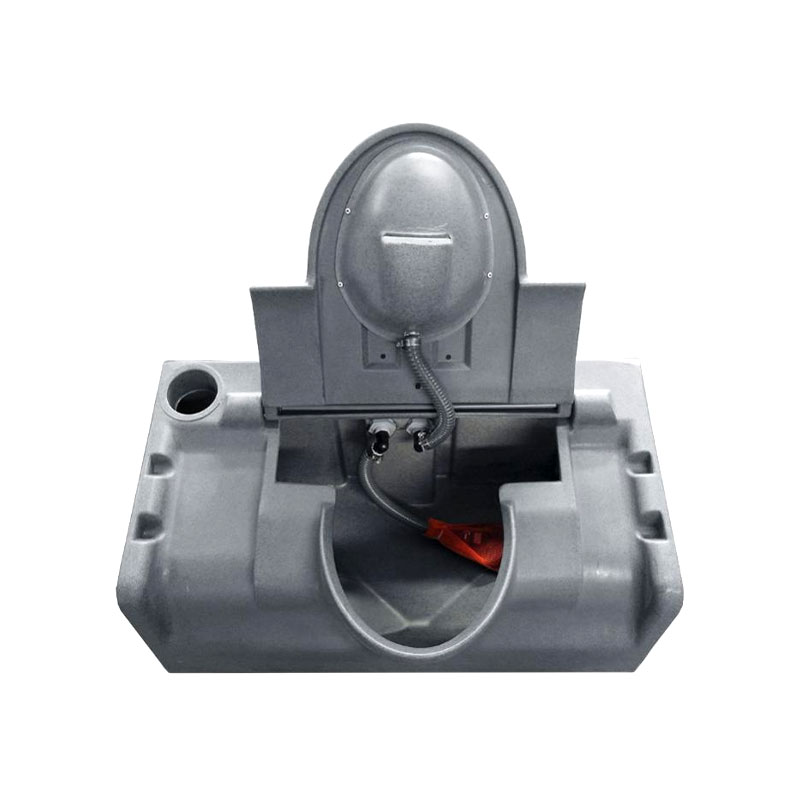
The second category consists of supporting components used inside or around portable sanitation units. These may include tank covers, service panels, protective housings, storage structures, and other molded parts that contribute to the complete sanitation system. Unlike the main enclosure, these components generally require greater attention to interfaces, accessibility, drainage-related geometry, and maintenance. A successful public washroom plastic mold must therefore account for how individual components interact with cleaning procedures and service operations.
Sanitation-oriented tooling should avoid unnecessary recesses and difficult-to-reach pockets wherever possible. Surfaces should be designed to facilitate washing and inspection, while edges and connections should provide sufficient durability for repeated assembly and maintenance. For portable restroom tooling, dimensional consistency is particularly important because covers, panels, and housings may need to align with other components. Rotational molding offers flexibility for producing different shapes without requiring highly complicated tooling structures, making it appropriate for customized portable sanitation products.
This category is useful in locations where toilets must be rapidly installed, serviced, relocated, or replaced. Construction sites may prioritize impact resistance, while parks and scenic areas may emphasize appearance and long-term outdoor durability. Event organizers may require standardized dimensions and colors for temporary facilities. environmentally friendly mobile toilet mold solutions can address these differences through modular design thinking and controlled customization rather than creating an entirely new production concept for every application. Jiangsu Zhroto Mould Co., Ltd. provides project consultation, product structure optimization, 3D modeling, mold confirmation, CNC manufacturing, sample validation, and production technical support, allowing component requirements to be evaluated as part of the complete sanitation system.
- Review the sanitation environment, product dimensions, cleaning method, and expected frequency of use.
- Optimize wall structures, openings, corners, interfaces, and demolding features for rotational molding.
- Develop detailed CAD models and confirm the tooling structure before manufacturing.
- Perform mold trials and sample validation to check dimensions, appearance, and functional performance.
- Provide production guidance and maintenance recommendations after mold acceptance.
Eco-Oriented Outdoor Sanitation Mold Solutions
The third category focuses on environmentally conscious mobile sanitation products intended for repeated outdoor deployment. These systems are not defined only by the use of recyclable or lower-impact materials. Environmental performance also depends on product durability, manufacturing efficiency, energy management, repairability, and the ability to maintain sanitation facilities over a long operating period. Consequently, eco-friendly sanitation manufacturing should be considered as a complete production strategy rather than a single material decision.
For this category, environmentally friendly mobile toilet mold tooling should support stable production and consistent product quality while allowing practical customization. Rotational molding is useful because it accommodates large hollow products and complex geometries while avoiding some of the limitations associated with conventional multi-part fabrication. Properly engineered tooling can also support repeatable production, which helps manufacturers maintain consistent wall structures and reduce avoidable production defects. public washroom plastic mold designs can therefore contribute to environmental objectives through durable construction and efficient manufacturing processes.
ZHROTO has invested in electric-heated rotational molding capabilities since 2023. Compared with conventional gas-heated equipment, electric heating can provide more precise temperature control and independent heating zones, creating additional requirements for mold thermal performance. The company's stated capabilities include temperature control accuracy of approximately one to two degrees Celsius, thermal efficiency above 95 percent, and potential energy consumption reductions of 30 to 50 percent. These capabilities are particularly relevant when manufacturers seek better process management for environmentally oriented sanitation products.
| Product category | Primary focus | Typical applications | Main tooling advantage |
| Mobile toilet enclosure molds | Structural shell and hygiene | Parks, construction sites, scenic areas | Large hollow integrated structures |
| Portable restroom component molds | Interfaces and maintenance | Service panels, covers, housings | Flexible geometry and customization |
| Eco-oriented sanitation molds | Durability and production efficiency | Repeated outdoor public use | Process optimization and energy-conscious production |
Key Sanitation Considerations in Mold Engineering
Sanitation standards vary according to the destination market, facility type, local regulations, and applicable public health requirements. A mold itself is not normally a sanitation-certified product; rather, it enables production of components that must meet the specifications applicable to the completed toilet system. Manufacturers should therefore evaluate cleanability, material suitability, structural safety, drainage, ventilation, accessibility, and resistance to routine cleaning procedures during product development. portable restroom tooling should be engineered around these requirements instead of treating sanitation as an issue that begins only after molding.
For international projects, the engineering team should confirm the relevant national, regional, and municipal requirements before finalizing tooling. Documentation should clearly define the intended application, operating environment, materials, cleaning conditions, and quality inspection criteria. This approach allows public washroom plastic mold development to remain closely connected with the compliance needs of the final product.
How ZHROTO Supports Sanitary Mold Development
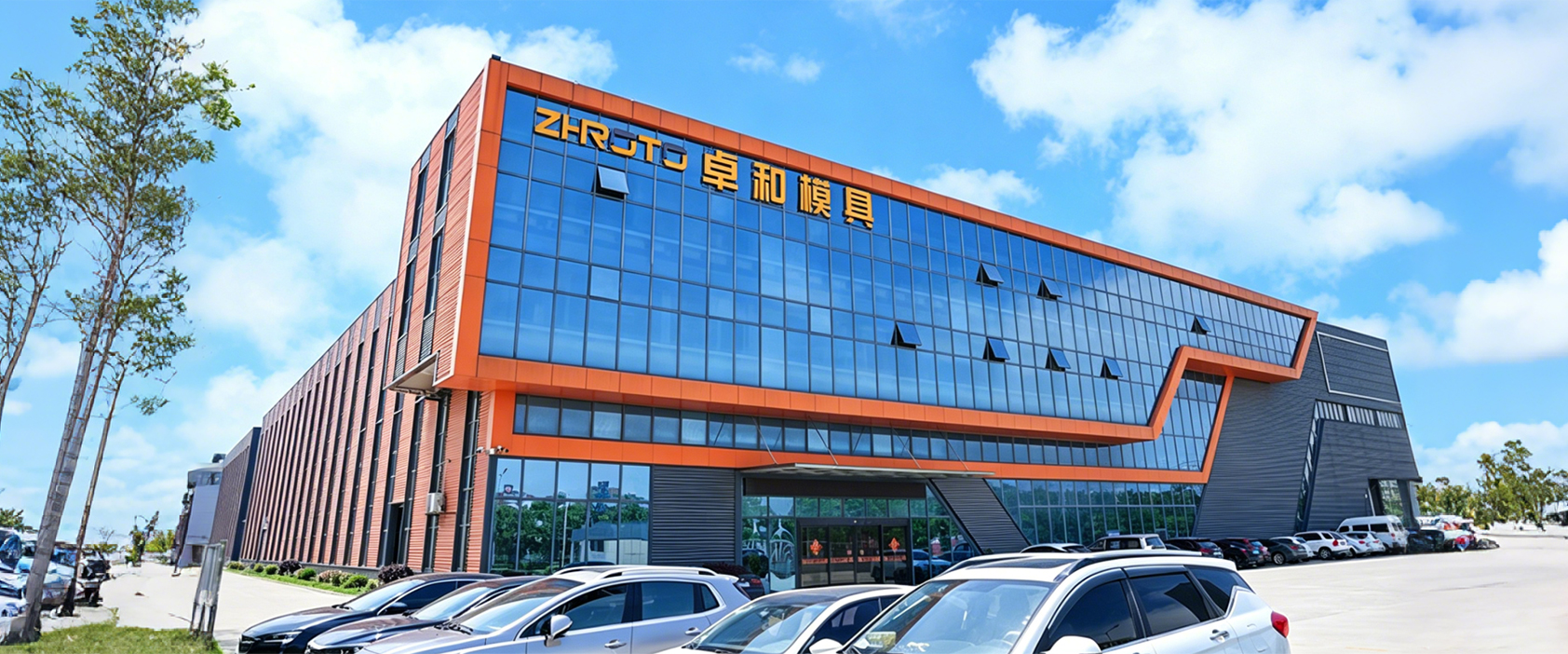
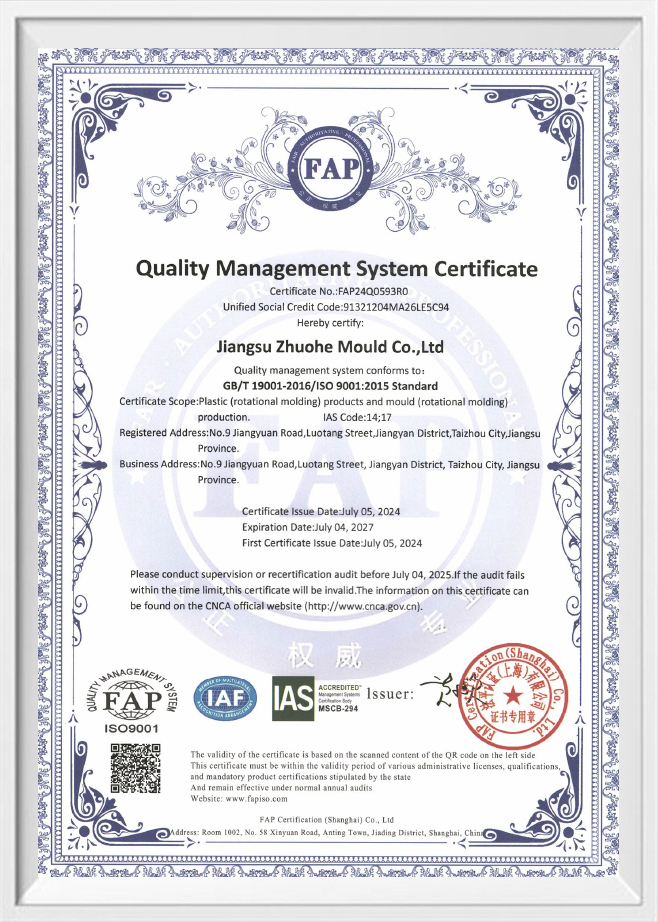
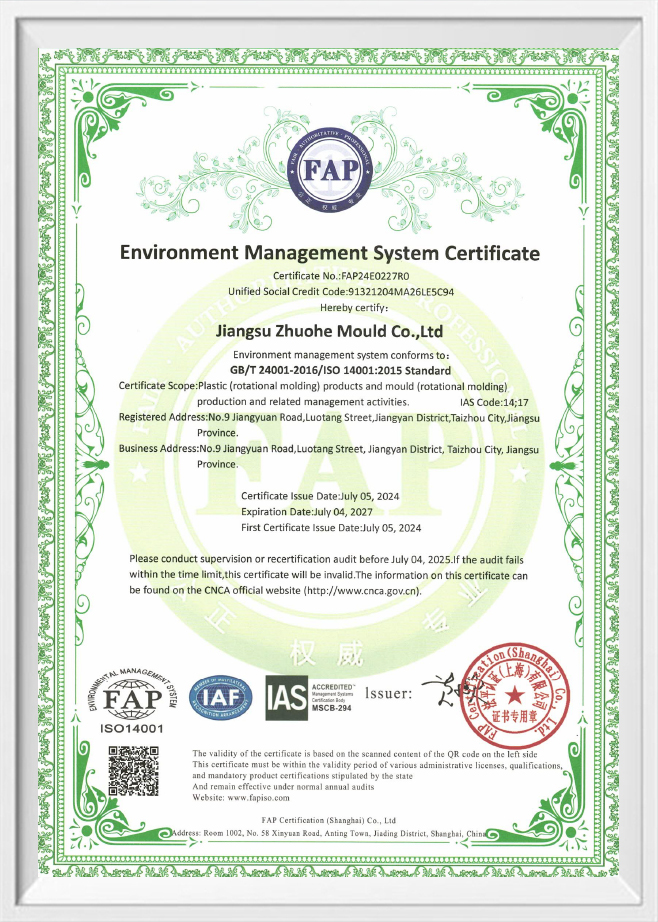
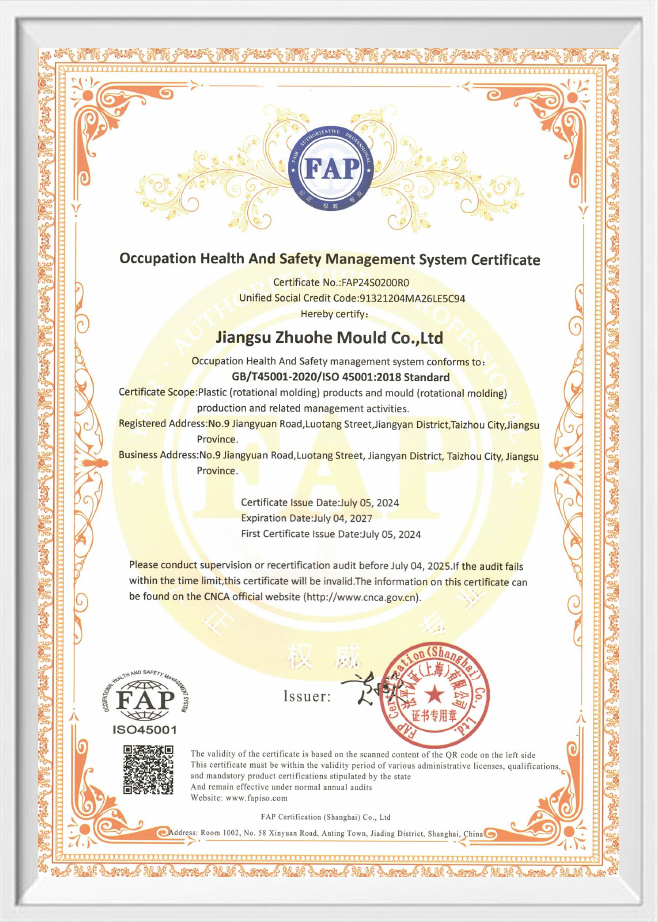
ZHROTO provides an integrated rotational molding solution covering concept evaluation, structural optimization, CAD development, tooling design, precision manufacturing, mold testing, sample validation, quality inspection, delivery, and technical support. Founded in 2015, the company operates a modern facility in Jiangyan District, Taizhou City, with a total land area of 18,000 square meters and standardized workshops exceeding 12,000 square meters. Its quality and environmental management systems are certified to ISO 9001:2015 and ISO 14001:2015, while ISO 45001:2015 supports occupational health and safety management.
With annual production exceeding 800 mold sets, Jiangsu Zhroto Mould Co., Ltd. serves multiple industries requiring large and durable rotationally molded products. For sanitation applications, its experience with tanks, containers, outdoor facilities, and complex hollow products provides a practical foundation for developing environmentally friendly mobile toilet mold solutions. The engineering workflow emphasizes manufacturability from the beginning, helping customers avoid structural features that could create unnecessary production or maintenance difficulties.
Why Integrated Engineering Matters
A sanitation mold should not be evaluated solely by its ability to reproduce a shape. The tooling must support stable production, reliable demolding, dimensional accuracy, surface quality, and long-term maintenance. ZHROTO's combination of product optimization, 3D engineering, CNC machining, mold trials, and production support allows these factors to be considered together. This integrated approach is particularly valuable when a customer has only a product concept or an early-stage drawing and needs assistance transforming it into a manufacturable rotationally molded sanitation product.
The company also supports both conventional gas-heated rotational molding machines and newer electric-heated systems. This equipment compatibility gives customers greater flexibility when selecting a production route. For projects emphasizing energy management and process stability, electric-heated tooling can be evaluated according to the machine's thermal requirements. For established high-volume operations, conventional tooling remains a practical option. In both cases, eco-friendly sanitation manufacturing depends on matching mold construction, product design, machine characteristics, and production controls.
Frequently Asked Questions
Q1: What sanitation requirements should an environmentally friendly mobile toilet mold support?
The mold should enable products with cleanable surfaces, durable structures, appropriate drainage-related geometry, chemical resistance, and consistent dimensions. The final sanitation unit must also comply with the regulations applicable to its destination and intended use.
Q2: Why is rotational molding suitable for portable restroom tooling?
Rotational molding is well suited to large hollow plastic structures and can accommodate integrated shapes, customized geometries, and durable wall structures. These characteristics make it practical for outdoor mobile toilets that require repeated cleaning and long-term service.
Q3: How does eco-friendly sanitation manufacturing relate to mold design?
Environmental performance involves more than material selection. Durable products, efficient processing, repeatable production, reduced defects, and appropriate energy management can all contribute to a more sustainable manufacturing strategy.
Q4: Can ZHROTO develop a customized public washroom plastic mold from drawings?
Yes. ZHROTO can review existing drawings or product concepts, optimize the structure for rotational molding, develop CAD models, manufacture the mold, conduct trial production, validate samples, and provide technical support through production.
Q5: Can these molds be used with electric-heated rotational molding machines?
Yes. ZHROTO has developed electric-heated rotational molding capabilities and can consider thermal management, zoned heating requirements, mold structure, and production conditions when developing tooling for electric-heated equipment.
In conclusion, sanitation standards should influence mobile toilet tooling from the initial product concept through mold validation and production support. A carefully engineered environmentally friendly mobile toilet mold can help manufacturers produce durable, hygienic, and adaptable sanitation units for demanding public and temporary environments. By combining rotational molding expertise, structured engineering procedures, quality management, and energy-conscious production options, manufacturers can develop sanitation products that are easier to maintain while supporting long-term operational and environmental objectives.
 +86-18006248936
  ricky.t@zhroto.com
  No.9 Jiangyuan Road, Luotang Street, Jiangyan District, Taizhou City,Jiangsu Province, China