
 en
en 中文简体
中文简体 русский
 Español
 Deutsch
 Polskie
 REQUEST A QUOTE


How ergonomics shape pet bathtub mold design
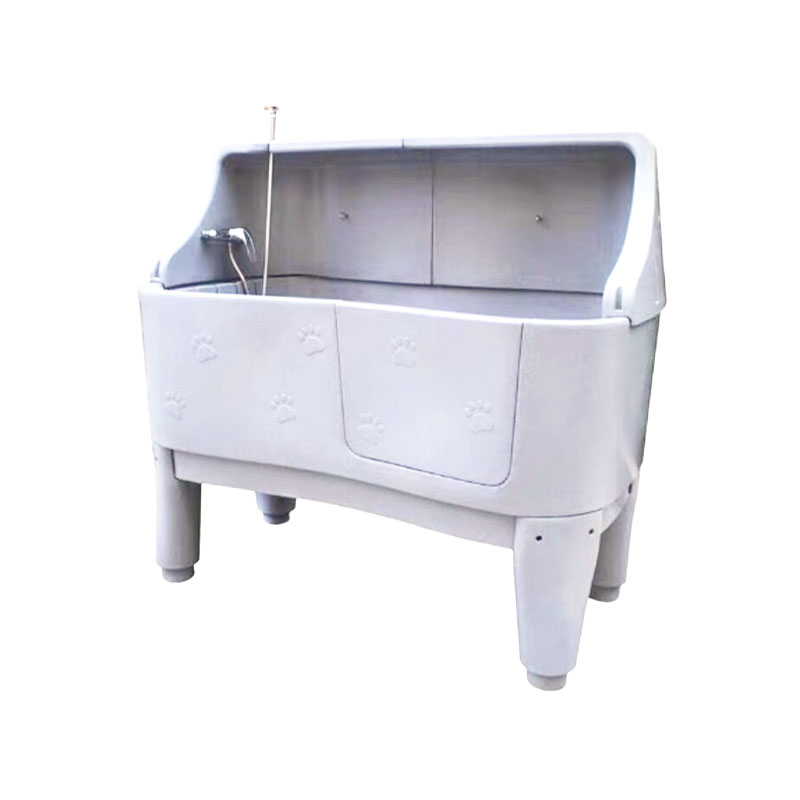
Ergonomics is a decisive factor in modern pet bathing equipment because a bathtub must accommodate the physical behavior of animals while also supporting the repetitive movements of professional groomers. A well-designed pet bathtub mold therefore does more than reproduce an attractive outer shell. It determines working height, internal contours, drainage position, operator access, animal stability, cleaning efficiency, and long-term structural performance. For manufacturers serving grooming salons, veterinary facilities, boarding centers, and commercial pet-care businesses, ergonomic mold engineering can directly influence product safety and operating efficiency.
Rotational molding is particularly suitable for this application because it can create large, hollow, seamless plastic structures with rounded transitions and consistent wall distribution. The mold can be engineered to eliminate unnecessary sharp edges or burrs while producing an integrated bathtub body. High-grade cast aluminum alloy provides the mold with structural stability and durability during repeated heating, rotation, and cooling cycles. The resulting bathtub can remain relatively lightweight while offering the strength needed for demanding commercial use.
Ergonomics also affects the entire manufacturing strategy. Dimensions, curvature, wall thickness, drainage features, access areas, and reinforcement structures should be considered during the mold-design stage rather than added after production begins. For applications requiring commercial dog wash station tooling, these decisions help create equipment that supports efficient washing without imposing unnecessary physical strain on operators.
1. Professional Grooming Bathtub Molds: Operator-Centered Ergonomics
Professional grooming bathtubs are designed for repeated daily use in environments where operators may wash several animals during a working shift. Their primary purpose is to provide a stable washing space while allowing groomers to reach the animal from different directions. In this category, pet bathtub mold design focuses strongly on working height, internal accessibility, rounded corners, drainage efficiency, and compatibility with common grooming procedures.
A rotationally molded bathtub can be formed as a seamless one-piece structure, reducing joints where water, shampoo residue, hair, and dirt could accumulate. Rounded internal corners make the tub easier to clean and reduce areas that can interfere with animal movement. Smooth surfaces are also useful when operators need to rinse the tub quickly between appointments. The absence of unnecessary protrusions improves both animal safety and cleaning efficiency.
The ergonomic relationship between the bathtub and the operator is equally important. A working surface that is too low can increase bending, while an excessively high structure may make it difficult to lift or control larger animals. Mold dimensions should therefore be developed around the intended installation environment and the typical size range of animals. Drainage openings should also be positioned so that water can leave efficiently without creating obstacles for the animal.
Compared with simpler household bathing products, professional grooming molds generally require greater attention to structural durability and workflow. The bathtub must tolerate repeated exposure to water, detergents, shampoos, conditioners, and mechanical cleaning. Rotomolded polyethylene provides useful corrosion resistance against many common cleaning agents, while the seamless construction supports long-term hygiene management.
- Rounded internal geometry improves animal comfort and simplifies cleaning.
- Appropriate working height reduces repetitive bending and awkward operator movements.
- Integrated drainage areas support faster washing and rinsing procedures.
- Seamless construction reduces potential contamination points.
For these products, commercial dog wash station tooling requires a balance between animal containment and unrestricted operator access. Zhroto Mould can support this process through product application evaluation, structural optimization, CAD modeling, mold confirmation, precision CNC manufacturing, trial validation, and production support.
2. Veterinary and Rehabilitation Bathtub Molds: Safety-Oriented Design
Veterinary bathing and rehabilitation environments introduce different ergonomic priorities. Animals may be nervous, injured, elderly, or physically restricted, meaning the bathtub must offer predictable movement and secure positioning. veterinary equipment molding therefore places greater emphasis on gentle transitions, accessible working zones, stable support structures, and easy sanitation.
A properly engineered rotational mold can create smooth interior surfaces without abrupt steps that could catch an animal's paws. Curved sidewalls can help guide movement without creating uncomfortable pressure points. The mold may also incorporate locations for drainage fittings, support accessories, or other functional components, provided that these features are carefully integrated into the overall structure.
Material selection is another important consideration. The bathtub body should withstand repeated exposure to water and cleaning agents while maintaining dimensional stability during regular use. Rotomolded plastic provides a useful combination of low weight, durability, and corrosion resistance. Compared with heavier traditional structures, a lightweight bathtub can be easier to install, relocate, or maintain while placing less load on supporting floors.
Ergonomics in veterinary applications also includes sanitation. Smooth and continuous surfaces help reduce places where hair and residue can remain after washing. The mold designer must therefore consider draft, corner transitions, drainage geometry, and accessibility during the earliest design stages. These details can make the final product easier for staff to disinfect and prepare for the next animal.
Compared with general grooming bathtub molds, veterinary-oriented designs typically prioritize controlled access and safety over decorative styling. veterinary equipment molding can also involve more detailed structural analysis because the finished product may need to support animals of different sizes while allowing veterinary personnel to work around them.
Key Ergonomic Considerations
- Define the animal size range and intended clinical or rehabilitation application.
- Optimize interior curvature to reduce sharp transitions and uncomfortable contact areas.
- Position drainage and accessory interfaces according to the intended workflow.
- Review operator reach, cleaning access, and installation requirements.
- Validate the mold through trial production and inspect dimensional accuracy before final delivery.
Zhroto Mould has established a complete rotational molding development workflow covering project consultation, product design optimization, 3D engineering, mold manufacturing, material recommendations, sample validation, quality inspection, delivery, and ongoing technical support. This integrated approach is particularly valuable when ergonomic requirements need to be incorporated into a complex hollow plastic structure.
3. Heavy-Duty Commercial Wash Molds: Durability and Workflow Efficiency
Heavy-duty commercial wash products are intended for facilities where high usage frequency makes durability a major design requirement. These systems must accommodate repeated loading, frequent washing, intensive cleaning, and continuous operator movement. In this category, pet grooming plastic parts production is closely connected with mold durability because the quality of the mold directly influences dimensional consistency and the repeatability of finished components.
The ergonomic objective is not simply to make the bathtub comfortable. It is to improve the complete workflow. Operators should be able to guide an animal into the tub, perform washing and rinsing, remove the animal, drain the water, and clean the workstation without unnecessary interruptions. A rotationally molded body can integrate functional contours into a single structure, reducing assembly complexity and helping manufacturers achieve a clean external appearance.
The use of high-grade cast aluminum alloy for the mold supports repeated production cycles and complex curved surfaces. Aluminum tooling can also facilitate efficient heat transfer during rotational molding, which is particularly relevant when manufacturers need consistent material distribution throughout large hollow products. Proper process control helps produce walls with stable thickness and minimizes quality variation between production batches.
Zhroto Mould has extensive experience in large-scale mold machining and complex curved-surface manufacturing. Its capabilities cover both conventional gas-heated rotomolding equipment and electric-heated rotational molding systems. Since 2023, the company has invested in electric-heating technology, which enables more precise temperature control, independent heating zones, and improved process management. These capabilities create additional opportunities for optimizing molds where thermal behavior is an important part of product quality.
For heavy-duty commercial applications, pet grooming plastic parts production should be considered together with mold maintenance and technical support. Regular inspection of mold surfaces, parting areas, fastening components, and functional inserts can help maintain production stability. The objective is not only to manufacture a durable bathtub but also to establish a repeatable manufacturing system.
| Product category | Primary ergonomic focus | Main application | Key mold advantage |
| Professional grooming bathtub | Operator access and cleaning efficiency | Pet salons and grooming centers | Seamless, rounded, easy-clean construction |
| Veterinary bathtub | Animal safety and controlled handling | Veterinary and rehabilitation facilities | Smooth transitions and adaptable geometry |
| Heavy-duty commercial wash bathtub | Workflow efficiency and durability | High-volume pet-care operations | Durable tooling and repeatable production |
How Mold Engineering Converts Ergonomic Ideas into Products
Ergonomic design must be translated into manufacturable geometry. A designer may identify the ideal working height or interior contour, but the mold must reproduce those features consistently during every production cycle. This is why pet bathtub mold engineering should begin with a clear understanding of the final product's use environment, installation conditions, animal dimensions, cleaning routine, and production volume.
The rotational molding process allows plastic material to move across the internal surface of a mold during heating and rotation. This characteristic makes it possible to manufacture large seamless products with complex curves and hollow sections. However, the geometry still needs to be compatible with material flow, demolding, heating, cooling, and inspection requirements. Good mold design balances ergonomic goals with production practicality.
ZHROTO provides an integrated engineering path from initial product concept to finished tooling. Customers can begin with an idea, existing drawings, or a new product development project. Engineers evaluate dimensions, structures, applications, and production requirements before optimizing the design for rotational molding. Detailed CAD models are then developed, followed by mold manufacturing, testing, sample validation, and quality inspection.
Important Design Features
- Rounded corners and smooth transitions for safer animal interaction.
- Stable wall geometry for reliable structural performance.
- Integrated drainage provisions that support efficient water removal.
- Accessible surfaces that simplify cleaning and routine maintenance.
- Suitable mold construction for repeated thermal cycling.
- Adaptable dimensions for customized commercial and veterinary applications.
A major advantage of this approach is that ergonomic improvements can be incorporated before tooling investment is finalized. Instead of correcting uncomfortable or inefficient features after production starts, manufacturers can evaluate the complete product structure during the engineering stage. This reduces design risk and helps ensure that the finished bathtub meets practical requirements as well as aesthetic expectations.
Material, Thermal Performance, and Long-Term Reliability
Mold material and manufacturing precision influence the quality of every finished bathtub. High-grade cast aluminum alloy offers the structural stability required for repeated rotational molding cycles while supporting the production of curved and detailed surfaces. Proper mold construction also contributes to consistent heating behavior and reliable replication of the intended product geometry.
The finished bathtub benefits from the characteristics of rotomolded polyethylene. Its corrosion-resistant behavior makes it suitable for environments where shampoos, conditioners, detergents, and water are frequently present. The relatively low weight of a hollow molded structure also supports easier handling and can reduce the load imposed on supporting floors. These characteristics are valuable for both fixed commercial installations and facilities that require occasional equipment relocation.
For manufacturers considering commercial dog wash station tooling, thermal process compatibility is increasingly important. Conventional gas-heated machines remain widely applicable, while electric-heated rotational molding can offer more precise temperature control and independent heating zones. Zhroto Mould develops tooling compatible with both approaches and can provide process recommendations based on the intended production system.
Integrated Solutions for Custom Pet Watercraft and Care Equipment
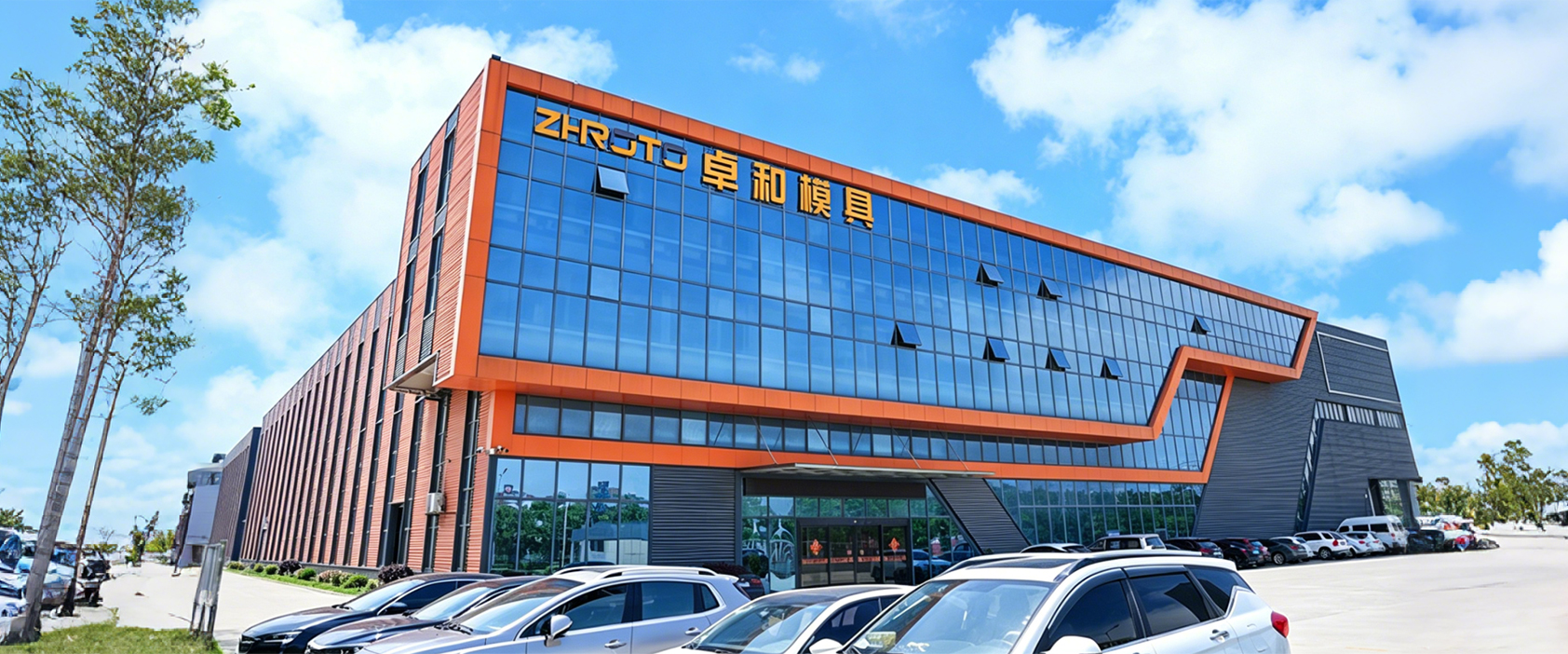
Founded in 2015, Jiangsu Zhroto Mould Co., Ltd. specializes in rotational molding mold design, rotomolded product processing, and integrated technical solutions. Its modern factory in Jiangyan District, Taizhou City covers 18,000 square meters, including more than 12,000 square meters of standardized production workshops. The company has an annual output exceeding 800 sets of molds and serves multiple industrial sectors.
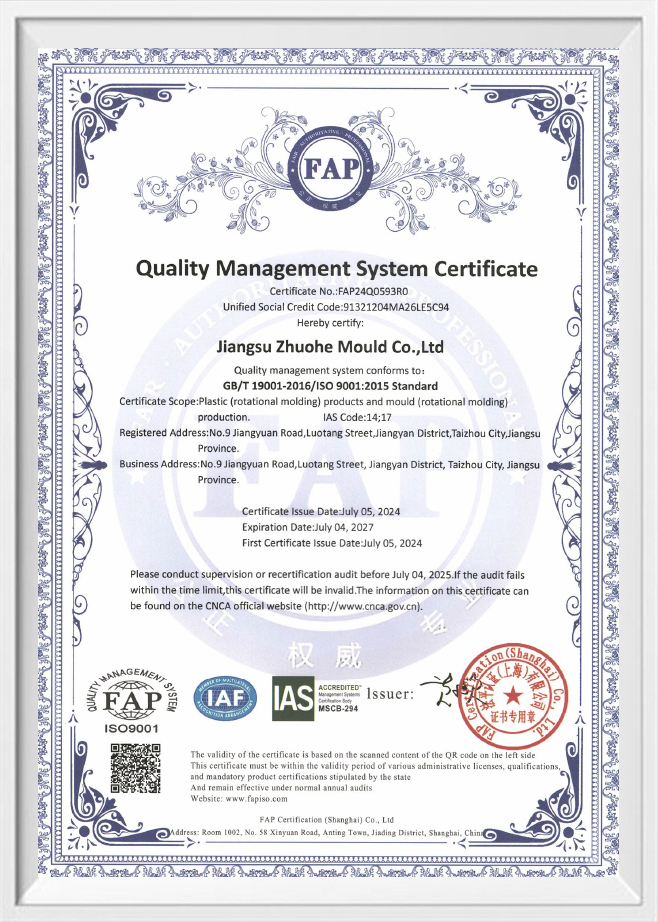
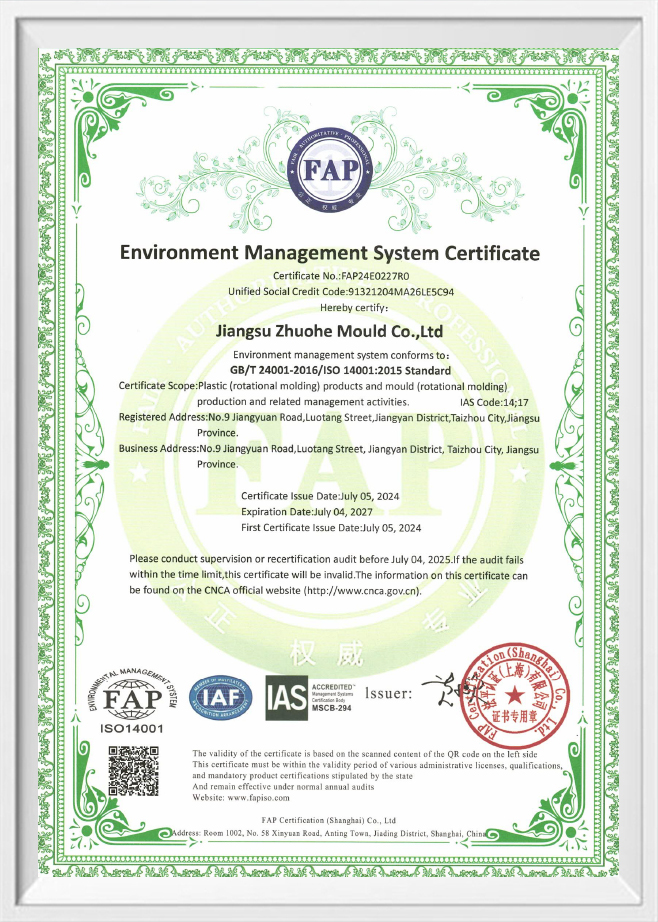
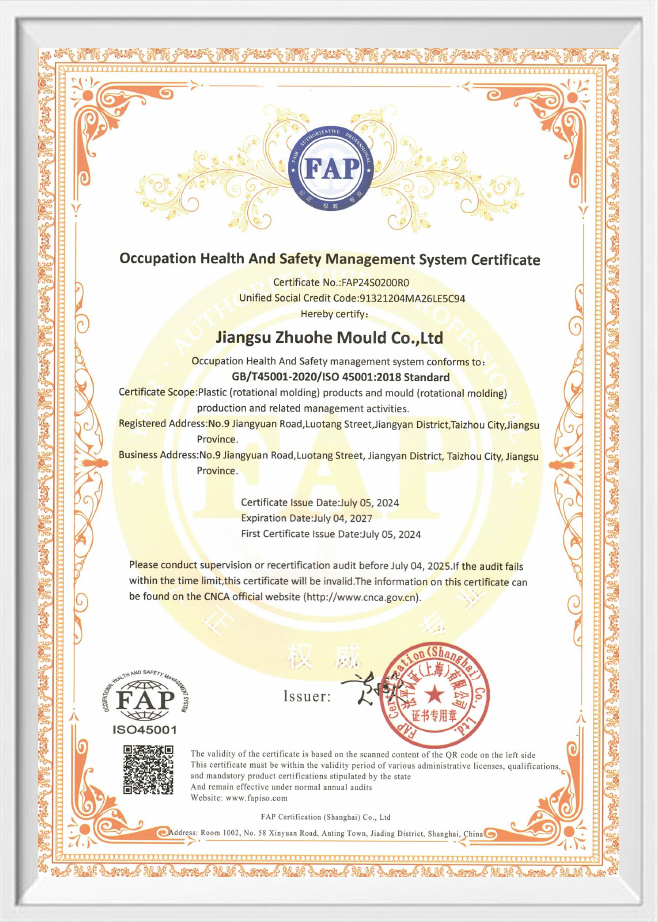
Although pet-care products represent a specialized application, the engineering principles required for their manufacture are closely related to the company's experience with tanks, containers, vehicle components, agricultural equipment, outdoor products, and other large hollow plastic structures. ISO 9001:2015, ISO 14001:2015, and ISO 45001:2015 certifications further support its quality, environmental, and occupational safety management systems.
For veterinary equipment molding and related pet-care products, an integrated supplier can provide advantages throughout the development cycle. Product evaluation, structural optimization, 3D modeling, precision CNC machining, mold trials, sample inspection, delivery, and production support can be coordinated through one technical workflow. This helps reduce communication gaps between product design and tooling manufacturing.
The company's mold solutions can also accommodate both conventional and electric-heated rotational molding equipment. Electric-heated systems provide improved temperature management and zoned heating capabilities, while conventional gas-heated machines offer broad compatibility and established production performance. Selecting the appropriate mold and heating approach depends on product dimensions, material requirements, production volume, and the desired level of process control.
Frequently Asked Questions
Q1: Why is ergonomics important in a pet bathtub mold?
Ergonomics affects animal safety, operator posture, access, cleaning efficiency, drainage, and overall workflow. A properly designed mold can reproduce smooth curves, rounded corners, appropriate working dimensions, and integrated functional features in a durable seamless structure.
Q2: How does commercial dog wash station tooling differ from a household bathtub mold?
Commercial tooling generally requires greater durability, easier cleaning, stronger structural performance, and better adaptation to repeated daily operation. It should be designed around professional workflow rather than occasional household use.
Q3: Can veterinary equipment molding be customized for different animal sizes?
Yes. Rotational molding tooling can be developed around different dimensions, internal contours, drainage arrangements, and installation requirements. Product requirements should be evaluated before mold design begins so that the geometry remains both ergonomic and manufacturable.
Q4: What advantages does rotational molding provide for pet bathtub production?
Rotational molding can produce seamless, hollow structures with rounded surfaces and relatively uniform wall distribution. The resulting bathtub can be lightweight, durable, corrosion resistant, and easier to clean, making the process suitable for demanding pet-care environments.
Q5: What services can Jiangsu Zhroto Mould Co., Ltd. provide for customized tooling?
The company can support projects from consultation and product optimization through 3D engineering, precision mold manufacturing, material and process recommendations, trial production, sample validation, quality inspection, delivery, production support, and mold maintenance advice.
Ultimately, ergonomic excellence begins before the first bathtub is molded. By integrating animal safety, operator comfort, cleaning requirements, material performance, thermal behavior, and production efficiency into the tooling stage, manufacturers can create pet bathing products that perform reliably in real working environments. A carefully engineered pet bathtub mold is therefore not merely a production tool; it is the foundation for a safer, more efficient, and more durable pet-care product.
 +86-18006248936
  ricky.t@zhroto.com
  No.9 Jiangyuan Road, Luotang Street, Jiangyan District, Taizhou City,Jiangsu Province, China