
 en
en 中文简体
中文简体 русский
 Español
 Deutsch
 Polskie
 REQUEST A QUOTE


Sustainable Materials Used in Environmentally Friendly Cleaning Mold
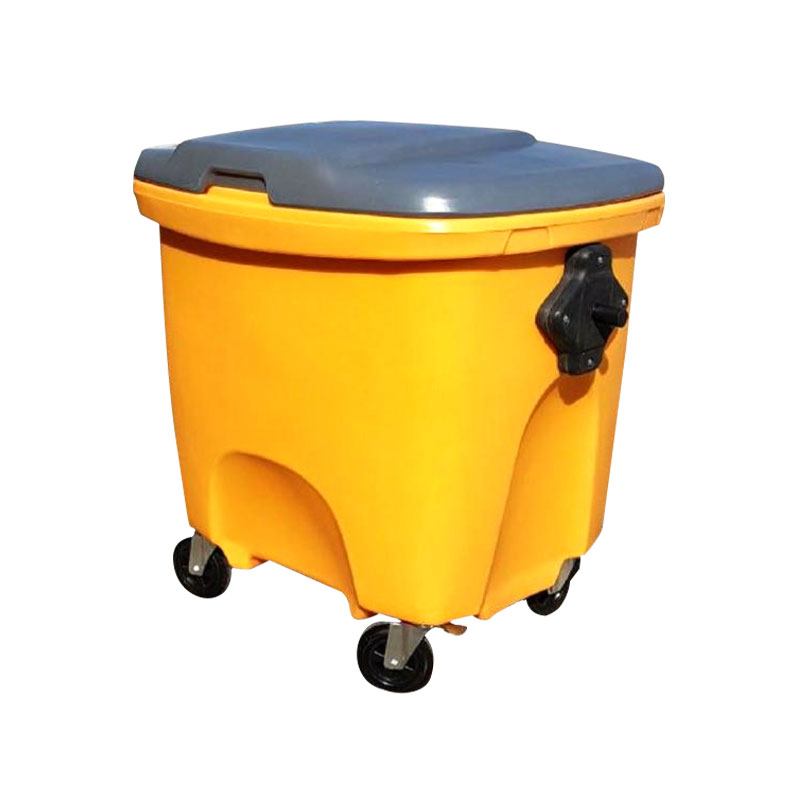
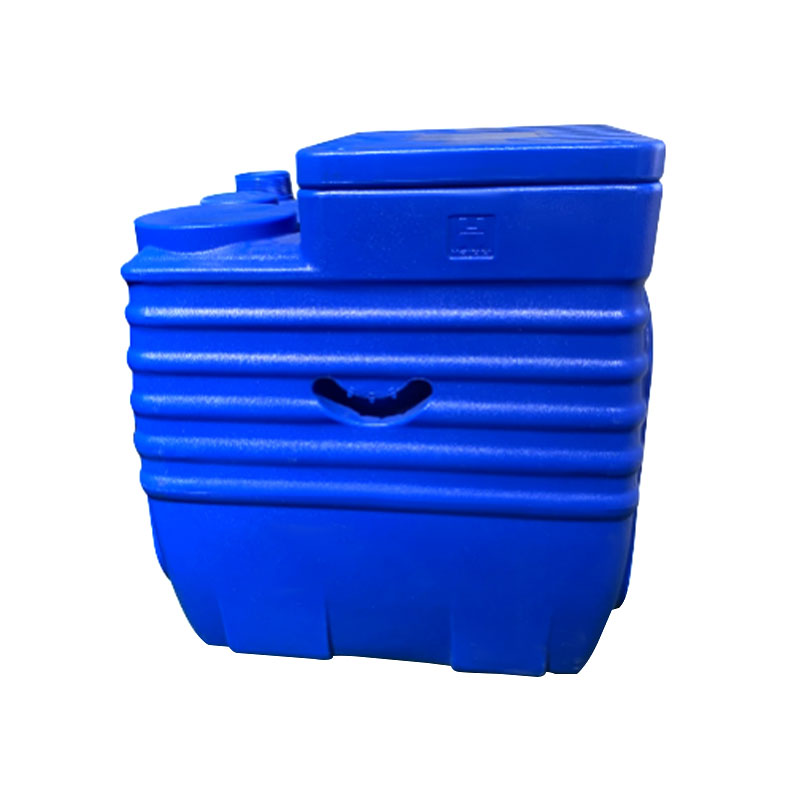
Sustainability has become an important consideration in the design and manufacture of modern cleaning equipment. Manufacturers increasingly require molds that support efficient production while reducing material waste, energy consumption, and unnecessary maintenance. An environmentally friendly cleaning mold addresses these requirements through durable mold construction, efficient rotational molding processes, and material choices designed for long service life. Rotational molding is particularly suitable for large, seamless, hollow cleaning equipment because plastic material is heated and distributed evenly across the mold surface while the mold rotates.
The development of green cleaning equipment tooling is not limited to selecting environmentally preferable materials. It also involves mold durability, thermal performance, manufacturability, repairability, and production efficiency. With suitable tooling, manufacturers can produce lightweight but strong cleaning equipment housings, tanks, containers, and other hollow components with consistent wall distribution. These characteristics make eco-friendly plastic manufacturing an increasingly practical approach for cleaning equipment producers seeking long-term production efficiency.
A major advantage of rotational molding is that the finished product can be manufactured as a seamless structure. This reduces the need for multiple assembled sections and can simplify downstream production. The use of sustainable rotomolding solutions therefore provides an integrated approach to material efficiency and product durability. For manufacturers evaluating mold construction, material selection should be considered together with heating technology, product geometry, expected production volume, and maintenance requirements.
1. Sand-Cast Aluminum Molds for Durable Cleaning Equipment
Sand-cast aluminum molds are an important solution for cleaning equipment that requires complex shapes, lightweight structures, and reliable dimensional consistency. In an environmentally friendly cleaning mold, aluminum provides a practical balance between strength, thermal responsiveness, and manufacturing flexibility. The sand-casting process can accommodate large and relatively complex mold geometries, making it suitable for rotationally molded cleaning tanks, equipment covers, collection containers, and other hollow components.
The basic function of this mold category is to provide a stable cavity in which plastic raw material can be heated and evenly distributed. As the mold rotates, molten plastic coats the interior surface and gradually cools into a seamless hollow component. This approach supports green cleaning equipment tooling because the final product can combine low weight with structural strength without relying on extensive mechanical assembly. Fewer joints may also simplify cleaning and maintenance of the finished equipment.
From a sustainability perspective, durable aluminum tooling can remain in production for an extended period when properly designed and maintained. Mold longevity helps reduce the frequency of tooling replacement and avoids unnecessary manufacturing resources. This supports eco-friendly plastic manufacturing by improving the useful life of the production system rather than focusing only on the environmental characteristics of the final plastic product.
- Suitable geometry: Large hollow cleaning equipment, tanks, covers, containers, and structural shells.
- Key advantage: Flexible mold construction combined with effective heat transfer during rotational molding.
- Sustainability value: Long-lasting tooling can reduce replacement frequency and support stable production.
These characteristics make sand-cast aluminum molds particularly appropriate when manufacturers need sustainable rotomolding solutions for customized cleaning equipment. The mold can be developed according to product dimensions, wall requirements, structural features, and production conditions rather than relying on a generic tooling configuration.
2. Conventional Gas-Heated Rotomolding Molds
Conventional gas-heated rotomolding molds remain widely used for producing large plastic cleaning components. This category focuses on compatibility with established gas-heated rotational molding machines and is valuable for manufacturers that prioritize broad equipment compatibility and proven production methods. A properly engineered environmentally friendly cleaning mold can support consistent heating and material distribution while maintaining the structural requirements of the finished product.
The main technical feature of this category is its ability to work with conventional heating systems across different production environments. The rotating mold distributes molten plastic over its interior surface, creating a seamless structure without conventional injection-molding parting constraints. This makes green cleaning equipment tooling appropriate for cleaning tanks, industrial cleaning containers, equipment housings, and other products where durability and low weight are important.
Compared with specialized electric-heated tooling, gas-heated molds provide a familiar production route and can be advantageous where existing equipment infrastructure is already established. However, sustainability should still be evaluated through overall production efficiency, mold life, material utilization, and process management. A durable mold that produces stable parts over many production cycles can contribute significantly to eco-friendly plastic manufacturing, even when the heating system itself is conventional.
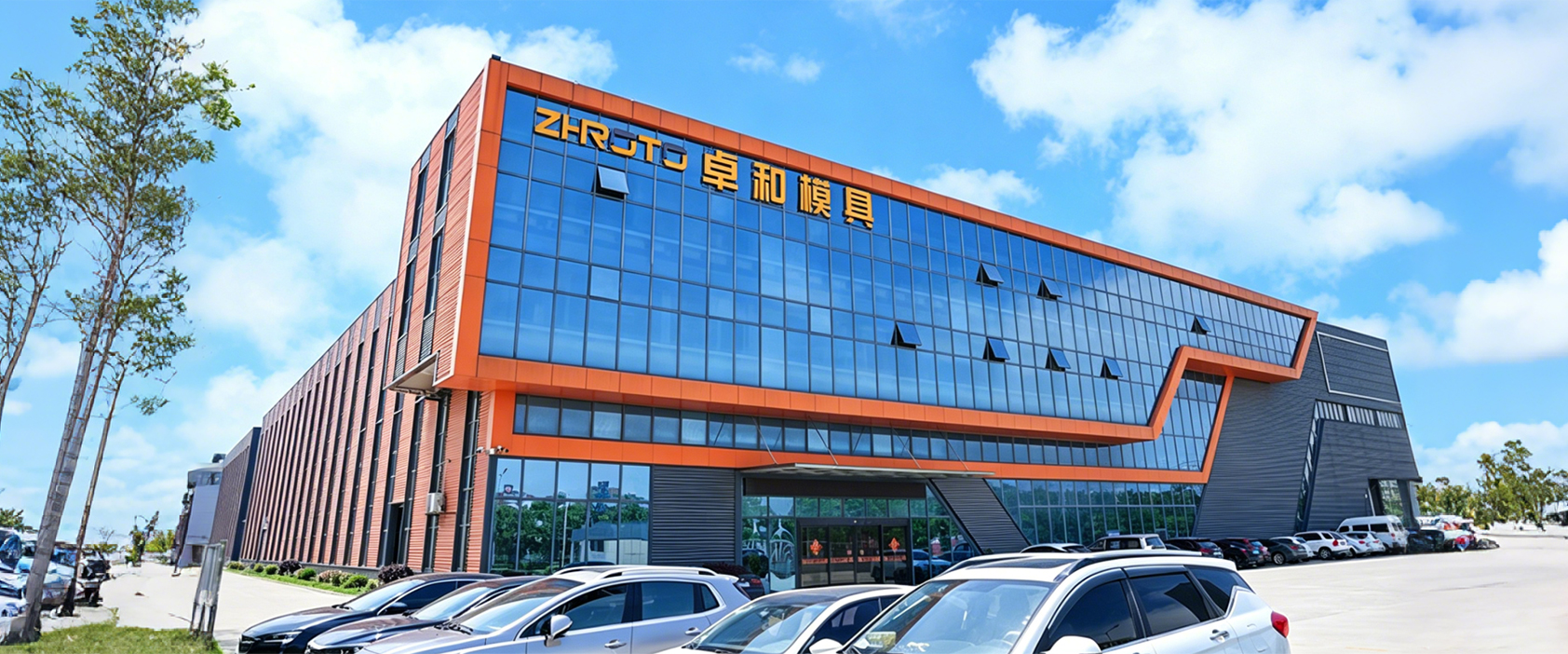
Jiangsu Zhroto Mould Co., Ltd. provides rotational molding molds designed for conventional gas-heated machines. Its engineering capabilities cover project evaluation, product structure optimization, CAD-based 3D modeling, mold manufacturing, testing, inspection, and production support. This integrated approach helps manufacturers develop sustainable rotomolding solutions according to their actual equipment and product requirements.
3. Electric-Heated Rotomolding Molds and Energy Efficiency
Electric-heated rotational molding represents a more advanced category for manufacturers seeking tighter process control and improved energy management. Since 2023, Jiangsu Zhroto Mould Co., Ltd. has invested in electric-heated rotational molding technology and associated manufacturing capabilities. In this environment, an environmentally friendly cleaning mold must be designed with greater attention to thermal conductivity, heating distribution, and product geometry.
Electric heating enables more precise temperature management and independent zoned heating. The company's stated technical capabilities include temperature control accuracy of approximately 1 to 2 degrees Celsius, thermal efficiency above 95 percent, and potential energy consumption reductions of 30 to 50 percent compared with conventional processes under suitable production conditions. These characteristics can strengthen green cleaning equipment tooling strategies when energy management is a major production objective.
The main difference between electric-heated and gas-heated tooling is therefore not simply the heating source. Electric systems place higher demands on mold design, heat distribution, process monitoring, and engineering coordination. For manufacturers producing cleaning equipment with complex surfaces or demanding dimensional requirements, this greater process control can help improve consistency. It also provides a stronger foundation for eco-friendly plastic manufacturing where energy efficiency is an important part of the production strategy.
| Mold category | Primary feature | Typical applications | Main sustainability advantage |
| Sand-cast aluminum | Flexible complex mold construction | Tanks, housings, containers | Long tooling life and stable production |
| Gas-heated tooling | Broad equipment compatibility | Industrial cleaning components | Established process and durable tooling |
| Electric-heated tooling | Precise and zoned heating | Advanced cleaning equipment | Improved thermal efficiency and energy management |
For applications where energy efficiency and process precision are priorities, sustainable rotomolding solutions based on electric heating can offer significant advantages. The mold must nevertheless be engineered together with the machine and product, because heating performance depends on mold construction, geometry, material, and production conditions.
Material Selection and Sustainable Mold Engineering
Sustainable mold engineering requires a broader perspective than simply choosing one material. Aluminum mold construction, appropriate plastic raw materials, efficient heating, and long-term maintenance should all be considered as part of one production system. For an environmentally friendly cleaning mold, the objective is to create tooling that remains reliable while supporting efficient production of strong, lightweight, seamless plastic products.
Manufacturers should also consider product structure during the initial design stage. Complex corners, unnecessary thickness variations, deep cavities, and difficult demolding features can affect material distribution and production stability. Engineering optimization can therefore improve both product quality and resource efficiency. This is a core principle of green cleaning equipment tooling, because a well-designed mold reduces avoidable process problems and supports repeatable production.
- Evaluate the cleaning equipment's application, dimensions, structure, and production requirements.
- Optimize the product geometry for rotational molding performance and manufacturability.
- Develop detailed 3D models and confirm the appropriate mold construction.
- Select suitable mold materials and heating technology according to production conditions.
- Manufacture, test, inspect, and validate the mold before final production.
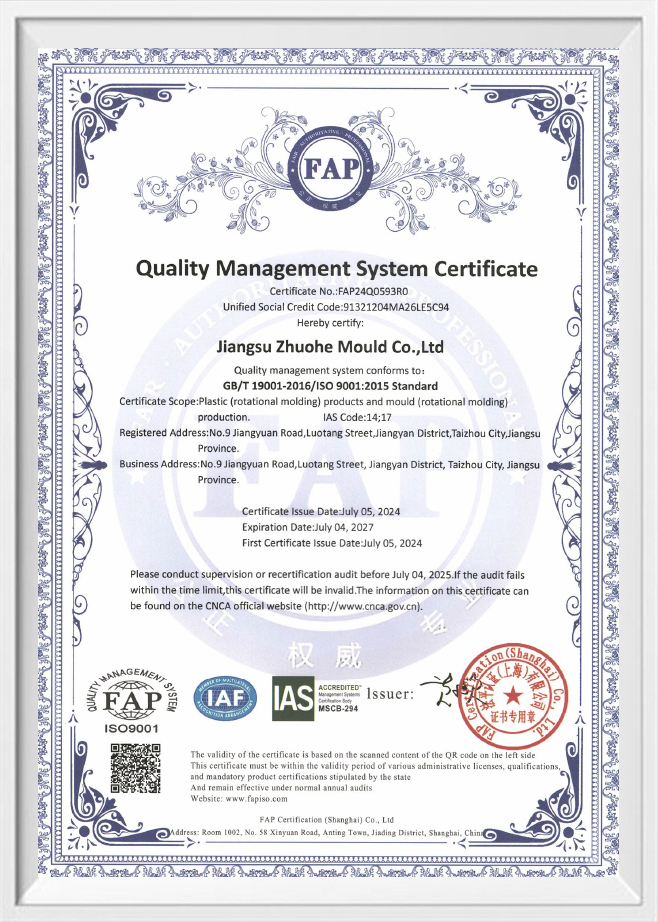
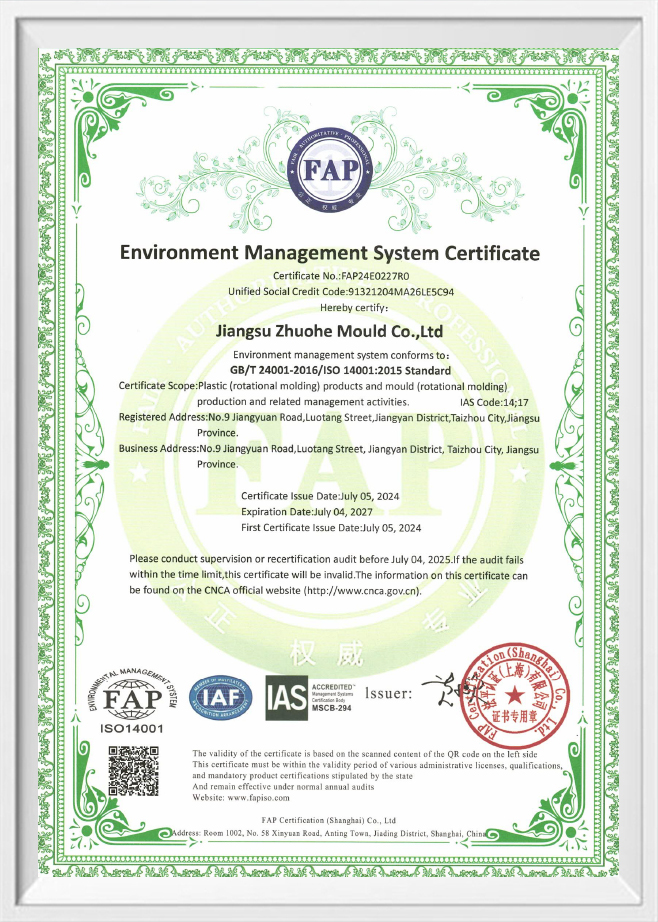
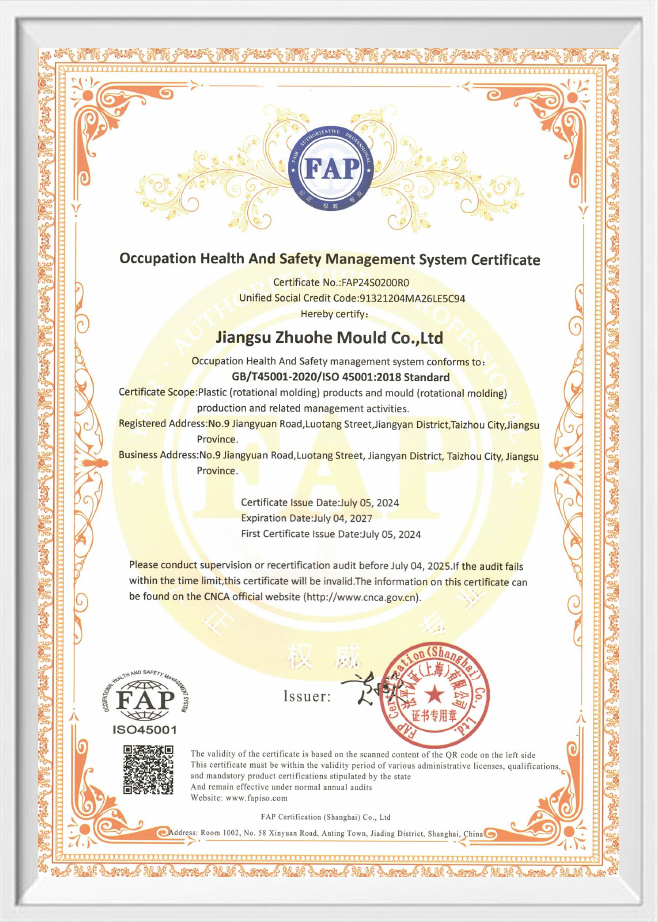
Jiangsu Zhroto Mould Co., Ltd. follows an integrated workflow covering project consultation, design optimization, 3D engineering, precision CNC manufacturing, mold testing, quality inspection, delivery, production support, and maintenance advice. The company has ISO 9001:2015, ISO 14001:2015, and ISO 45001:2015 certifications and produces more than 800 mold sets annually. This complete process supports eco-friendly plastic manufacturing by connecting mold engineering with actual production requirements.
Why Choose Integrated Sustainable Rotomolding Solutions?
The sustainability of cleaning equipment depends on more than the mold itself. A reliable mold should support stable production, minimize unnecessary waste, maintain dimensional consistency, and remain serviceable over a long operating period. For this reason, sustainable rotomolding solutions should include engineering support before mold manufacturing as well as technical assistance after delivery.
Zhroto Mould provides customized tooling for customers that have only a product concept, existing drawings, or a new rotomolded product under development. Its capabilities include large-scale mold machining, complex curved-surface machining, rapid prototyping, mass production, mold trial validation, and finished-product support. Such capabilities allow the tooling strategy to be adjusted to different cleaning equipment structures rather than forcing every application into one standard design.
A well-developed environmentally friendly cleaning mold can therefore become part of a broader sustainable production strategy. By combining durable aluminum tooling, suitable heating systems, optimized product geometry, and responsible production management, manufacturers can pursue stronger environmental performance without compromising product functionality.
Frequently Asked Questions
Q1: What is an environmentally friendly cleaning mold?
An environmentally friendly cleaning mold is rotational molding tooling designed to support durable, efficient, and resource-conscious production of cleaning equipment. It emphasizes mold longevity, material efficiency, stable processing, and suitable heating technology.
Q2: Why are aluminum molds suitable for cleaning equipment?
Sand-cast aluminum molds provide flexible geometry, useful thermal performance, and durable construction. They are especially suitable for large hollow products that require seamless structures and consistent production quality.
Q3: When should manufacturers consider electric-heated rotomolding molds?
Electric-heated tooling is particularly attractive when precise temperature management, zoned heating, and energy efficiency are important. It can support advanced green cleaning equipment tooling where production control is a major priority.
Q4: How does Zhroto Mould support sustainable cleaning equipment production?
Jiangsu Zhroto Mould Co., Ltd. provides integrated services covering design evaluation, product optimization, 3D modeling, mold manufacturing, testing, inspection, delivery, production support, and maintenance advice. Its conventional and electric-heated mold capabilities provide flexible sustainable rotomolding solutions for different production environments.
 +86-18006248936
  ricky.t@zhroto.com
  No.9 Jiangyuan Road, Luotang Street, Jiangyan District, Taizhou City,Jiangsu Province, China