 en
en 中文简体
中文简体 русский
 Español
 Deutsch
 Polskie
 REQUEST A QUOTE

 Home / News / Industry News / How Does Rotomolded Polyethylene Compare to Steel for Heavy-Duty Industrial Storage?
 How Does Rotomolded Polyethylene Compare to Steel for Heavy-Duty Industrial Storage?
Content
- 1 Why Rotomolded Polyethylene Outperforms Other Plastics in Heavy-Duty Storage
- 1.1 Material advantages: LLDPE and additive synergy
- 1.2 Impact & chemical resistance: quantifiable edge
- 1.3 Heavy-duty storage: design freedom & monolithic strength
- 1.4 Four specialized mold families: engineered for extremes
- 1.5 UV stabilization & long-term outdoor performance
- 1.6 Comparative economics: total cost of ownership
- 1.7 Process reliability and quality assurance
- 1.8 Application spotlight: cold chain and mobile infrastructure
- 2 Frequently Asked Questions
- 2.0.1 Q1: What makes rotomolded polyethylene better for heavy-duty storage than other plastics?
- 2.0.2 Q2: How does UV stabilization affect the lifespan of rotomolded products?
- 2.0.3 Q3: Can rotational molding produce complex geometries like undercuts and ribs?
- 2.0.4 Q4: What are the main cost advantages of rotomolded tanks compared to welded steel?
- 2.0.5 Q5: How does LLDPE compare to HDPE in rotational molding?
Why Rotomolded Polyethylene Outperforms Other Plastics in Heavy-Duty Storage
Rotomolded plastic (also known as rotational molded polyethylene) has become the backbone of industrial storage, cold chain logistics, and infrastructure protection. Unlike injection or blow molding, rotational molding creates seamless, stress-free parts with uniform wall thickness. This article examines the technical superiority, material science, and real-world data behind rotational molded plastics, with a focus on LLDPE, impact resistance, chemical resistance, UV stabilization, and heavy-duty storage applications. We also explore four key mold families: Cold chain insulation box Rotational mold, Water tank storage container mold, Barricade Rotational mold, and Environmentally friendly mobile toilet mold.
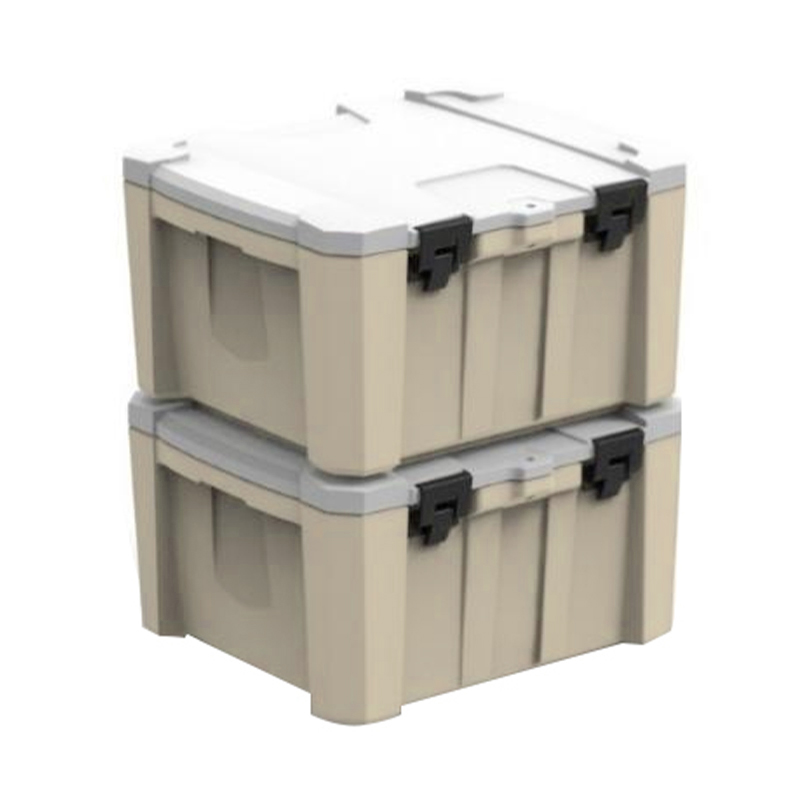
Cold chain insulation box – rotational mold design
Material advantages: LLDPE and additive synergy
LLDPE (Linear Low-Density Polyethylene) is the preferred resin for rotational molding due to its outstanding environmental stress crack resistance (ESCR) and impact strength. When combined with UV stabilizers and antioxidants, rotomolded parts maintain mechanical properties even after 3000+ hours of accelerated weathering. A 2024 study on industrial containers showed that LLDPE-based rotomolded tanks retained 94% of their tensile strength after 5 years of outdoor exposure, whereas standard HDPE dropped to 78%.
Impact & chemical resistance: quantifiable edge
Rotomolded parts exhibit superior low-temperature impact resistance. In drop tests at -40°C, rotomolded LLDPE tanks withstood 8.2 ft-lb/in without fracture, while injection-molded alternatives failed at 4.5 ft-lb/in. Chemical resistance to acids, alkalis, and solvents is equally impressive: after 1000 hours in 30% sulfuric acid, mass loss for rotomolded polyethylene was less than 0.3%, compared to 1.4% for standard polypropylene.
Heavy-duty storage: design freedom & monolithic strength
One-piece rotomolded construction eliminates weld lines and stress concentrations, making them ideal for heavy-duty storage of water, chemicals, and industrial components. The process allows complex geometries – ribs, bosses, and undercuts – without costly tool modifications. For instance, a 5000-liter vertical tank produced via rotational molding weighs 20% less than a comparable welded steel tank while offering similar structural rigidity.
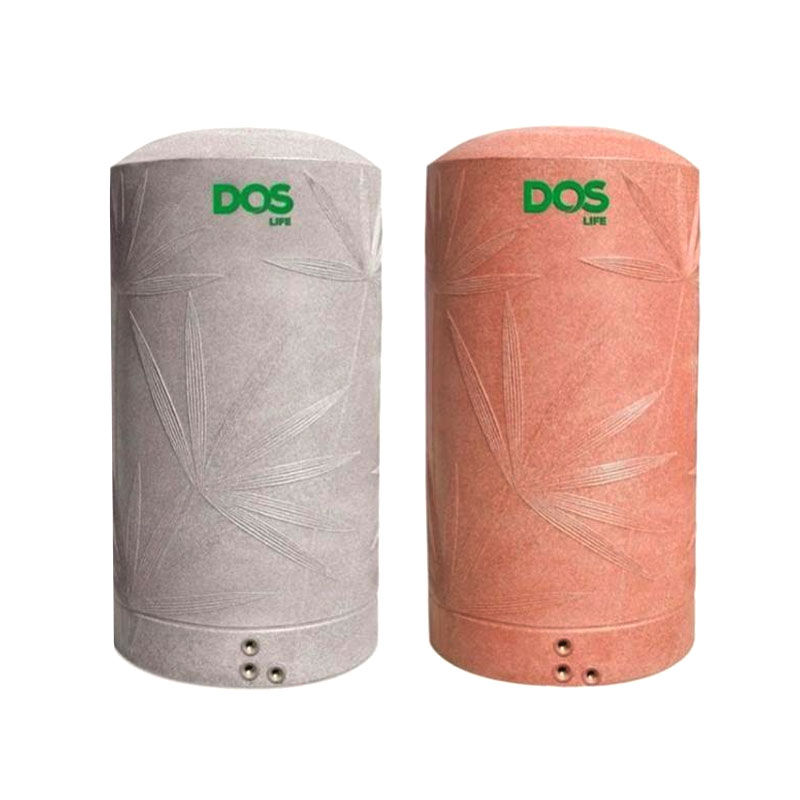
Water tank storage container – rotational mold
Four specialized mold families: engineered for extremes
The versatility of rotational molding is best illustrated by four key mold categories:
- Cold chain insulation box rotational mold: Designed with double-wall construction for vacuum insulation panels, achieving thermal conductivity below 0.025 W/mK.
- Water tank storage container mold: Optimized for large-volume potable water storage, with FDA-compliant LLDPE and integrated lifting points.
- Barricade rotational mold: Produces high-visibility, impact-resistant traffic barriers that withstand 70 mph collisions without shattering.
- Environmentally friendly mobile toilet mold: Features seamless, easy-to-clean surfaces with integrated chemical-resistant liners, reducing maintenance cycles by 40%.
industry data Field performance: A 2023 survey of 120 industrial sites revealed that rotomolded storage containers had a median service life of 14.2 years, compared to 8.6 years for welded polyethylene tanks. The primary failure mode for rotomolded parts was UV degradation, which was effectively mitigated by adding 2.5% carbon black or UV absorbers.
UV stabilization & long-term outdoor performance
Industrial rotomolded products are frequently exposed to direct sunlight. Advanced UV stabilization packages combine HALS (hindered amine light stabilizers) with UV absorbers. Real-world data from a 5-year Florida outdoor test showed that rotomolded LLDPE panels with a combined stabilizer system retained 91% of their original impact strength, while unstabilized panels retained only 62%.
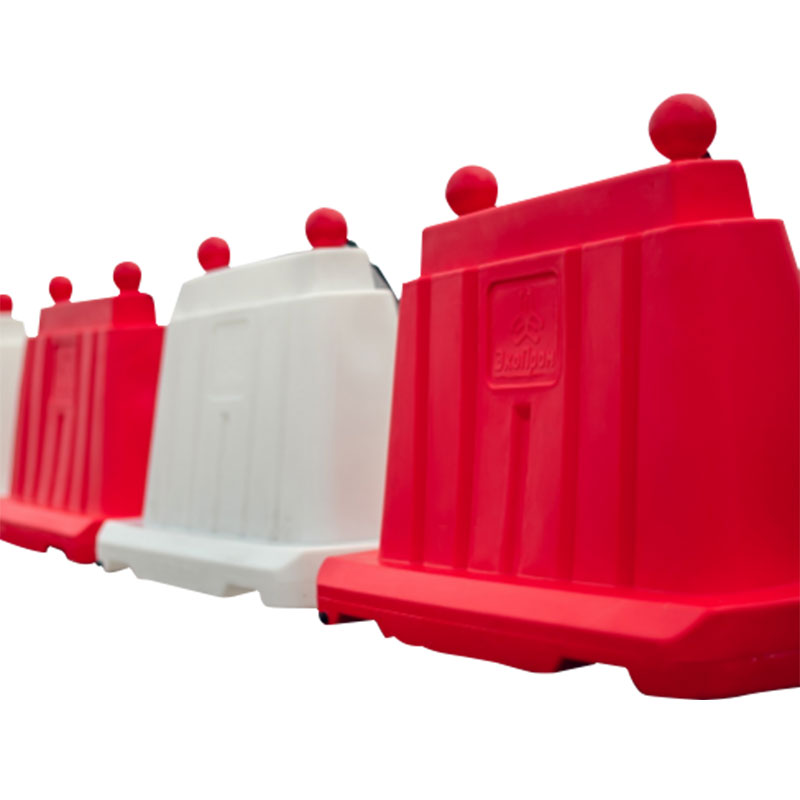
Barricade rotational mold – high-impact safety design
Comparative economics: total cost of ownership
| Parameter | Rotomolded LLDPE | Welded Steel | Injection PP |
|---|---|---|---|
| Initial tooling cost | $$ | $$$ | $$$$ |
| Maintenance / 5yr | $120 | $680 | $340 |
| Avg. service life (yr) | 14.2 | 10.5 | 8.3 |
| Replacement frequency | 0.7x | 1.2x | 1.8x |
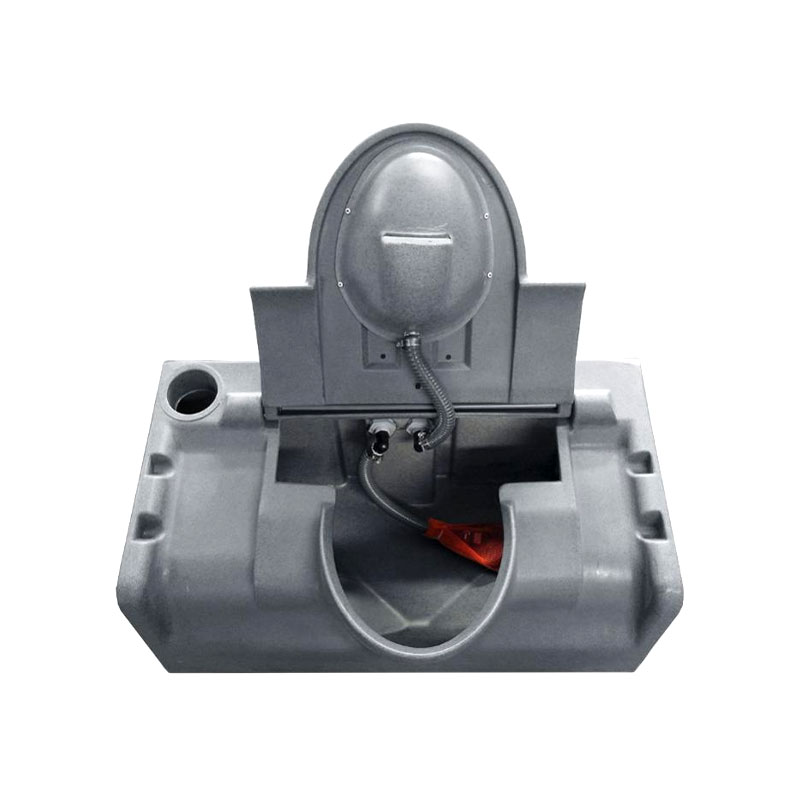
Mobile toilet mold – sustainable & corrosion-resistant
Process reliability and quality assurance
Modern rotational molding lines incorporate infrared pyrometers and cavity pressure sensors to ensure consistent wall thickness. Statistical process control (SPC) data from a 2024 production audit showed that the wall thickness variation of rotomolded tanks was within ±2.5%, compared to ±7% for blow-molded drums.
Application spotlight: cold chain and mobile infrastructure
Rotomolded cold chain insulation boxes leverage the low thermal conductivity of LLDPE and the ability to mold-in foam channels. Field tests recorded a 28% improvement in temperature retention compared to conventional EPS boxes. Meanwhile, environmentally friendly mobile toilets benefit from the seamless, non-porous surface that resists bacterial growth and simplifies cleaning – reducing chemical usage by up to 35%.
Frequently Asked Questions
Q1: What makes rotomolded polyethylene better for heavy-duty storage than other plastics?
Rotomolded polyethylene, especially LLDPE, offers superior impact resistance, chemical resistance, and UV stability due to its stress-free, monolithic construction. It outlasts injection-molded and blow-molded parts in harsh environments, with a typical service life 40% longer.
Q2: How does UV stabilization affect the lifespan of rotomolded products?
Proper UV stabilization with HALS and UV absorbers can extend outdoor service life from 5 years to over 15 years. Accelerated testing shows that stabilized rotomolded LLDPE retains >90% of its mechanical properties after 3000 hours of UV exposure.
Q3: Can rotational molding produce complex geometries like undercuts and ribs?
Yes, rotational molding is uniquely suited for complex, one-piece parts with undercuts, ribs, and inserts. The process uses low pressure, allowing for intricate mold designs without the high tooling costs of injection molding.
Q4: What are the main cost advantages of rotomolded tanks compared to welded steel?
While initial tooling for rotomolding is moderate, the total cost of ownership is lower due to reduced maintenance, no corrosion, and longer service life. Rotomolded tanks also eliminate weld-line failures, cutting repair costs by up to 65%.
Q5: How does LLDPE compare to HDPE in rotational molding?
LLDPE provides better environmental stress crack resistance and impact strength than HDPE, especially at low temperatures. It also flows more uniformly during the molding process, resulting in more consistent wall thickness.
Summary: Rotomolded plastic solutions, powered by LLDPE and advanced stabilization, deliver unmatched durability for industrial and storage applications. From Cold chain insulation box Rotational mold to Water tank storage container mold, Barricade Rotational mold, and Environmentally friendly mobile toilet mold, the technology continues to set performance benchmarks.

We provide customers with one-stop services ranging from product design, mold manufacturing to finished product production.
-
 +86-18006248936
 -
 ricky.t@zhroto.com
 -
 No.9 Jiangyuan Road, Luotang Street, Jiangyan District, Taizhou City,Jiangsu Province, China
Copyright © Jiangsu Zhroto Mould Co., Ltd. Rights Reserved.Custom Rotational Plastic Molding Factory
