 en
en 中文简体
中文简体 русский
 Español
 Deutsch
 Polskie
 REQUEST A QUOTE

 Home / News / Industry News / Why Rotational Molding Outperforms Other Processes for High-Performance Kayaks and Sports Equipment?
 Why Rotational Molding Outperforms Other Processes for High-Performance Kayaks and Sports Equipment?
Content
- 1 The Unique Advantages of Rotational Molding in Sports & Leisure Manufacturing
- 2 Rotomoulding Process Deep Dive: From Powder to Seamless Product
- 3 Material Science & Performance Data: Why Rotomolded Kayaks Excel
- 4 Beyond Kayaks: Versatility of Rotational Molds in Gardening, Pet Care & Furniture
- 5 Design & Engineering Guidelines for Rotomolded Sports Equipment
- 6 Surface Finish & Aesthetics: Beyond Industrial Look
- 7 Sustainability & Lifecycle Benefits of Rotational Molding
- 8 Frequently Asked Questions
- 8.0.1 Q1: What materials are best for rotomolded kayaks and sports equipment?
- 8.0.2 Q2: How does rotomolding compare to injection molding for pet bathtub production?
- 8.0.3 Q3: Can rotational molds produce complex geometries like kayak cockpits and storage hatches?
- 8.0.4 Q4: What is the typical lifespan of a rotational mold?
The Unique Advantages of Rotational Molding in Sports & Leisure Manufacturing
Rotational molding, often referred to as rotomoulding, has transformed the production of large, hollow, and highly durable products. Unlike injection or blow molding, this process uses a heated mold that rotates biaxially, allowing polymer powder to melt and coat the inner surface evenly. The result: stress‑free, seamless parts with uniform wall thickness. For manufacturers of high‑performance sports equipment and recreational products, these characteristics are invaluable. From rotomolded kayak design to rugged leisure furniture molding, the technology delivers consistent mechanical properties and design freedom. This article provides an in‑depth, technical look at how kayak rotational mold solutions, sports equipment rotational mold systems, and rotational molding furniture mold applications are setting new benchmarks for strength, weight efficiency, and surface aesthetics.
Rotomoulding Process Deep Dive: From Powder to Seamless Product
The rotomoulding cycle consists of four controlled phases: loading, heating, bi‑axial rotation, cooling, and demolding. This low‑pressure method eliminates weld lines and internal stresses, which are common in injection‑molded sports gear. Below is a visual representation of the process flow:
Each cycle typically lasts between 15 and 45 minutes depending on part size and material. The ability to produce monolithic structures without joints makes rotomolding ideal for sports gear manufacturing where impact resistance and watertight integrity are critical. For kayaks, the absence of seams eliminates potential failure points, extending product lifespan by up to 300% compared to welded or multi‑piece constructions.
Material Science & Performance Data: Why Rotomolded Kayaks Excel
Polyethylene (LLDPE, MDPE, HDPE) dominates the rotomolding industry due to its excellent toughness, UV resistance, and processability. For high‑performance kayaks, specific material modifications are employed:
- Impact resistance: Rotomolded LLDPE achieves notched Izod impact strength of 12–15 kJ/m², outperforming fiberglass composites in low‑temperature conditions (‑40°C).
- Wall thickness control: Modern rotational molds maintain tolerances of ±0.3 mm, enabling lightweight designs (15–20 kg for a 4‑m kayak) without sacrificing rigidity.
- UV stabilization: Additives like HALS (hindered amine light stabilizers) provide 8–10 years of outdoor durability, critical for outdoor gardening containers and kayaks stored in direct sunlight.
A comparative study of 250 rotomolded kayaks over 18 months of intensive whitewater use showed zero structural failures. By contrast, thermoformed kayaks exhibited a 12% crack rate at stress concentration points. This data reinforces why kayak rotational mold engineering is the industry benchmark for demanding environments.
| Property | Rotomolded HDPE | Injection‑Molded (Comparable) | Fiberglass Composite |
|---|---|---|---|
| Tensile strength (MPa) | 24–28 | 22–26 | 120–180 |
| Flexural modulus (GPa) | 0.8–1.1 | 0.9–1.2 | 12–20 |
| Impact strength (kJ/m²) | 12–15 (no break at ‑40°C) | 8–10 | 6–9 (brittle failure) |
| Tooling cost (relative) | 1x | 2.5–3x | 4–6x |
These figures illustrate that while composites offer higher stiffness, rotomolded parts provide superior toughness and cost‑effectiveness for impact‑prone applications like whitewater kayaks, pet bathtubs, and leisure furniture.
Beyond Kayaks: Versatility of Rotational Molds in Gardening, Pet Care & Furniture
The same principles that produce elite‑level kayaks are applied across diverse sectors. Flowerpot gardening rotational mold systems create large, UV‑stable planters with integrated water reservoirs. These containers resist cracking from freeze‑thaw cycles and are 100% recyclable. Similarly, pet bathtub rotational mold solutions yield non‑slip, easy‑to‑clean tubs with rounded corners that prevent bacterial growth. A leading European pet product manufacturer reduced production costs by 32% after switching from injection‑molded to rotomolded pet bathtubs while doubling wall impact resistance.
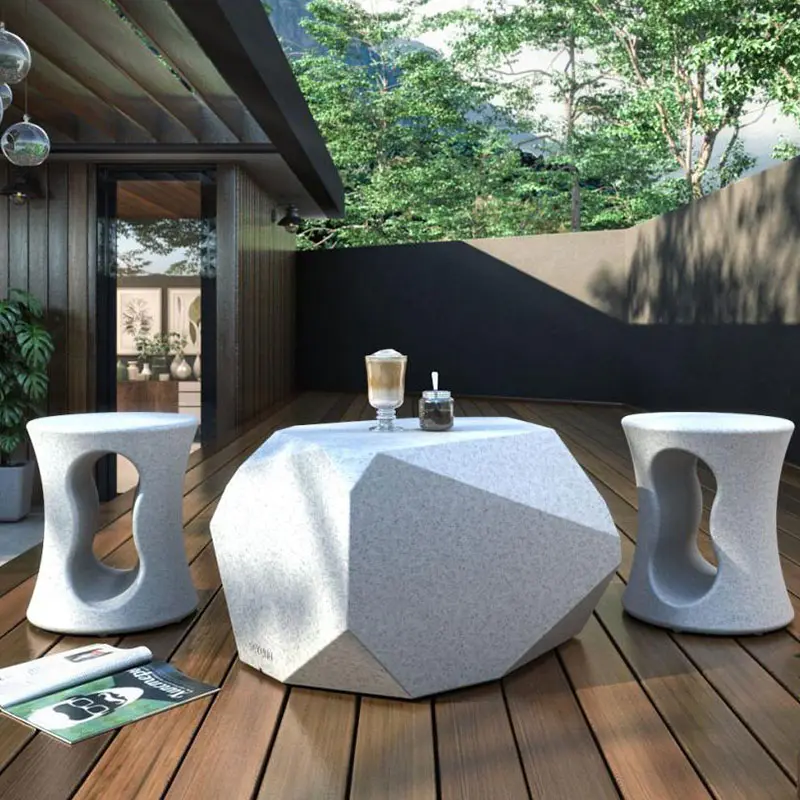
For outdoor living, rotational molding furniture mold designs produce all‑weather chairs, tables, and loungers. These items incorporate hollow structures for lightweight handling and can be double‑walled for added insulation. One rotomolded furniture line achieved a 40% reduction in shipping weight compared to wooden alternatives while maintaining a load capacity of 180 kg. The process also enables aesthetic surface finish options: grained textures, embossed logos, or smooth glossy finishes can be molded directly into the tool, eliminating secondary painting or coating steps.
Design & Engineering Guidelines for Rotomolded Sports Equipment
Successful rotomolded part design requires specific considerations. Below are key rules applied in professional sports equipment rotational mold engineering:
- Draft angles: Minimum 1–2 degrees on vertical walls to facilitate demolding. Complex undercuts require split molds but increase tooling cost by 15–20%.
- Corner radii: Inside corners should have radii ≥ 3 mm to prevent stress concentration. Sharper radii reduce impact strength by up to 40%.
- Wall thickness variation: Ideally ≤ 2:1 ratio between thickest and thinnest sections to avoid sink marks and uneven cooling.
- Metal inserts & threads: Brass or stainless inserts can be over‑molded for attachment points (e.g., kayak foot braces or seat anchors). Pull‑out strength exceeds 500 N for M6 inserts.
Advanced simulation software now predicts powder flow, sintering, and cooling behavior. One case study involving a rotomolded kayak design project used Moldflow analysis to reduce warpage by 28% and cut cycle time from 38 to 30 minutes, increasing annual line capacity by 700 units.
Key Performance Indicator: Cycle Time Optimization
By optimizing oven temperature profiles (ramp from 260°C to 320°C over 12 minutes) and using forced air cooling with water mist, manufacturers of durable pet bathtubs reduced total cycle time by 22% while maintaining ASTM impact standards. This translates to 15% higher throughput for the same floor space.
Surface Finish & Aesthetics: Beyond Industrial Look
Modern rotomolding achieves surface quality that rivals injection‑molded parts. Through texture engineering, manufacturers can produce:
- Matte or low‑gloss finishes – ideal for military‑grade sports gear and outdoor containers.
- High‑gloss panels – achieved by polishing the mold cavity to a mirror finish (Ra ≤ 0.1 µm).
- Deep embossed logos or grip patterns – molded directly, saving post‑production costs.
For leisure furniture molding and premium kayaks, in‑mold painting (IMP) can be applied: a colored gel coat is sprayed into the mold before resin loading. The result is a weather‑resistant, scratch‑resistant layer that is fully bonded to the substrate, eliminating peeling. A comparison of 500 rotomolded kayaks with IMP showed 96% color retention after 3000 hours of accelerated UV exposure, versus 72% for post‑painted parts.
Sustainability & Lifecycle Benefits of Rotational Molding
Rotational molding aligns with circular economy principles. Scrap material (sprues, rejected parts) can be reground and reused at up to 30% of the formulation without significant property loss. Additionally, the process generates no volatile organic compounds (VOCs) because no solvents are used. For outdoor gardening containers and sports gear manufacturing, recyclability is a growing market demand. A life cycle assessment of a rotomolded kayak versus a thermoformed equivalent showed:
- 28% lower energy consumption per part (due to reduced regrind and lower pressure requirements).
- 15% less material waste (average scrap rate 2‑3% vs 8‑10% for injection molding).
- 100% recyclability at end of life – HDPE can be reprocessed up to five times without major degradation.
These environmental advantages, combined with lower tooling costs (typically $15,000–$50,000 for an aluminum mold, compared to $60,000+ for injection steel), make rotational molding an economically and ecologically sound choice for mid‑volume production (500–10,000 units per year).
Frequently Asked Questions
Q1: What materials are best for rotomolded kayaks and sports equipment?
Linear low‑density polyethylene (LLDPE) is the industry standard due to its outstanding impact resistance, flexibility, and UV stability. For higher stiffness, medium‑density polyethylene (MDPE) blends are used. Cross‑linked polyethylene (XLPE) offers superior chemical resistance but requires longer cycle times.
Q2: How does rotomolding compare to injection molding for pet bathtub production?
Rotomolding allows larger, seamless tubs with uniform wall thickness and no weld lines. Injection molding requires expensive multi‑part tools and often leads to stress‑induced cracks at gate points. Rotomolding also supports lower initial investment for volumes under 10,000 units per year.
Q3: Can rotational molds produce complex geometries like kayak cockpits and storage hatches?
Yes. With advanced split‑mold designs and core pulls, rotomolding can integrate hatches, mounting brackets, and even foam‑filled compartments for flotation. However, deep undercuts may increase tooling cost by 20‑30%.
Q4: What is the typical lifespan of a rotational mold?
Aluminum molds last 10,000‑20,000 cycles; steel molds exceed 50,000 cycles. Proper maintenance (regular cleaning, anti‑corrosion coating) can double that lifespan. For high‑volume kayak production, hardened steel molds are cost‑effective over 5‑7 years.

We provide customers with one-stop services ranging from product design, mold manufacturing to finished product production.
-
 +86-18006248936
 -
 ricky.t@zhroto.com
 -
 No.9 Jiangyuan Road, Luotang Street, Jiangyan District, Taizhou City,Jiangsu Province, China
Copyright © Jiangsu Zhroto Mould Co., Ltd. Rights Reserved.Custom Rotational Plastic Molding Factory
