 en
en 中文简体
中文简体 русский
 Español
 Deutsch
 Polskie
 REQUEST A QUOTE

 Home / News / Industry News / How Rotomolding Molds Power the Production of Commercial Cleaning Equipment and Mobile Sanitation Units
 How Rotomolding Molds Power the Production of Commercial Cleaning Equipment and Mobile Sanitation Units
Content
- 1 What Makes Rotomolding the Right Process for Cleaning Equipment Housings
- 2 Unmanned Sweeping Robot Rotational Mold: Precision Meets Geometry
- 3 Floor Washing Machine Rotational Mold: Balancing Size and Chemical Resistance
- 4 Environmentally Friendly Mobile Toilet Mold: Engineering for Outdoor Durability
- 5 Roto Mold Plastic Material Selection: What Engineers Evaluate
- 6 Complex Geometry Rotomolding: Mold Engineering Techniques
- 7 Mold Construction Standards: Cast Aluminum vs. Fabricated Steel
- 8 Quality Control Checkpoints in Rotomolded Cleaning Equipment Parts
- 9 Production Volume Planning: When to Expand the Mold Family
- 10 Frequently Asked Questions
- 10.0.1 Q1: What wall thickness is standard for a sweeping robot chassis produced by rotomolding?
- 10.0.2 Q2: How long does it take to produce a new rotomolding mold for a floor washing machine housing?
- 10.0.3 Q3: Can rotomolded mobile toilet units meet international chemical resistance standards?
- 10.0.4 Q4: What is the typical production cost advantage of rotomolding over injection molding for large housings?
- 10.0.5 Q5: Are environmentally friendly mobile toilet molds available in custom colors without painting?
- 10.0.6 Q6: How does the roto mold plastic selection differ between indoor and outdoor cleaning equipment?
Manufacturing Insight
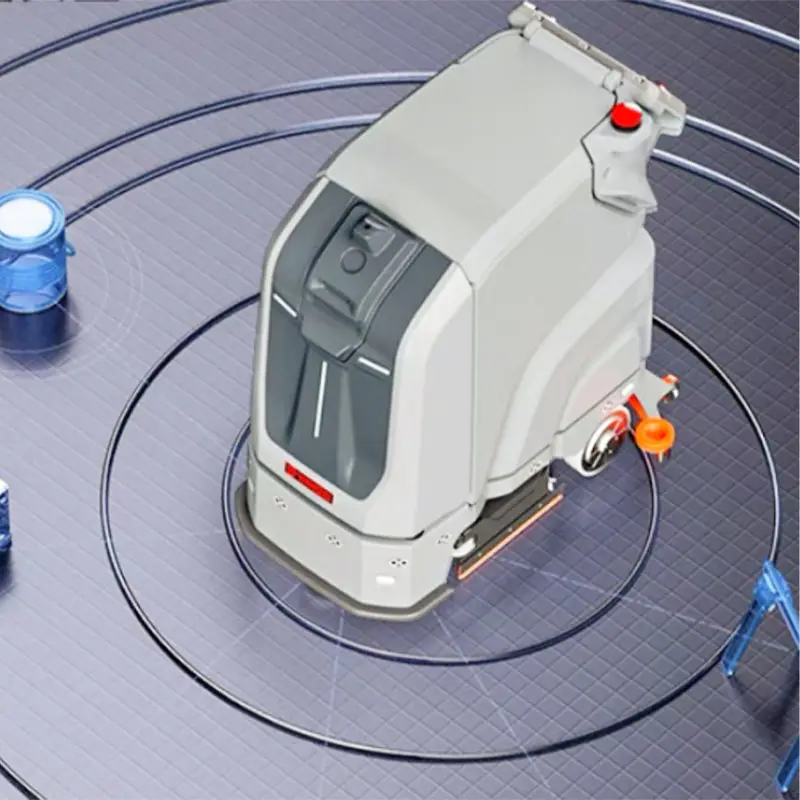
When engineers design an unmanned sweeping robot or a mobile sanitation unit destined for outdoor use, the shell around the machine is far more than cosmetic. It must endure UV exposure, chemical splash, mechanical impact, and temperature cycling while keeping tolerances tight enough for sensors, motors, and plumbing to fit precisely. Rotational molding — commonly called rotomolding — has become the process of choice for these complex, hollow, single-piece plastic housings across the commercial cleaning and mobile sanitation industries.
This article examines why industrial cleaning rotational mold tooling is engineered differently from packaging molds, how each equipment category drives unique design requirements, and what production teams should evaluate before committing to a rotomolding strategy.
What Makes Rotomolding the Right Process for Cleaning Equipment Housings
Rotomolding is a low-pressure, high-heat process. Plastic powder — almost always polyethylene — is loaded into a closed mold, which then rotates biaxially inside an oven. The powder melts and coats the interior mold surface evenly. After cooling, the part is removed as a seamless, hollow structure.
For commercial cleaning equipment, this process offers three structural advantages that injection molding and blow molding cannot easily replicate at the same part size:
Uniform Wall Thickness
Rotomolding distributes material evenly across complex three-dimensional contours. A sweeping robot chassis with undercuts, recesses for wheel arches, and cable routing channels can achieve consistent 4–6 mm walls throughout — eliminating the thin-spot failures common in large injection-molded parts.
No Weld Lines or Seams
Because the part forms as a single continuous skin, there are no structural weak points where halves are bonded. Mobile sanitation units that face repeated pressure washing and chemical disinfectants rely on this monolithic construction to prevent crack propagation at joints.
Low Tooling Investment for Large Parts
Molds are fabricated from cast aluminum or fabricated steel, and they operate at atmospheric pressure. A mold set for a full floor washing machine housing can cost 60–80% less than an equivalent injection mold, making the process economically viable even for mid-volume production runs of 500–5,000 units per year.
Unmanned Sweeping Robot Rotational Mold: Precision Meets Geometry
Autonomous sweeping robots used in airports, warehouses, and urban plazas present one of the most geometrically demanding challenges in the rotomolding sector. The chassis must simultaneously:
- Enclose LiDAR housings and ultrasonic sensor ports with dimensional tolerances under 1.5 mm
- Route drainage channels for collected debris and liquid
- Accept insert-molded threaded bosses for battery tray and motor mounting
- Provide integrated bumper geometry to absorb low-speed impacts without deforming sensor alignment
The unmanned sweeping robot rotational mold tooling for these applications is typically machined from A356 cast aluminum with secondary CNC profiling on all sensor mounting datum surfaces. Wall thickness targets are validated through mold flow simulation before tooling is cut, and air vent placements are calculated to prevent pinholes in the upper surfaces where aesthetics matter most.
Key Mold Design Parameters for Sweeping Robot Chassis
| Parameter | Typical Range | Design Consideration |
|---|---|---|
| Wall Thickness | 4.0 – 6.0 mm | Thicker at impact zones, thinner at cosmetic panels |
| Draft Angle | 1.5 – 3.0 deg | Deeper undercuts require split-mold inserts |
| Oven Temperature | 300 – 360 deg C | Controlled by aluminum mold thermal conductivity |
| Rotation Ratio (Major:Minor) | 4:1 to 6:1 | Adjusted for elongated chassis profiles |
| Insert Count | 8 – 24 per part | Stainless steel threaded inserts pre-placed in mold |
| Cycle Time | 18 – 35 minutes | Longer for UV-stabilized, pigmented LLDPE grades |
Process Flow for Sweeping Robot Mold Production
Floor Washing Machine Rotational Mold: Balancing Size and Chemical Resistance
Ride-on and walk-behind floor washing machines used in logistics centers and commercial kitchens carry solution tanks ranging from 60 to 300 liters. The structural requirements for the outer housing diverge sharply from the sweeping robot category:
- Chemical compatibility with alkaline detergents, acidic descalers, and quaternary ammonium disinfectants — necessitating medium-density polyethylene (MDPE) or cross-linked polyethylene (XLPE) grades
- Large flat surfaces that must resist warping during cooling — a critical mold-design challenge unique to this equipment type
- Integrated solution tank cavities often molded as a second inner shell within the same rotomolding cycle using a drop-box insert
- Operator ergonomic zones including curved handle recesses and footplate platforms formed directly in the mold geometry
For the floor washing machine rotational mold, mold engineers pay particular attention to anti-warpage ribbing strategies. Ribs are not added to the part itself — they are engineered as negative features in the mold that create corresponding reinforcing geometry on the inside face of the housing panel.
Comparing Housing Materials for Floor Washing Machines
| Material Grade | Tensile Strength | Chemical Resistance | UV Stability | Best Application |
|---|---|---|---|---|
| LLDPE | Moderate | Good | Requires additive | Indoor washers, lower chemical exposure |
| HDPE | High | Very Good | Requires additive | General commercial floor washers |
| XLPE | Very High | Excellent | Excellent | Outdoor washers, harsh chemical use |
| Nylon (PA) | High | Moderate | Good | Precision shrouds, small geometry parts |
Environmentally Friendly Mobile Toilet Mold: Engineering for Outdoor Durability
Mobile and portable sanitation units — deployed at construction sites, outdoor events, disaster relief operations, and public parks — represent one of the highest-volume applications for rotomolding in the sanitation sector. A single environmentally friendly mobile toilet mold program typically produces 1,000–10,000 identical units from a small mold family of three to six tools.
Why Rotomolding Outperforms FRP and Stainless Steel for Mobile Toilets
Environmental Performance of HDPE in Sanitation Units
The term "environmentally friendly" in mobile sanitation manufacturing encompasses three measurable dimensions:
- Material recyclability: HDPE used in rotomolding carries recycling code 2 and is accepted in industrial recycling streams globally. End-of-life units can be shredded and reprocessed into non-structural products, reducing landfill contribution.
- Manufacturing waste reduction: Rotomolding generates near-zero material scrap. Excess powder from each cycle is reclaimed and reused. This contrasts with thermoforming or CNC-fabricated stainless shells, where trim waste can reach 15–25% of raw material input.
- Longevity in field conditions: A well-formulated HDPE unit with UV stabilizers and carbon black pigmentation can maintain structural integrity for 15–20 years in outdoor service, reducing the replacement frequency and associated manufacturing carbon load.
Roto Mold Plastic Material Selection: What Engineers Evaluate
The phrase "roto mold plastic" broadly refers to the powdered polymer feedstock used in the process. For cleaning equipment and sanitation units, material selection is one of the most consequential engineering decisions, affecting structural life, chemical compatibility, surface finish, and compliance with regional regulations.
Linear Low-Density Polyethylene
The most widely used rotomolding grade. Offers excellent impact resistance at low temperatures, good elongation before failure, and straightforward processing. Typical melt index: 3–7 g/10 min for rotomolding applications. Ideal for sweeping robot chassis components operating in climate-controlled indoor environments.
High-Density Polyethylene
Higher stiffness than LLDPE — important for large flat panels on floor washing machine housings where deflection under load must be limited. Superior chemical resistance to concentrated acids and alkalis. Slightly more challenging to process due to narrower sintering window.
Cross-Linked Polyethylene
Produced using peroxide or silane crosslinking chemistry. Cannot be remolded after crosslinking — this is a one-way material transformation. The result is significantly improved heat resistance, stress-crack resistance, and long-term UV stability. Used for the highest-demand outdoor sanitation units exposed to tropical climates.
Flexible Polyethylene Blends
Compounded to provide rubber-like flexibility in finished parts. Used for integrated bumper sections and gasket flanges in sweeping robots where rigid geometry transitions to vibration-absorbing elements. Typically co-molded in a secondary drop-box layer within the same rotomolding cycle.
Complex Geometry Rotomolding: Mold Engineering Techniques
Commercial cleaning equipment and mobile sanitation enclosures rarely present simple box geometries. The following mold engineering techniques enable production of the complex geometry rotomolding profiles these products demand.
Split-Line and Parting Surface Design
The mold parting line — where two mold halves meet — determines which surface features can be formed without mechanical inserts. For sweeping robot bodies, the parting line is typically placed at the horizontal mid-plane, allowing sensor port bosses and wheel arch undercuts to be formed on removable side-action inserts rather than requiring the entire part to be designed around a single split direction.
Internal Drop-Box Inserts for Tank Integration
Floor washing machines frequently require an internal solution tank integrated into the outer housing. This is achieved using a suspended drop-box — a secondary mold form placed inside the main mold cavity. During rotation, powder coats both the outer mold wall and the inner drop-box, creating a double-walled structure with an air or foam-fill gap between the tank and the outer panel. The technique adds thermal insulation and dramatically increases impact resistance of the liquid-carrying area.
Rotomolding Molds With Magnetic Insert Retention
Insert-molded metal components — threaded bosses, electrical conduit fittings, sensor mounting plates — must remain precisely positioned throughout the oven cycle. In high-precision sweeping robot applications, mold engineers embed neodymium magnets within the aluminum mold body. These magnets hold steel inserts against the mold surface during rotation, preventing migration that would cause dimensional failures at assembly.
Surface Texture and Grain Application
The interior surface of the rotomold directly defines the exterior surface of the finished part. Texture is applied to the mold surface through:
- Bead blasting — creates a uniform matte grain suitable for mobile toilet exteriors
- EDM (Electrical Discharge Machining) texturing — produces fine, repeatable patterns for cosmetic panels on sweeping robots
- Polishing — used on areas requiring gloss, such as signage recesses and lens housings
- Chemical etching — applied for large-scale geometric patterns across full mold panels
Mold Construction Standards: Cast Aluminum vs. Fabricated Steel
Two primary mold materials serve the rotomolding industry, each with distinct performance profiles for cleaning equipment tooling.
| Attribute | Cast Aluminum Mold | Fabricated Steel Mold |
|---|---|---|
| Thermal Conductivity | High — faster heating and cooling cycles | Lower — longer cycle times |
| Weight | Light — easier operator handling | Heavy — requires lifting equipment |
| Surface Detail | Excellent detail from CNC finishing | Good — requires welding for complex features |
| Typical Lifespan | 3,000 – 5,000 cycles | 10,000 – 20,000 cycles |
| Repair | TIG weld repair possible | Straightforward welded repair |
| Best Use Case | Complex geometry, mid-volume runs | Simple shapes, high-volume production |
| Initial Cost | Lower | Higher for equal complexity |
For the majority of sweeping robot and floor washing machine programs — where annual volumes fall below 5,000 units and part geometry is complex — cast aluminum molds fabricated from A356 alloy deliver the best balance of cycle speed, surface quality, and total tooling economics. Steel molds become economically justified only when annual volumes exceed 8,000–10,000 parts for simpler geometry mobile toilet panels.
Quality Control Checkpoints in Rotomolded Cleaning Equipment Parts
Production teams maintaining consistent output quality for commercial cleaning housings implement a multi-stage inspection sequence. The following diagram summarizes the primary QC gates:
Wall thickness uniformity is the single most frequently cited root cause of field failures in rotomolded cleaning equipment housings. Ultrasonic thickness gauges allow non-destructive mapping of all production parts without cutting or sectioning samples — a critical capability when part volumes are measured in hundreds rather than thousands per day.
Production Volume Planning: When to Expand the Mold Family
A single mold tool mounted on a multi-arm carousel can produce 6–15 parts per day depending on cycle time and arm configuration. When market demand grows, manufacturers face the decision of adding mold capacity. The following benchmarks guide expansion decisions for cleaning equipment and sanitation programs:
For mobile toilet programs supplying municipal contracts, mold families of six to eight identical tools are common, enabling output rates exceeding 80 units per day per production line from a three-arm carousel machine.
Frequently Asked Questions
Q1: What wall thickness is standard for a sweeping robot chassis produced by rotomolding?
Most commercial unmanned sweeping robot chassis target a nominal wall thickness between 4.0 and 6.0 mm, with localized thickening to 7–8 mm at impact zones such as the front bumper and wheel well edges. Thinner walls of 3.5 mm may be specified for lightweight cosmetic upper panels where structural loading is minimal.
Q2: How long does it take to produce a new rotomolding mold for a floor washing machine housing?
Lead times for cast aluminum molds for floor washing machine housings typically range from 6 to 14 weeks depending on part complexity, insert count, and the mold manufacturer's current workload. Simpler panel geometries with few inserts can be completed in 6–8 weeks. Full chassis with integrated tank geometry and multiple side-action features generally require 10–14 weeks from drawing approval to first article production.
Q3: Can rotomolded mobile toilet units meet international chemical resistance standards?
Yes. HDPE and XLPE grades used in mobile sanitation rotomolding are formulated to pass chemical resistance protocols including ISO 175 immersion testing. Units are typically tested against concentrated disinfectants, chlorine-based cleaning agents, and urea solutions. The test duration is commonly 72 to 168 hours at elevated temperature to simulate accelerated field exposure.
Q4: What is the typical production cost advantage of rotomolding over injection molding for large housings?
For large housings exceeding 600 mm in any dimension, rotomolding tooling costs are typically 60–75% lower than equivalent injection mold tooling. Per-part cycle times are longer in rotomolding (15–35 minutes versus under 2 minutes for injection molding), so the process is most economical at annual volumes below 10,000 parts. Above that threshold, the per-part time disadvantage begins to outweigh the tooling savings.
Q5: Are environmentally friendly mobile toilet molds available in custom colors without painting?
Yes — through-body color is a standard feature of the rotomolding process. Pigment masterbatch is blended directly into the polyethylene powder before loading into the mold. The resulting part has consistent color through the full wall thickness, eliminating paint adhesion failures, peeling, or fading from chemical or UV exposure. Common colors for sanitation units are specified using standard color systems, and custom pigment matching is available from powder compounders.
Q6: How does the roto mold plastic selection differ between indoor and outdoor cleaning equipment?
Indoor cleaning equipment housings — such as robotic sweepers used in warehouses — typically use standard LLDPE grades without heavy UV stabilization, since ultraviolet exposure is minimal. Outdoor equipment, including mobile toilets and outdoor sweeping robots operating on public plazas, requires UV-stabilized formulations with carbon black pigmentation or hindered amine light stabilizer (HALS) packages. These additives can increase material cost by 8–15% but extend service life from approximately 5 years to 15–20 years in direct sun exposure.