 en
en 中文简体
中文简体 русский
 Español
 Deutsch
 Polskie
 REQUEST A QUOTE


What Is the Best Material for Manufacturing Commercial Pet Bathtubs?
Content
- 1 The Unique Demands of a Commercial Grooming Environment
- 2 Candidate Materials: A Technical Overview
- 3 Material Performance Comparison Table
- 4 Why HDPE Outperforms Other Plastics for Pet Tub Manufacturing
- 5 How Rotational Molding Unlocks HDPE's Full Potential
- 6 Key Design Considerations When Specifying a Commercial Pet Tub
- 7 Total Cost of Ownership: A Lifecycle Perspective
- 8 Selecting the Right HDPE Grade for Rotomolding
- 9 Hygiene Standards and Regulatory Context
- 10 Environmental Sustainability of HDPE in Commercial Pet Equipment
- 11 Specification Checklist for Purchasing Decision-Makers
- 12 Frequently Asked Questions
- 12.0.1 Q1: Is rotomolded HDPE safe for animals with skin sensitivities or allergies?
- 12.0.2 Q2: Can a damaged rotomolded HDPE tub be repaired rather than replaced?
- 12.0.3 Q3: What disinfectants are safe to use on HDPE grooming tubs?
- 12.0.4 Q4: How does rotomolded HDPE compare to acrylic for commercial pet tubs?
Choosing the right material for a commercial pet bathtub is not simply a matter of picking something that looks durable. Grooming salons, veterinary clinics, and boarding facilities place their equipment under relentless daily stress — repeated exposure to water, disinfectants, animal claws, heavy loads, and temperature swings. A material that fails under any of these conditions becomes a liability rather than an asset. This guide examines the leading candidate materials in depth, with a particular focus on why high density polyethylene processed through rotational molding has emerged as the preferred choice among professional equipment manufacturers worldwide.
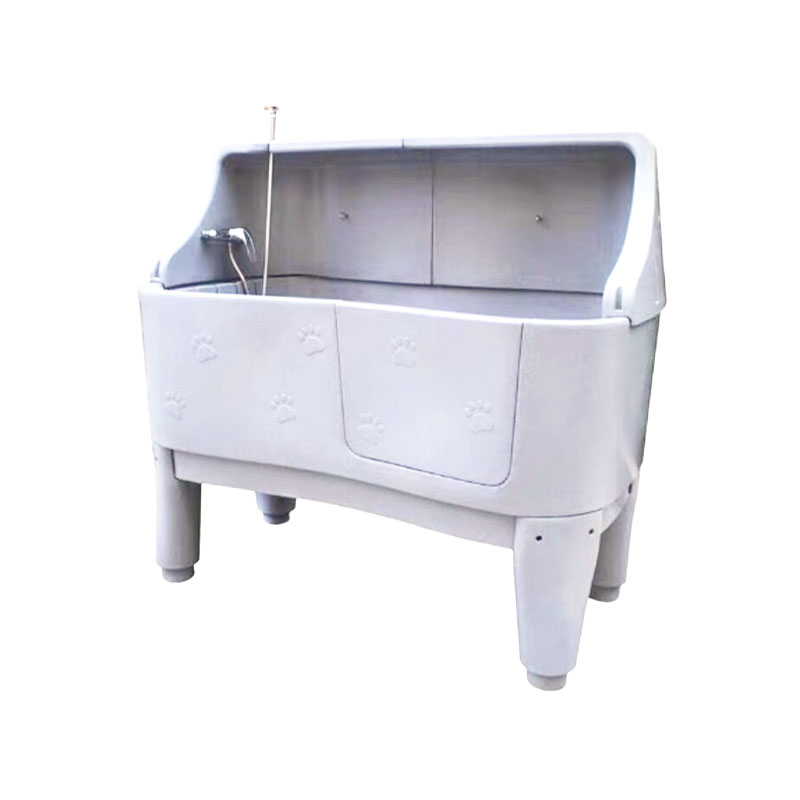
The Unique Demands of a Commercial Grooming Environment
Unlike a residential pet tub used a few times per week, a commercial unit in a busy grooming salon may handle 20 to 40 bathing sessions per day. Each session involves vigorous scrubbing, pressurized spray nozzles, and animals that range from a 2 kg Chihuahua to a 90 kg Newfoundland. The tub must also survive the chemical environment created by grooming shampoos, flea treatments, disinfectants, and bleach-based sanitizers applied between clients.
This operational profile translates into a precise set of material requirements:
- Structural rigidity sufficient to bear dynamic loads without cracking or deforming.
- Chemical inertness so that repeated disinfectant contact does not degrade the surface.
- Impact resistance that absorbs scratching and banging from animal claws and grooming tools.
- Slip and hygiene surfaces that can be textured during manufacturing to reduce animal injury risk.
- Corrosion immunity because water and metal fasteners frequently meet at drain fittings.
- Low total cost of ownership across a service life measured in years, not months.
No single material scores perfectly on every axis. The goal is to identify which material combination best balances these competing demands at a commercially viable price point.
Candidate Materials: A Technical Overview
Four material families dominate the conversation when engineers and procurement teams evaluate commercial pet bathtub construction. Understanding the intrinsic properties of each is essential before comparing them in real-world conditions.
1. High Density Polyethylene (HDPE)
High density polyethylene is a thermoplastic polymer with a tightly packed molecular chain structure that gives it a density typically ranging from 0.94 to 0.97 g/cm3. This dense chain packing produces a material with outstanding tensile strength relative to its weight, excellent resistance to most solvents and acids, and a surface that is naturally non-porous. HDPE is UV-stabilized grades are widely used outdoors, and the material retains meaningful impact toughness at temperatures as low as minus 40 degrees Celsius — well outside any grooming environment concern.
When processed through Pet bathtub rotational mold technology, HDPE can be formed into complex, seamless, hollow shapes with wall thicknesses controlled to within tight tolerances. The absence of seams is particularly significant in a wet commercial environment because seams are the primary site of bacterial colonization and structural fatigue.
2. Polypropylene (PP)
Polypropylene shares many surface-level similarities with HDPE — both are polyolefins, both are chemically resistant, and both are recyclable. However, polypropylene becomes brittle at temperatures below roughly 0 degrees Celsius and has a lower Izod impact strength than HDPE at room temperature. For grooming environments where large dogs shift their weight suddenly, that difference in impact behavior matters. PP is more commonly used for smaller, lightweight accessories within the grooming space rather than the primary tub body.
3. Fiberglass Reinforced Plastic (FRP)
Fiberglass tubs offer excellent rigidity and can be molded into aesthetically refined shapes. However, the gel-coat surface that provides their smooth finish is vulnerable to micro-cracking under repeated impact. Once the gel coat cracks, moisture penetrates the fiberglass matrix, enabling bacterial growth and structural delamination. Repairing a cracked fiberglass tub in a commercial setting requires specialized materials and skills, often resulting in the unit being taken out of service. FRP also cannot be seamlessly molded as a single hollow unit in the same way rotomolded HDPE can.
4. Stainless Steel
Stainless steel — particularly grade 304 — is hygienic, easy to sanitize, and carries a perception of professional quality. It is standard in veterinary surgical suites for good reason. However, for grooming bathtubs specifically, stainless steel presents several operational disadvantages. It is cold to the touch, which increases animal stress. It transmits sound efficiently, amplifying the noise of water and movement. It is significantly heavier than polymer alternatives, complicating installation and relocation. And fabrication of complex tub geometries — angled entries, contoured interiors, integrated drain channels — adds substantial cost compared to molded plastic.
Material Performance Comparison Table
The following table consolidates key performance indicators across the four candidate materials. Ratings are relative assessments based on published material data and field performance reports from commercial grooming facility operators.
| Property | HDPE (Rotomolded) | Polypropylene | Fiberglass (FRP) | Stainless Steel |
|---|---|---|---|---|
| Impact Resistance | Excellent | Moderate | Moderate | Good |
| Chemical Resistance | Excellent | Good | Moderate | Good |
| Seamless Construction | Yes | No | No | No |
| Weight (relative) | Low | Low | Medium | High |
| Low-Temp. Toughness | Excellent | Poor | Moderate | Good |
| Surface Texturing | Integral | Limited | Gel-coat only | Embossed/Add-on |
| Corrosion Risk | None | None | Low | Low (pitting risk) |
| Repairability | Moderate | Moderate | Difficult | Good (welding) |
| Noise Dampening | Good | Good | Moderate | Poor |
| Relative Unit Cost | Low-Medium | Low | Medium-High | High |
Why HDPE Outperforms Other Plastics for Pet Tub Manufacturing
The performance table above points clearly toward rotomolded HDPE as the leading choice, but the reasons behind that conclusion deserve deeper examination. Several properties work in combination to create an advantage that no competing material fully replicates.
Molecular Architecture and Impact Behavior
The high crystallinity of HDPE — typically in the range of 60 to 80 percent — creates a semi-crystalline structure that absorbs and distributes impact energy rather than concentrating it at a crack tip. This behavior, known in materials science as ductile fracture resistance, means that when a large dog suddenly shifts its full weight onto one corner of a tub, the HDPE wall flexes fractionally and recovers rather than initiating a crack. Over tens of thousands of such events across a multi-year service life, this difference is decisive.
In controlled drop-weight impact tests comparing equivalent wall thicknesses, HDPE consistently absorbs two to three times more energy before fracture than standard polypropylene and four to five times more than a comparable gel-coated fiberglass layup. These are not marginal differences — they translate directly into years of extended service life in commercial applications.
Chemical Resistance in Practice
Grooming facilities routinely use quaternary ammonium compounds, accelerated hydrogen peroxide solutions, and sodium hypochlorite (bleach) dilutions for sanitation between clients. Independent laboratory immersion studies show that HDPE maintains greater than 95 percent of its tensile strength after 1,000 hours of continuous exposure to a 10 percent bleach solution at 23 degrees Celsius. Fiberglass gel coats show measurable surface degradation and color fade under the same conditions, and standard polypropylene shows surface micro-cracking after extended exposure to strong oxidizing agents.
The Non-Porous Surface Advantage
Bacteria require surface features — pores, cracks, or scratches — to colonize. HDPE's non-porous surface, when properly maintained, does not provide those footholds in the way that fiberglass micro-cracks do. Studies examining microbial contamination on animal contact surfaces consistently rank seamless polyethylene among the most hygienic options available, second only to polished stainless steel in initial colonization resistance. However, HDPE maintains this advantage longer because it does not develop the surface fatigue that fiberglass does over time.
Weight and Ergonomics
A typical rotomolded HDPE commercial dog wash station with a capacity suitable for large breeds weighs between 25 and 45 kg empty, depending on wall thickness and size. An equivalent stainless steel fabrication weighs 60 to 90 kg. This weight difference has real operational consequences: HDPE tubs can be repositioned by two people without mechanical assistance, simplifying salon layout changes and reducing workplace injury risk for staff.
How Rotational Molding Unlocks HDPE's Full Potential
The manufacturing process used to shape HDPE is not incidental — it is central to why the finished tub performs the way it does. Rotational molding, or rotomolding, is a low-pressure casting process in which powdered HDPE is loaded into a closed mold that rotates simultaneously on two perpendicular axes inside a heated oven. As the mold heats, the powder melts and coats the interior surface uniformly. The mold then moves to a cooling station while continuing to rotate, solidifying the plastic into a seamless hollow part.
Advantages Specific to Rotomolded HDPE Tubs
- Uniform wall thickness: Because the mold rotates on two axes simultaneously, gravity distributes the melt evenly across all surfaces. Wall thickness variations in well-controlled rotomolding are typically less than 10 percent, eliminating the thin-spot failure modes common in blow-molded or thermoformed parts.
- Integrated texture: The mold surface can be machined or sandblasted to produce a textured interior floor in the finished tub. This texture provides grip for animals without requiring adhesive anti-slip mats, which are themselves a hygiene liability.
- Insert molding compatibility: Metal threaded inserts for drain fittings and mounting hardware can be placed in the mold before the cycle begins, becoming permanently encapsulated in the HDPE wall. This eliminates the need for post-molded holes — a major bacterial infiltration point.
- Design freedom: Rotomolding tooling is machined from aluminum, making it significantly less expensive than injection molding steel tooling. This economic reality enables manufacturers to produce ergonomically optimized tub geometries — graduated entry ramps, contoured side walls, integrated soap ledges — without the prohibitive tooling costs that would make equivalent injection-molded designs commercially unviable.
- Color integration: Pigment added directly to the HDPE powder produces through-color parts. Surface scratches do not expose a different-colored substrate, maintaining the aesthetic integrity of the tub across its service life.
Rotomolding vs. Injection Molding for Large Tub Formats
Injection molding can produce HDPE parts with very fine tolerances and excellent surface finish, but the process becomes economically impractical for parts with volumes exceeding roughly 20 liters. A commercial dog tub for large breeds may have an interior volume of 150 to 300 liters. At these sizes, injection mold tooling costs become prohibitive, cycle times per part extend dramatically, and the resulting parts must be assembled from multiple pieces — reintroducing seams. Rotomolding does not share these constraints. A single rotomolding cycle can produce a complete large-format tub as a single seamless unit, which is why it dominates the commercial pet equipment sector.
Key Design Considerations When Specifying a Commercial Pet Tub
Material selection does not exist in isolation — it intersects with product design decisions that determine whether a tub serves a grooming facility effectively for five years or fails in eighteen months. The following design parameters should be evaluated alongside material choice.
Wall Thickness Specification
For a durable dog wash station intended for breeds over 40 kg, industry practice generally calls for a nominal HDPE wall thickness of 6 to 10 mm. Thinner walls reduce material cost but increase the risk of localized flexure and eventual fatigue cracking at stress concentration points such as drain surrounds and mounting bracket locations. Thicker walls add weight without proportional benefit once a minimum structural threshold is exceeded. The 6 to 10 mm range represents the engineering optimum for most commercial applications.
Drain Configuration and Water Management
Effective water drainage is a hygiene and operational priority. Tubs should be designed with a floor slope of at least 2 degrees toward the drain outlet to ensure complete drainage after each session. Standing water accelerates biofilm formation and creates a slipping hazard. The drain fitting in a rotomolded HDPE tub should be a stainless steel insert molded in place, providing a corrosion-resistant, permanently sealed junction between the HDPE body and the plumbing connection.
Entry Height and Accessibility
Groomer ergonomics and animal safety both depend on entry height. A tub floor positioned at approximately 75 to 85 cm from the ground minimizes groomer back strain during bathing sessions that may last 20 to 40 minutes. For facilities serving older or mobility-impaired animals, a walk-in ramp channel integrated into the tub body — feasible in rotomolded HDPE but not in fiberglass or stainless steel without significant fabrication additions — reduces animal stress and injury risk during entry and exit.
Surface Finish and Slip Resistance
The interior floor texture is a critical safety specification. A surface with a coefficient of friction (wet) of at least 0.5 is generally recommended for animal contact surfaces to prevent paw slippage. In rotomolded HDPE tubs, this is achieved by specifying a stippled or embossed pattern on the mold floor surface. The texture is integral to the material — it cannot be worn away or peeled off the way adhesive anti-slip coatings can.
Color Selection
While color is partially an aesthetic choice, it has a functional dimension in commercial grooming. Lighter colors make it easier to visually inspect cleanliness between sessions and spot residual product buildup. Dark colors conceal debris better but make hygiene auditing harder. Most commercial operators prefer medium-tone colors — warm grays, slate blues, or muted greens — that balance visual cleanliness cues with the practical reality of a high-volume work environment.
Total Cost of Ownership: A Lifecycle Perspective
Purchase price is a poor proxy for the actual cost of commercial pet bathing equipment. A more complete analysis accounts for installation, maintenance, repair, downtime, and end-of-life disposal across the expected service life of the unit.
When these factors are aggregated across a 10-year ownership period, rotomolded HDPE tubs typically deliver a total cost per grooming session 30 to 50 percent lower than stainless steel alternatives and 20 to 35 percent lower than fiberglass units, primarily because of their lower maintenance burden and superior resistance to the failure modes — cracking, delamination, surface degradation — that drive early replacement in competing materials.
Selecting the Right HDPE Grade for Rotomolding
Not all HDPE formulations perform equally in rotomolding applications. The molecular weight distribution and melt flow index of the resin significantly affect how the powder coats the mold during the heating cycle and how the solidified part performs in service.
Melt Flow Index Considerations
Rotomolding grade HDPE typically has a melt flow index (MFI) in the range of 3 to 8 grams per 10 minutes. Lower MFI resins produce parts with higher impact toughness but require longer oven cycles and more precise temperature control. Higher MFI resins flow more freely, producing better surface detail reproduction from the mold texture, but the finished part may have slightly lower impact resistance. For commercial pet tubs, a mid-range MFI of 4 to 6 g/10 min, combined with UV stabilizer packages rated for outdoor use, represents standard practice.
UV Stabilization
Even when used indoors, a commercial pet tub may be exposed to significant UV radiation through windows or skylights. UV degradation in unstabilized polyethylene manifests as surface chalking, color fading, and gradual embrittlement. Specifying HDPE with a hindered amine light stabilizer (HALS) package appropriate for the expected UV exposure level adds minimal cost at the resin stage but can extend surface appearance life by three to five years in sun-exposed installations.
Antistatic Additives
In dry grooming areas adjacent to bathing stations, static charge accumulation on HDPE surfaces can attract pet hair and fine debris. Antistatic additive packages blended into the resin at the compounding stage address this issue without affecting the mechanical or chemical resistance properties of the finished part.
Hygiene Standards and Regulatory Context
Commercial grooming facilities in most jurisdictions operate under health and sanitation regulations that specify minimum surface hygiene standards for animal contact equipment. While these regulations vary by country and municipality, common themes include requirements for non-porous, cleanable surfaces, resistance to the disinfectants approved for use in animal care settings, and freedom from features that could trap organic material.
Rotomolded HDPE tubs, by virtue of their seamless construction and chemical resistance, inherently satisfy most of these requirements. Facilities seeking third-party certification for their hygiene practices — a growing marketing advantage in the premium grooming segment — will find that rotomolded HDPE equipment is straightforward to include in a documented sanitation protocol because its surface properties are consistent, predictable, and testable.
Hygiene Best Practice: For commercial grooming tubs, the combination of a seamless HDPE body, stainless steel insert drain fittings, and an integral textured floor eliminates the three most common bacterial harboring sites found in competing tub designs: seam joints, porous gel-coat cracks, and adhesive anti-slip mat edges. This construction approach aligns with the surface hygiene principles codified in ISO 14159 (safety of machinery — hygiene requirements for the design of machinery) and similar animal care facility standards.
Environmental Sustainability of HDPE in Commercial Pet Equipment
Sustainability considerations are increasingly part of commercial procurement decisions in the pet care industry. HDPE compares favorably to competing materials across several environmental metrics.
- Recyclability: HDPE (recycling code 2) is one of the most widely recycled plastics globally. At end of service life, a rotomolded HDPE tub can be ground into regrind material suitable for non-food-contact applications in recycled plastic lumber, traffic management products, and agricultural equipment components.
- Manufacturing energy: The rotomolding process operates at low pressures, using significantly less energy per kilogram of finished product than injection molding or metal fabrication. Typical rotomolding ovens operate at 260 to 400 degrees Celsius, and modern units incorporate heat recovery systems that reduce energy consumption per cycle by 15 to 25 percent compared to older equipment.
- Longevity as a sustainability factor: A tub that lasts 12 years rather than 5 years represents a 58 percent reduction in manufacturing resource consumption per year of service, even without considering recycling. The durability of rotomolded HDPE is therefore itself a significant sustainability advantage.
- No surface coatings: Unlike fiberglass tubs that require periodic reapplication of protective coatings containing volatile organic compounds, HDPE requires no surface treatments throughout its service life, eliminating a source of chemical waste in the grooming facility environment.
Specification Checklist for Purchasing Decision-Makers
For facility managers evaluating commercial pet bathtub procurement, the following checklist consolidates the critical specification points covered in this guide:
- Confirm the tub body is manufactured from rotomolding-grade HDPE, not polypropylene, ABS, or fiberglass.
- Verify that the tub is a single seamless unit — not assembled from multiple pieces joined by adhesive or mechanical fasteners.
- Confirm wall thickness specification: minimum 6 mm for breeds under 30 kg, 8 to 10 mm for large breed facilities.
- Verify that drain fittings are stainless steel inserts molded in place, not post-molded drilled and gasketed fittings.
- Confirm that the floor surface incorporates an integral anti-slip texture with a documented wet coefficient of friction of at least 0.5.
- Verify that the HDPE resin specification includes a UV stabilizer package appropriate for the installation environment.
- Request documentation of chemical resistance testing against the disinfectants used in your specific facility protocol.
- Confirm that the manufacturer can provide insert-molded hardware options for grooming accessory attachment points.
- Evaluate entry height against the ergonomic needs of your grooming staff and the size range of animals served.
- Request information on the expected service life and any manufacturer warranty covering structural integrity.
Frequently Asked Questions
Q1: Is rotomolded HDPE safe for animals with skin sensitivities or allergies?
HDPE is classified as biologically inert and is approved for direct food contact by major regulatory bodies worldwide. It does not leach plasticizers, bisphenols, or other potentially sensitizing compounds, making it one of the safest plastic surfaces for direct animal contact. Animals with documented skin sensitivities are no more reactive to HDPE surfaces than to stainless steel or glazed ceramic.
Q2: Can a damaged rotomolded HDPE tub be repaired rather than replaced?
Minor surface damage — shallow gouges, small stress cracks — can be repaired using HDPE-compatible plastic welding rods and a hot air plastic welder. The weld area should be ground smooth and inspected for structural integrity before returning the tub to service. Deep structural cracks through the full wall thickness indicate that the tub has reached end of service life and should be replaced. The economics of repair versus replacement depend on the extent of damage and the remaining service life expectancy of the unit.
Q3: What disinfectants are safe to use on HDPE grooming tubs?
Rotomolded HDPE is compatible with the most commonly used veterinary and grooming facility disinfectants, including quaternary ammonium compounds, accelerated hydrogen peroxide solutions, and diluted sodium hypochlorite at concentrations up to 10 percent. Phenolic disinfectants and concentrated solvent-based cleaners should be avoided, as these can cause surface swelling or micro-cracking at elevated concentrations. Always follow the disinfectant manufacturer's recommended dilution ratios and contact times.
Q4: How does rotomolded HDPE compare to acrylic for commercial pet tubs?
Acrylic tubs offer excellent initial surface gloss and color clarity, but acrylic is significantly more brittle than HDPE and scratches much more easily under animal claw contact. Scratched acrylic surfaces d

We provide customers with one-stop services ranging from product design, mold manufacturing to finished product production.
-
 +86-18006248936
 -
 ricky.t@zhroto.com
 -
 No.9 Jiangyuan Road, Luotang Street, Jiangyan District, Taizhou City,Jiangsu Province, China
Copyright © Jiangsu Zhroto Mould Co., Ltd. Rights Reserved.Custom Rotational Plastic Molding Factory
