 en
en 中文简体
中文简体 русский
 Español
 Deutsch
 Polskie
 REQUEST A QUOTE

 Home / News / Industry News / Custom Plastic Water Tanks: Rotomolding Mold Solutions & Manufacturing Guide
 Custom Plastic Water Tanks: Rotomolding Mold Solutions & Manufacturing Guide
Content
A facility manager at a small municipal water utility is looking at a 15,000-gallon replacement tank. The old steel tank has rusted through in three places, and the contractor quotes include welded seams that will require annual inspection. A rotomolding supplier offers a single-piece polyethylene tank with an expected service life of over 20 years, a uniformly molded wall thickness, and no welds that can corrode. For the manager, custom plastic water tanks are not just a cheaper option, they are the technically superior one.
Why Rotomolding Is the Preferred Process for Custom Plastic Water Tanks
Rotationally molded tanks outperform welded metal alternatives in corrosion resistance, impact strength, and total cost of ownership.
Rotomolding creates a seamless, stress-free product. The plastic powder is heated inside a rotating mold until it melts and coats the mold surface. Because the material fuses as a single part, there are no weld lines, no seams, and no weak points. This is why the rotomolding process for seamless water tanks has become the default method for custom water storage.
Here are the main reasons this process fits custom tanks:
- Uniform wall thickness. The material is deposited evenly on the mold walls, so wall thickness variations are typically within 10% to 15%.
- No internal stress. Unlike injection molding or blow molding, rotomolding creates parts without localized stress concentrations.
- Excellent chemical resistance. Polyethylene tanks handle many aggressive liquids, from fertilizers to industrial runoff.
- Design freedom for fittings. Bosses, reinforced openings, and recessed areas can be created without secondary machining.
For tanks with capacities from 500 liters to 50,000 liters, the mold is the heart of the project. A reliable custom water tank mold from a rotomolding mold maker ensures repeatable part quality and dimensional accuracy across every production cycle.
Material Selection: PE Grades That Perform
LLDPE is the best all-rounder for custom water tanks, while HDPE should be chosen only when higher stiffness is required.
The most common resins for custom plastic water tanks are:
- LLDPE (Linear Low-Density Polyethylene). This grade provides the best balance of impact resistance, environmental stress-crack resistance, and flexibility. It is the key grade for large tanks that must handle hydrostatic pressure.
- HDPE (High-Density Polyethylene). HDPE offers higher tensile strength and stiffness, but lower impact performance at low temperatures.
| Property | LLDPE | HDPE |
|---|---|---|
| Density | 0.91–0.94 g/cm³ | 0.94–0.96 g/cm³ |
| Tensile strength | Moderate | High |
| Impact resistance | Excellent | Good |
| Stress-crack resistance | Excellent | Moderate |
| Typical tank price | Lower | Higher |
For food-grade water storage, the resin must meet FDA 21 CFR 177.1520. For outdoor installations, UV stabilizers should be added at the compounding stage, usually at 1% to 2% by weight. Without these additives, the tank surface will degrade after a few seasons in direct sunlight.
Design Considerations for Custom Water Tank Molds
The mold geometry determines the quality of the tank more than any other factor.
When a custom tank project starts, the engineering team must decide the following:
- Wall thickness. For tanks up to 10,000 liters, a nominal wall of 6 to 8 mm is common. Larger tanks may need 10 to 12 mm.
- Draft angle. A minimum of 1 degree is required for easy part release; 3 degrees is recommended for complex shapes.
- Reinforcement ribs. Ribs should be placed on the outside of the tank, never inside, to avoid creating internal stress risers.
- Openings and bosses. For threaded outlets and manhole covers, the mold must include reinforced boss structures that do not compromise the wall thickness.
To achieve these specifications, mold making requires precision. In precision machining for water tank molds, semifinishing and finishing steps control cavity dimensions within plus or minus 0.1 mm. This level of accuracy produces the controlled wall thickness and smooth inner surface that a high-performance tank requires.
Selecting the right mold partner makes a measurable difference. A reliable custom water tank mold combines durable steel or aluminum construction with CNC-machined cavity features, so every production run delivers consistent results.
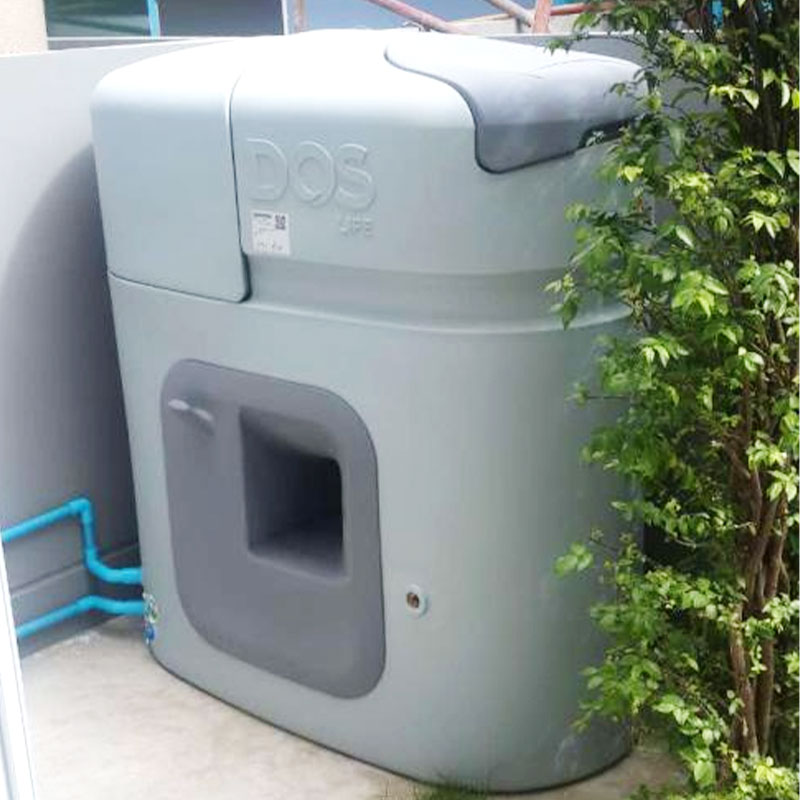 Custom Rotational Molding Water Tank Storage Container MoldThis industrial tooling solution enables the production of seamless, large-capacity plastic storage containers with uniform wall thickness, suitable for water and chemical storage across industrial and agricultural applications.View Product →
How to Choose a Custom Water Tank Manufacturer
Verify the supplier's certification, production capacity, and mold-making capability before awarding the tank project.
The most reliable way to evaluate a rotomolding partner is to look at three areas:
- Certification. An ISO 9001:2015 quality management system certifies that production processes are controlled. ISO 14001 and ISO 45001 certify environmental and occupational health standards.
- Mold and product capacity. A supplier that builds molds in-house can deliver an integrated solution. For example, Jiangsu ZHROTO Mould Co., Ltd. produces more than 800 sets of molds per year and 3,600 tons of plastic products annually.
- Equipment. CNC machining centers and rotomolding machines are the basics. A plant with more than 17 CNC and rotomolding units ensures short lead times and consistent quality.
The following table summarizes the evaluation criteria.
| Criteria | What to Look For |
|---|---|
| Mold making | In-house tooling department with CNC capability |
| Production capacity | Annual part volume and machine count |
| Quality system | ISO 9001, ISO 14001, ISO 45001 certificates |
| Experience | Similar tank or container projects in your industry |
FAQ
Q1: What is the typical wall thickness for a custom plastic water tank?
For most custom liquid storage tanks, the nominal wall thickness is 6 to 8 mm for capacities up to 10,000 liters. It can exceed 10 mm for very large tanks or for tanks designed for high-pressure service. A thin wall saves material but risks buckling; a thick wall increases weight and cost.
Q2: How large can a custom rotomolded water tank be?
Rotomolding can produce tanks up to 50,000 liters in a single piece, depending on mold size and oven dimensions. Larger capacities are usually made as several modules that are field-assembled with gasketed flanges.
Q3: How long does a custom water tank mold last?
A high-quality steel mold can produce over 10,000 cycles before maintenance. Aluminum molds are lighter and suitable for lower-volume runs. Proper storage and cleaning extend mold life significantly.
The decision about custom plastic water tanks is not a one-product decision. It is a decision about tooling, materials, and the manufacturing partner behind them. Suppliers that control both the mold and the molding step can tighten tolerances, reduce cycle time, and deliver a tank that will be in service for two decades.
When the application involves drinking water, fertilizer storage, or industrial chemical containment, start by defining the capacity and resin requirements. Then choose a certified manufacturer with in-house mold-making capability and proven rotomolding experience. That single step will save design iterations, sample rejects, and long-term maintenance costs.

We provide customers with one-stop services ranging from product design, mold manufacturing to finished product production.
-
 +86-18006248936
 -
 ricky.t@zhroto.com
 -
 No.9 Jiangyuan Road, Luotang Street, Jiangyan District, Taizhou City,Jiangsu Province, China
Copyright © Jiangsu Zhroto Mould Co., Ltd. Rights Reserved.Custom Rotational Plastic Molding Factory
