 en
 中文简体
 русский
 Español
 Deutsch
 Polskie
 REQUEST A QUOTE

 Home / News / Industry News / Aluminum Mold for Rotational Molding: Alloy, Wall Thickness, and Sourcing Guide
Aluminum Mold for Rotational Molding: Alloy, Wall Thickness, and Sourcing Guide
Content
- 1 Why Aluminum Beats Steel for Most Rotational Molds
- 2 Cast, Billet-Machined, or Sheet Steel: Choosing the Construction Route
- 3 Alloy, Wall Thickness, and Tolerances: The Numbers Worth Asking For
- 4 Where Rotomolding Tooling Projects Actually Lose Money
- 5 Matching the Tool to the Part You Are Actually Running
- 6 Frequently Asked Questions
A rotational molder quoting a 2,000-litre water tank tool often receives three prices that look nearly identical, plus one that comes in about 30 percent lower. The cheap quote almost always trims the same three things: shell wall thickness, casting quality, and how the parting line gets finished. Nothing fails on delivery day. It fails around month nine, when the flange stops sealing, cycle time creeps upward, and scrap rate doubles.
So the conclusion first: aluminum is the right material for the large majority of rotomolding tools, but "aluminum mold" is not a specification. What decides whether a tool pays for itself is the alloy, the construction route (cast or CNC-machined from billet), the wall thickness of the shell, how the mold is supported and vented, and whether the working surfaces were finished to a controlled standard.
Why Aluminum Beats Steel for Most Rotational Molds
Thermal conductivity is the core of the argument. Aluminum 6061 runs at roughly 205 W/m·K, while carbon steel sits near 45 W/m·K, so heat moves into the polymer and back out several times faster. In a rotomolding oven that difference becomes shorter heating and cooling segments, more even powder pickup across the mold wall, and less risk of under-fused powder in thick sections or tight corners.
Mass matters almost as much. Aluminum has a density of about 2.7 g/cm³ against 7.85 g/cm³ for steel, so a mold of comparable stiffness weighs less than half as much. Lighter molds mean less torque on the arm, slower wear on the carriage, faster load and unload, and no need to buy a bigger crane. Aluminum also does not rust, which matters in shops where tools sit idle between production runs.
The trade-offs are real and worth stating plainly. Aluminum is softer than steel, so it dents if the operator drops a finished part onto the parting face or drags a pallet across it. It scratches when abrasive fillers or glass-filled polymers run without care. And it corrodes where it contacts steel inserts or frames if the two metals are not isolated with washers, coatings, or a barrier layer. None of that argues against aluminum; it argues for specifying handling rules, surface protection, and isolation during the design review.
For long, thin-walled parts such as kayak hulls, aluminum tooling outperforms steel for exactly the same reasons: faster heat transfer, lower mass, and far less thermal lag along a long cavity.
Cast, Billet-Machined, or Sheet Steel: Choosing the Construction Route
All three routes are still quoted, and each one has a place. The question is never which is best in the abstract; it is which one fits the geometry, the tolerance, and the order volume you actually have.
Cast aluminumBillet aluminumSheet steel
| Item | Cast aluminum | CNC billet aluminum | Sheet steel |
|---|---|---|---|
| How it is made | Pattern first, then casting of the shell | Machined from plate or billet in one setup | Formed and welded sheet with steel frame |
| Typical lead time | 4 to 7 weeks including pattern | 3 to 6 weeks depending on size | 2 to 4 weeks |
| Wall thickness control | Coarser, porosity must be checked | Tight, controlled by the program | Consistent but thin |
| Surface detail | Good on organic shapes, texture from pattern | Sharp edges, crisp logos, fine grain | Limited, meist simple |
| Best fit | Large one-piece shells, tanks, floats | Inserts, baffles, tight mating faces, complex parting lines | Simple boxes and large flat panels |
| Watch out for | Porous castings and warped flanges | Higher machining cost, more material waste | Heat transfer that limits cycle time |
When a hybrid mold makes sense
Many production tools are neither purely cast nor purely machined. A cast shell carries the large curved body, while machined aluminum inserts handle the features that need precision: threaded bosses, baffle mounts, gasket grooves, and the flange itself. This combination keeps the cost of the big curved surface low while protecting the dimensions that determine whether the part seals and assembles.
Vehicle fuel tanks are a good example. Baffles, filler necks, sender mounts, and reinforcement ribs are machined and anchored into a cast or machined body, and the whole assembly is checked as a matched set before shipment.
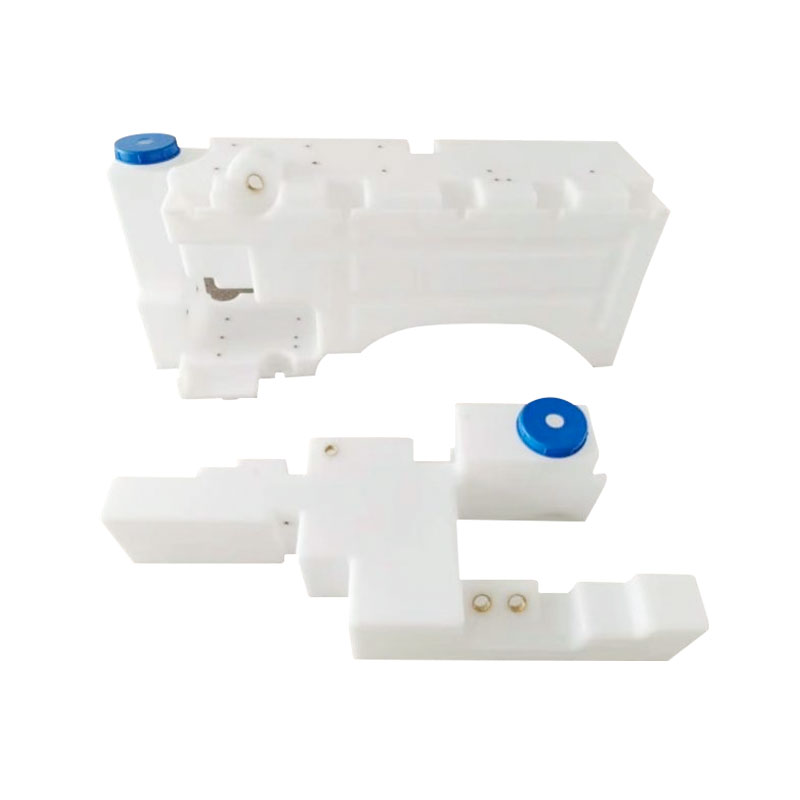 Automobile Fuel Tank Rotational Molding MoldRotational molding tool for seamless automotive fuel tanks and plastic gasoline containers, supporting complex geometries and sample validation before production.View Product →
Alloy, Wall Thickness, and Tolerances: The Numbers Worth Asking For
Three numbers separate a tool that runs for a decade from one that runs for two years: alloy grade, shell wall thickness, and the tolerance held on the mating faces.
Alloy grade
For machined molds, 6061-T6 is the default choice: weldable, dimensionally stable after machining, and available in thick plate. For cast shells, A356 or 356-T6 offers better castability and fatigue behaviour than general-purpose alloys. What you want to avoid is unspecified recycled stock. Gas porosity in a casting shows up as blisters and pinholes on the finished part surface, and it cannot be machined away later.
Shell wall thickness
Cast aluminum shells are commonly built at 8 to 12 mm, and billet-machined molds at 10 to 20 mm depending on part size and clamping loads. Support ribs are usually placed on 300 to 500 mm centres. A wall that is too thin will flex under vacuum, under clamping pressure, and across thousands of thermal cycles, and the flexing usually shows up as a wandering parting line long before anything visibly cracks. Pressure-rated products such as gas cylinders and closed containers justify the heavier end of those ranges, plus verified welds on every joint.
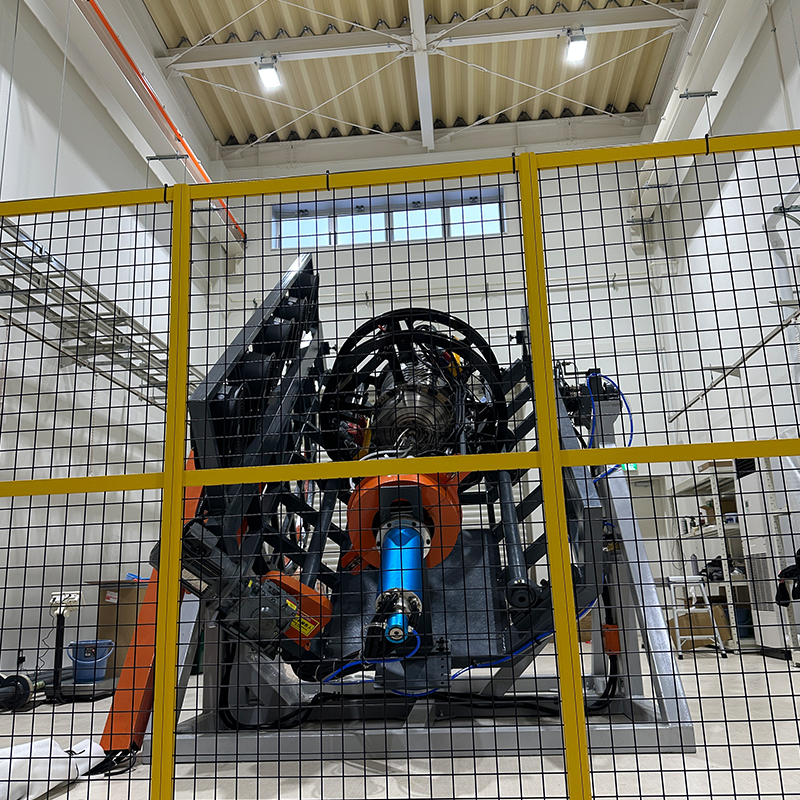 Hydrogen Gas Cylinder Rotational Molding MoldPrecision rotomolding tool for hollow plastic hydrogen cylinders, compatible with HDPE/XLPE and built for uniform wall thickness and stable closure.View Product →
Tolerances on the parting face
Molded part tolerances are normally written as ±2 percent of the dimension or ±0.5 mm, whichever is greater. The mold itself has to be tighter: ±0.1 to ±0.3 mm on mating faces, and flatness within 0.2 to 0.5 mm across the full flange. Alignment pins and bolt holes should be machined after the two halves are matched, not before, otherwise the tool may be accurate on each half and still out of register when closed.
Draft and radii
One to three degrees of draft on vertical walls, and internal radii at least equal to the part wall thickness, keep parts releasing cleanly without operator force. Deep draws, sharp corners, and heavy surface texture all need more.
Where Rotomolding Tooling Projects Actually Lose Money
Most failures trace back to a handful of specification gaps rather than to bad machining. These are the ones that bite in production:
- Unspecified shell thickness. If the drawing does not state a minimum wall, the foundry will optimise for material cost.
- Porosity in a cast shell. Pinholes appear as surface defects on parts, and the repair cost lands on the molder, not the foundry.
- A hand-finished parting line. Grinding a flange flat by hand gives you a seal that works cold and leaks hot.
- Missing vents and pressure relief. Trapped air creates internal pressure, blowholes, and moulded-in voids at the end of the cycle.
- Inserts that pull out. Threaded bosses and metal inserts must be mechanically anchored and machined to depth, not bonded into a shallow pocket.
- No surface treatment plan. Bare aluminum oxidises and stains; a defined finish and release practice protects both the tool and the part appearance.
- Tooling data that never gets handed over. Without 3D models, pattern ownership, and maintenance records, every future repair starts from scratch.
A short audit of how a tool is built, measured, and documented during mold manufacturing tells you more about a supplier than any brochure, because those habits carry straight into how the mold behaves on your machine.
Matching the Tool to the Part You Are Actually Running
General rules help with the first estimate, but the specific part decides. Two cases cover most of the inquiries that come across a mold builder's desk.
Large water tanks and storage containers
Above roughly 1,000 litres, a one-piece cast aluminum shell split on a horizontal flange is usually the most economical route. Wall thickness typically moves to 10 or 12 mm, lifting lugs and stiffening ribs are designed into the casting, and the flange is machined flat after casting rather than ground by hand. The trade-off is lead time, because pattern making adds weeks before any aluminum is poured.
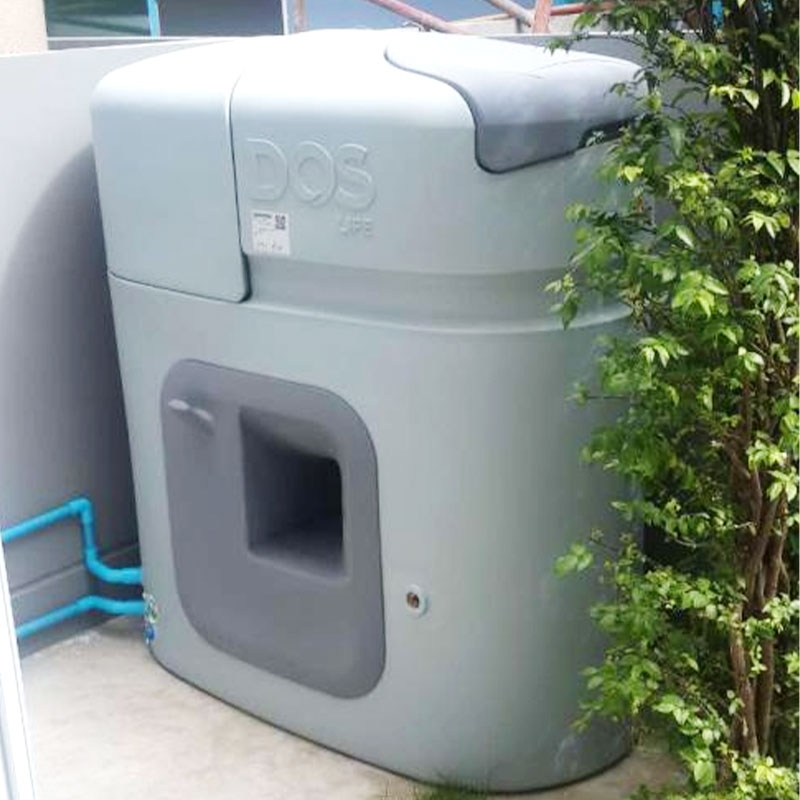 Water Tank Storage Container Rotational Molding MoldIndustrial rotomolding tool for large seamless water and chemical storage containers, supporting cylindrical or rectangular geometries with consistent wall thickness.View Product →
Small and medium consumer parts
Play equipment, floats, garden furniture, and similar parts in short runs usually favour billet-machined aluminum, because there is no pattern cost and the mold can be re-cut when the design changes. Surface texture comes from bead blasting or chemical etching on the working face, and that texture is the cheapest way to hide flow marks on a visible part.
Frequently Asked Questions
Q1: How long does an aluminum rotational mold last?
With reasonable handling, 5,000 to 10,000 cycles is a normal working life for a well-built tool, and some run well beyond that. The variables are the polymer being processed, whether abrasive fillers are involved, how hard the tool is thermally cycled, and whether it is cleaned and stored properly. Cast shells with porosity fail much earlier than sound ones.
Q2: Can a damaged aluminum mold be repaired?
Yes. Dents, scratches, and localised wear are routinely weld-repaired and re-machined. The exception is the parting face: any repair there must be re-machined and the halves re-matched, because a hand-blended repair will not hold a seal across a long flange.
Q3: Is aluminum suitable for very large molds?
Yes, and it is the standard choice for tanks of several thousand litres. As size grows, the support frame and rib layout matter more than the alloy itself, and mixed constructions with steel frames carrying aluminum shells are common for the largest tools.
Q4: What drives the price of an aluminum rotomolding mold?
Size and volume come first, then the construction route, the number of inserts and machined features, the machining hours required, and the surface finish spec. Billet machining costs more per hour but removes pattern cost, so the crossover point usually sits somewhere in the low-to-mid volume range.
Q5: What information should I send for an accurate quote?
A 3D model or dimensioned drawings, the polymer, target wall thickness, annual volume, expected mold quantity, required surface finish, insert details, and the arm swing and oven size of the machine the tool will run on. Those last two details prevent more redesigns than any other single item.
Aluminum tooling rewards buyers who specify rather than assume. Write down the alloy, the shell wall thickness, the tolerance on the parting faces, the surface finish, the insert design, and the venting arrangement before the purchase order goes out; those six lines prevent most of the failures described above. When the part is large, complex, or pressure-rated, bring the molder and the mold builder into the same conversation early, because mold design and process settings are the same decisions seen from two sides.
Start with the drawings you already have. Share the polymer, the wall thickness, and the annual volume, and you will get a clear answer on which alloy and construction route will hold those numbers for the life of the tool.

We provide customers with one-stop services ranging from product design, mold manufacturing to finished product production.
-
 +86-18006248936
-
 ricky.t@zhroto.com
-
 No.9 Jiangyuan Road, Luotang Street, Jiangyan District, Taizhou City,Jiangsu Province, China
Copyright © Jiangsu Zhroto Mould Co., Ltd. Rights Reserved.Custom Rotational Plastic Molding Factory
