
 en
en 中文简体
中文简体 русский
 Español
 Deutsch
 Polskie
 REQUEST A QUOTE


Why choose rotomolding for barricade mold production
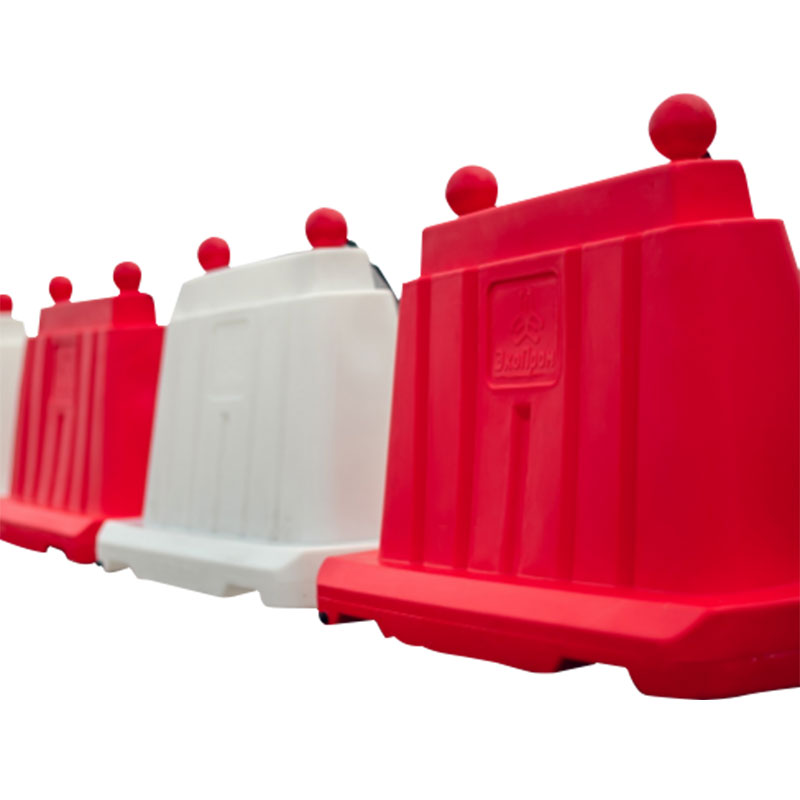
Road safety barriers must withstand repeated handling, outdoor exposure, vehicle impact risks, temperature changes, and demanding transportation conditions. These requirements make manufacturing technology a critical factor in product reliability. Rotational molding is particularly suitable because it can create seamless, hollow plastic structures with controlled wall thickness and excellent structural integrity. A well-designed barricade mold supports efficient material distribution while reducing unnecessary weight, making it practical for traffic control products that need to be moved frequently.
For water-filled barriers, rotational molding also provides an effective solution for producing large hollow bodies with integrated shapes and functional details. The use of sand-cast aluminum molds improves thermal transfer during heating and supports consistent polymer fusion. This combination is central to water filled traffic barrier tooling, where dimensional stability, repeatability, and production efficiency directly influence finished-product quality.
1. Water-Filled Traffic Barrier Molds
Water-filled traffic barriers are designed as lightweight products during transportation and handling, while gaining substantial stability after being filled with water at the installation site. Rotational molding is well suited to this structure because the process creates a hollow, seamless shell without welded joints. A properly engineered barricade mold can therefore produce a continuous body with reliable corners, transitions, filling openings, and reinforcement areas. The mold must maintain accurate dimensions through repeated heating and cooling cycles, which is why sand-cast aluminum is a valuable choice for this application.
The thermal conductivity of aluminum helps distribute heat efficiently across the mold surface. This supports uniform melting and fusion of the polymer powder and reduces the possibility of localized overheating or incomplete material bonding. For water filled traffic barrier tooling, consistent thermal behavior is especially important because uneven wall thickness may affect strength, leakage resistance, and dimensional stability. Compared with more complex multi-piece fabrication methods, rotational molding simplifies the production of large hollow barriers while supporting integrated features.
- Seamless construction: reduces dependence on welded joints and supports reliable containment.
- Efficient thermal transfer: aluminum molds promote consistent heating during the molding cycle.
- Flexible geometry: complex curves, handles, feet, and connecting features can be incorporated into the mold design.
- Transport efficiency: empty barriers remain relatively lightweight before filling.
2. Safety Barricade and Road Divider Molds
Safety barricades and road dividers serve a broader range of traffic-management purposes than water-filled barriers alone. They may be used around construction zones, temporary lane changes, pedestrian separation areas, parking facilities, and public events. Rotational molding enables manufacturers to develop hollow structures with substantial exterior dimensions while maintaining manageable product weight. In this category, rotational molding safety products benefit from seamless construction, impact tolerance, and the ability to integrate functional details directly into the mold.
The design of the mold influences how effectively the finished divider handles repeated movement and field exposure. Rounded corners can reduce stress concentration, while carefully positioned reinforcement areas can improve structural performance without creating unnecessarily thick sections. The use of sand-cast aluminum supports mold stability and repeatable production, while modern engineering can optimize venting, parting lines, mounting features, and demolding areas. These factors distinguish high-quality durable plastic road divider manufacturing from basic plastic forming approaches.
A further advantage is production flexibility. Different barrier lengths, connection systems, surface textures, and identification areas can be developed through dedicated mold configurations. This makes rotational molding suitable for customized traffic products without requiring the extensive assembly associated with separately manufactured components.
- Review the barrier's intended environment, dimensions, and functional requirements.
- Optimize wall distribution, corners, openings, handles, and connection structures for rotational molding.
- Develop the three-dimensional mold design and confirm critical dimensions before manufacturing.
- Produce and inspect the aluminum mold using precision machining processes.
- Conduct mold trials, evaluate samples, and refine production parameters before final acceptance.
3. Heavy-Duty Plastic Road Divider Molds
Heavy-duty road dividers are intended for environments where products experience frequent transportation, installation, weather exposure, and mechanical contact. Their mold design therefore needs to prioritize durability as well as appearance. Rotational molding is advantageous because the finished component can be produced as one hollow body, avoiding many weak interfaces. For durable plastic road divider manufacturing, the combination of seamless construction and carefully controlled polymer distribution provides a strong foundation for long-term service.
The mold itself must also withstand demanding production conditions. Repeated heating and cooling can influence mold dimensions if the tooling is poorly designed or manufactured. Sand-cast aluminum provides good thermal conductivity and dimensional stability, helping support repeatable cycles. This is particularly valuable for barricade mold applications requiring consistent output across large production runs. Mold maintenance should include cleaning, inspection of vents and connection areas, checking for surface damage, and verification of critical dimensions.
Compared with smaller safety products, heavy-duty dividers usually require greater attention to structural transitions, lifting points, interlocking systems, and base geometry. Engineering teams must balance durability with manufacturability so that the finished product remains practical to produce and handle. These considerations also make rotational molding safety products suitable for customized road-control systems where reliable performance is more important than extremely thin construction.
| Product category | Primary positioning | Main tooling advantage | Typical application |
| Water-filled barriers | Temporary traffic separation | Seamless hollow structure | Construction zones and road works |
| Safety barricades | Pedestrian and vehicle control | Flexible integrated geometry | Events and public facilities |
| Heavy-duty road dividers | Long-term demanding use | Stable aluminum tooling and repeatability | High-traffic and industrial areas |
How Zhroto Mould Supports Barricade Mold Development
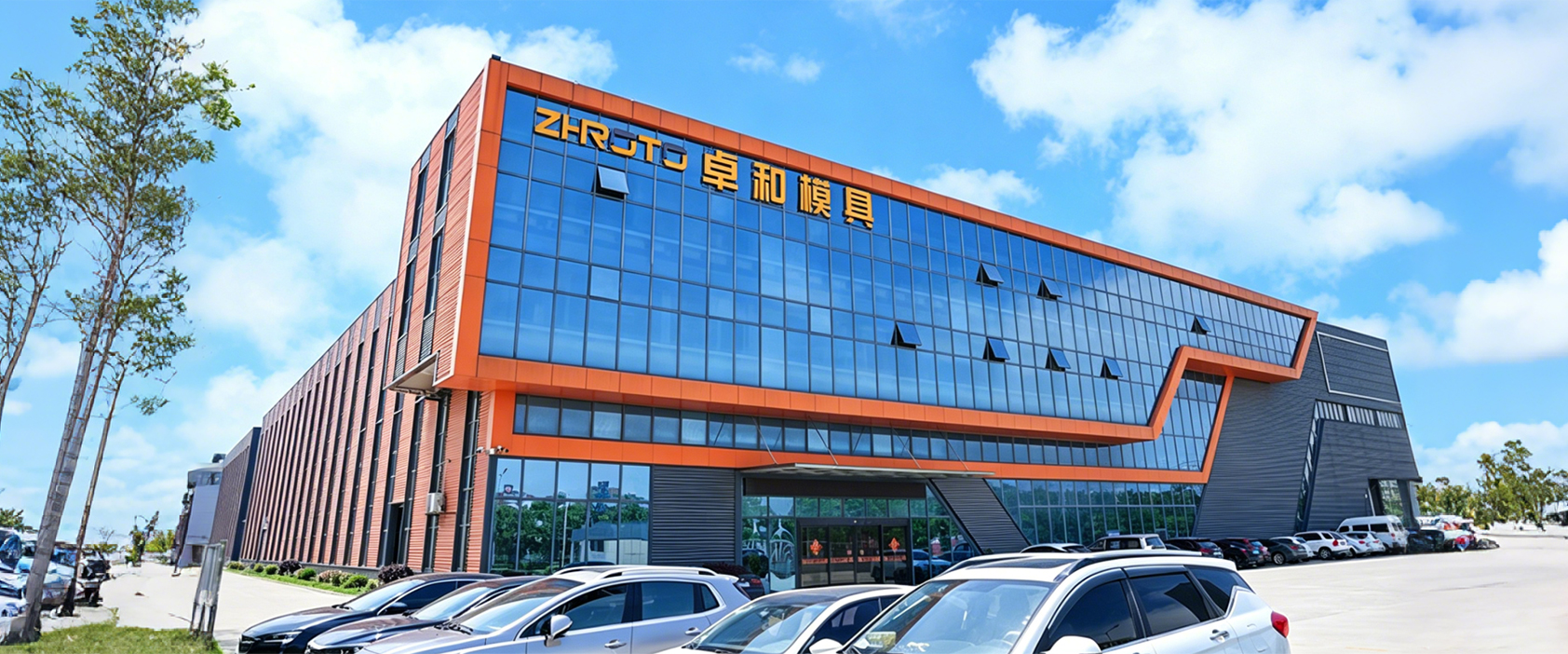
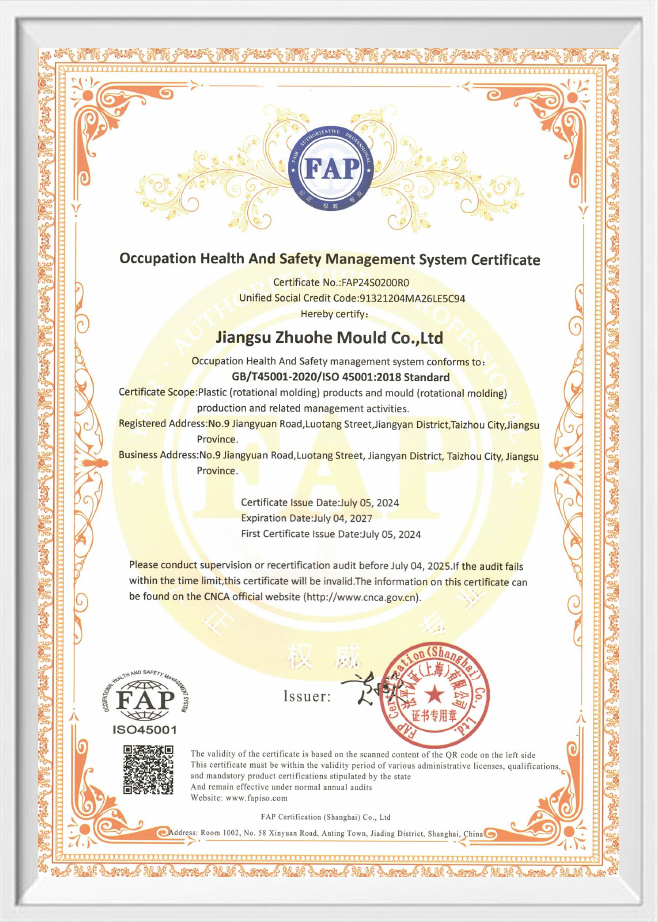
Founded in 2015, Jiangsu Zhroto Mould Co., Ltd. specializes in rotational molding mold design, manufacturing, rotomolded product processing, and integrated technical solutions. Its modern facility in Jiangyan District, Taizhou City includes standardized production workshops and supports an annual output of more than 800 mold sets. The company's experience across automotive, agricultural, industrial, water-treatment, and outdoor applications provides a practical engineering foundation for water filled traffic barrier tooling and related products.
For a new barricade project, the development process begins with application analysis, product structure review, and design optimization. Professional CAD modeling is then used to establish the mold structure before precision CNC manufacturing and sample validation. This workflow helps ensure that a barricade mold is compatible with the intended rotational molding equipment and production requirements.
Gas-Heated and Electric-Heated Rotomolding Solutions
Zhroto Mould provides tooling compatible with conventional gas-heated rotational molding machines as well as newer electric-heated systems. Electric heating places greater emphasis on temperature management, thermal conductivity, and zoned heating performance. For durable plastic road divider manufacturing, this capability can support more controlled processing and consistent production when the mold and machine are engineered as an integrated system.
The company's electric-heated rotomolding capabilities include precise temperature management, independent heating zones, high thermal efficiency, and reduced energy consumption. These characteristics are particularly useful when manufacturers require stable production conditions across large or complex barricade geometries. The company also provides mold testing, quality inspection, acceptance support, production guidance, maintenance advice, and ongoing technical assistance.
Why Rotomolding Is a Practical Choice
The main reason to choose rotational molding is its ability to combine structural performance, design flexibility, and efficient production for large hollow plastic products. Seamless construction minimizes assembly requirements, while aluminum tooling provides reliable heat transfer during processing. For rotational molding safety products, these advantages can translate into consistent dimensions, dependable wall fusion, and practical field performance.
Rotational molding also supports product customization. Barrier bodies can incorporate different connection systems, filling openings, handles, reinforcing features, and surface details without requiring multiple assembly stages. When tooling is properly engineered and maintained, manufacturers can achieve stable production over repeated cycles while adapting the product design to specific traffic-management requirements.
Frequently Asked Questions
Q1: Why is aluminum suitable for barricade molds?
Aluminum provides strong thermal conductivity and good dimensional stability, helping heat transfer evenly during rotational molding. Sand-cast aluminum is especially practical for large hollow traffic products that require repeated production cycles.
Q2: What makes rotational molding suitable for water-filled barriers?
The process can produce seamless hollow structures with integrated functional features. This makes water filled traffic barrier tooling suitable for lightweight barriers that become stable after filling and can be efficiently transported before installation.
Q3: Can Zhroto Mould develop customized traffic barrier tooling?
Yes. Jiangsu Zhroto Mould Co., Ltd. can support projects from concept evaluation and 3D engineering through mold manufacturing, trial validation, inspection, delivery, and production support. The process can be adapted to specific product dimensions and machine requirements.
Q4: How can mold service life be maintained?
Regular cleaning, inspection, correct storage, careful handling, and timely maintenance of vents and critical tooling surfaces can help preserve dimensional accuracy. Proper process control also reduces unnecessary thermal stress on the mold.
Q5: What applications can use these rotational molding solutions?
Applications include construction-zone barriers, temporary road dividers, pedestrian separation systems, event safety barriers, parking control products, and other outdoor traffic-management equipment requiring robust hollow plastic construction.
Ultimately, barricade mold production benefits from a tooling strategy that considers thermal behavior, structural geometry, material distribution, equipment compatibility, and long-term maintenance together. With sand-cast aluminum molds, professional engineering, and a complete development workflow, rotational molding provides a dependable manufacturing route for high-performance traffic safety products.
 +86-18006248936
  ricky.t@zhroto.com
  No.9 Jiangyuan Road, Luotang Street, Jiangyan District, Taizhou City,Jiangsu Province, China