
 en
en 中文简体
中文简体 русский
 Español
 Deutsch
 Polskie
 REQUEST A QUOTE


What Factors Influence Agricultural Machinery Parts Mold Lifespan?
Agricultural machinery operates in demanding environments where dust, moisture, temperature changes, vibration, impact, chemicals, and continuous outdoor exposure can affect component performance. For manufacturers producing protective covers, housings, tanks, guards, and other large plastic components, mold lifespan directly influences production stability, tooling cost, dimensional consistency, and product quality. Understanding the factors that determine tooling longevity is therefore essential when selecting a manufacturing process and designing a mold for long-term service.
A well-designed agricultural machinery parts mold must balance structural strength, dimensional accuracy, heat distribution, surface quality, and ease of maintenance. Rotational molding is particularly suitable for large hollow agricultural components because it can create seamless structures with relatively uniform wall thickness and without the internal stresses commonly associated with some other molding processes. Jiangsu Zhuohe Mould Co., Ltd. develops rotational molding solutions around these requirements, supporting applications ranging from curved protective components to large agricultural equipment panels.
1. Large Structural Components and Protective Agricultural Parts
Large structural components represent one of the most important categories of agricultural rotational molding applications. This group can include machinery covers, protective housings, guards, wheel-related components, operator protection elements, and large curved panels. Their defining feature is the need to combine substantial surface area with controlled geometry and reliable impact resistance. Unlike small precision parts, these components can experience significant deformation risks if the mold structure, heating conditions, or material distribution are not properly managed.
For this category, mold durability begins with structural design. A rigid mold body helps maintain dimensional stability during repeated heating and cooling cycles. Properly designed corners, transitions, mounting areas, and demolding features reduce localized stress during production. The one-piece rotational molding approach described by Jiangsu Zhuohe Mould Co., Ltd. provides a seamless mold structure that supports stable production and helps reduce weak areas that could contribute to premature deformation or cracking.
Another important consideration is surface quality. Agricultural machinery components are often highly visible and may need smooth, consistent surfaces for appearance, cleaning, or downstream assembly. A stable mold surface can reduce defects and help maintain repeatable product quality over many production cycles. This is particularly important for farm equipment tooling durability, because frequent repairs or surface corrections can increase downtime and reduce the economic value of the original tooling investment.
- Rigid construction improves dimensional stability during repeated thermal cycles.
- Seamless mold structures can reduce weak points associated with poorly integrated tooling sections.
- Optimized corners and curved surfaces support more consistent material distribution.
- Accessible tooling geometry simplifies inspection, cleaning, and routine maintenance.
Compared with smaller agricultural components, large protective parts place greater demands on mold stiffness and thermal consistency. For this reason, manufacturers should evaluate the complete production environment rather than selecting tooling based only on initial purchase price.
2. Agricultural Tanks, Containers, and Fluid-Handling Components
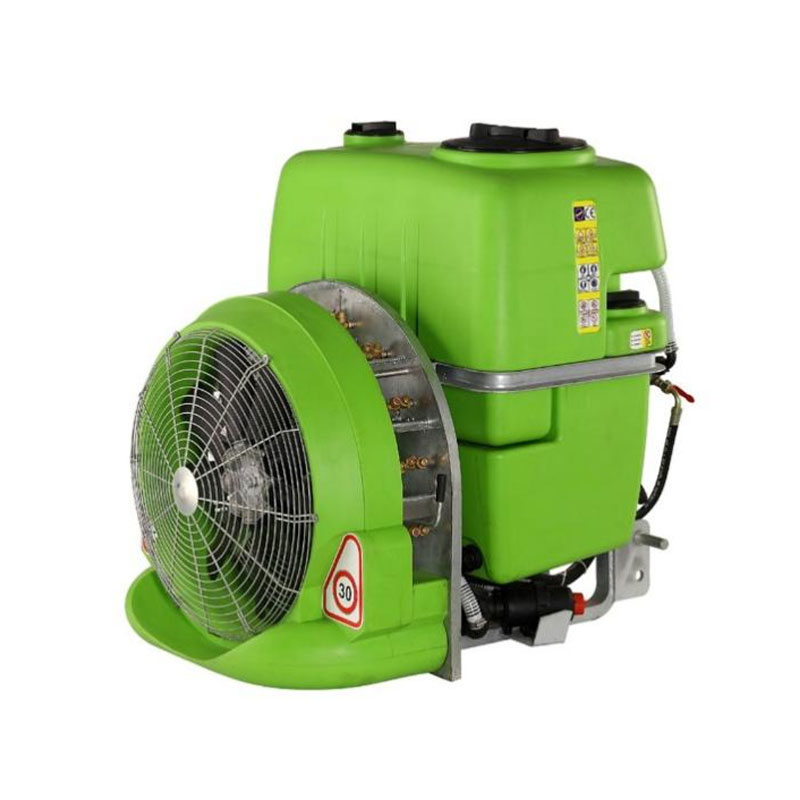
A second major category includes tanks, containers, reservoirs, and other hollow agricultural components. These products may be used for water storage, chemical handling, agricultural fluids, cleaning systems, or equipment-mounted reservoirs. Their positioning is different from protective panels because leak resistance, wall uniformity, dimensional stability, and internal surface quality become especially important.
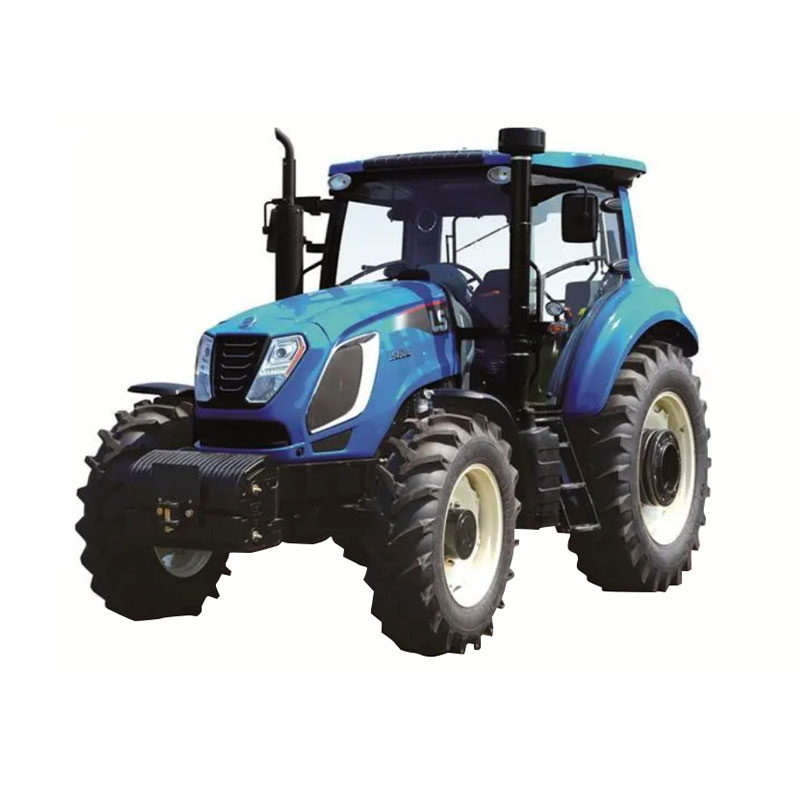
Rotational molding is well suited to these products because the process can produce hollow structures without conventional weld seams in the main body. A properly engineered mold supports consistent material distribution while allowing designers to create complex shapes, integrated contours, and large enclosed volumes. For applications associated with rotomolded tractor component manufacturing, the ability to create durable, lightweight, and geometrically complex parts can be a significant production advantage.
Mold lifespan in this category is strongly affected by thermal cycling. Repeated heating and cooling can gradually influence tooling surfaces, mounting areas, and dimensional accuracy if the mold is poorly designed or inadequately maintained. Temperature control is therefore an important part of modern mold engineering. Electric-heated rotational molding can provide more precise process control and zoned heating, while conventional gas-heated systems remain widely applicable across many agricultural products.
Jiangsu Zhuohe Mould Co., Ltd. has developed capabilities for both conventional gas-heated and electric-heated rotational molding systems. Its electric-heated solutions are designed around precise temperature management, independent heating zones, and improved process control. These capabilities can be particularly valuable when producing agricultural containers with complicated geometry or demanding wall-thickness requirements.
| Product category | Main function | Key mold requirement | Typical application |
| Protective components | Protection and enclosure | Rigidity and surface stability | Machine covers and guards |
| Fluid containers | Storage and fluid handling | Wall consistency and dimensional accuracy | Water and agricultural fluid tanks |
| Equipment housings | Component protection | Complex geometry and repeatability | Machinery housings and control enclosures |
3. Equipment Housings and Complex Curved Components
The third category covers equipment housings and complex curved components. These parts are generally developed around specific machinery architectures and may contain irregular contours, mounting points, openings, ribs, or other structural features. Their primary purpose is to protect internal mechanisms while integrating efficiently with the overall machine design. Consequently, tooling must provide both geometric flexibility and long-term dimensional stability.
For these applications, mold lifespan depends heavily on engineering accuracy. Poorly positioned parting areas, insufficient draft, difficult demolding features, or inconsistent thermal behavior can accelerate tooling wear and create production problems. A professional heavy duty plastic mold maintenance program should therefore begin during the design stage rather than only after a mold has already developed defects.
CAD-based three-dimensional engineering is useful for evaluating complex surfaces before machining begins. Jiangsu Zhuohe Mould Co., Ltd. follows a development workflow that can include project evaluation, product structure optimization, 3D modeling, mold design confirmation, precision CNC machining, trial production, sample validation, inspection, and delivery. This integrated process helps identify potential manufacturing problems before they become costly tooling modifications.
The major advantage of this category is design flexibility. Rotational molding can accommodate large curved surfaces and hollow structures while maintaining a relatively simple mold configuration. Compared with more rigid tooling approaches, this can facilitate product variations and reduce the complexity of changing between different agricultural component designs.
Key Factors That Determine Tooling Lifespan
Although product category affects tooling requirements, several general factors influence the service life of nearly every agricultural rotational mold. Material selection, mold thickness, thermal cycling, surface treatment, production frequency, demolding technique, cleaning practices, and storage conditions should all be considered together. A mold used occasionally in a controlled facility will naturally experience different stresses from tooling operated continuously in a high-volume agricultural component program.
- Define the product geometry and production volume before selecting the mold structure.
- Choose suitable tooling materials and manufacturing methods for the expected thermal cycle.
- Validate the mold through trial production and dimensional inspection.
- Inspect surfaces, mounting points, seams, and critical areas at scheduled intervals.
- Clean and store molds correctly to prevent contamination, corrosion, or accidental damage.
Maintenance is equally important. Routine inspection should look for surface damage, distortion, loose hardware, contamination, and changes in product dimensions. Correct handling during installation and removal can also prevent unnecessary impact damage. A documented maintenance schedule makes it easier to identify gradual changes before they affect production quality.
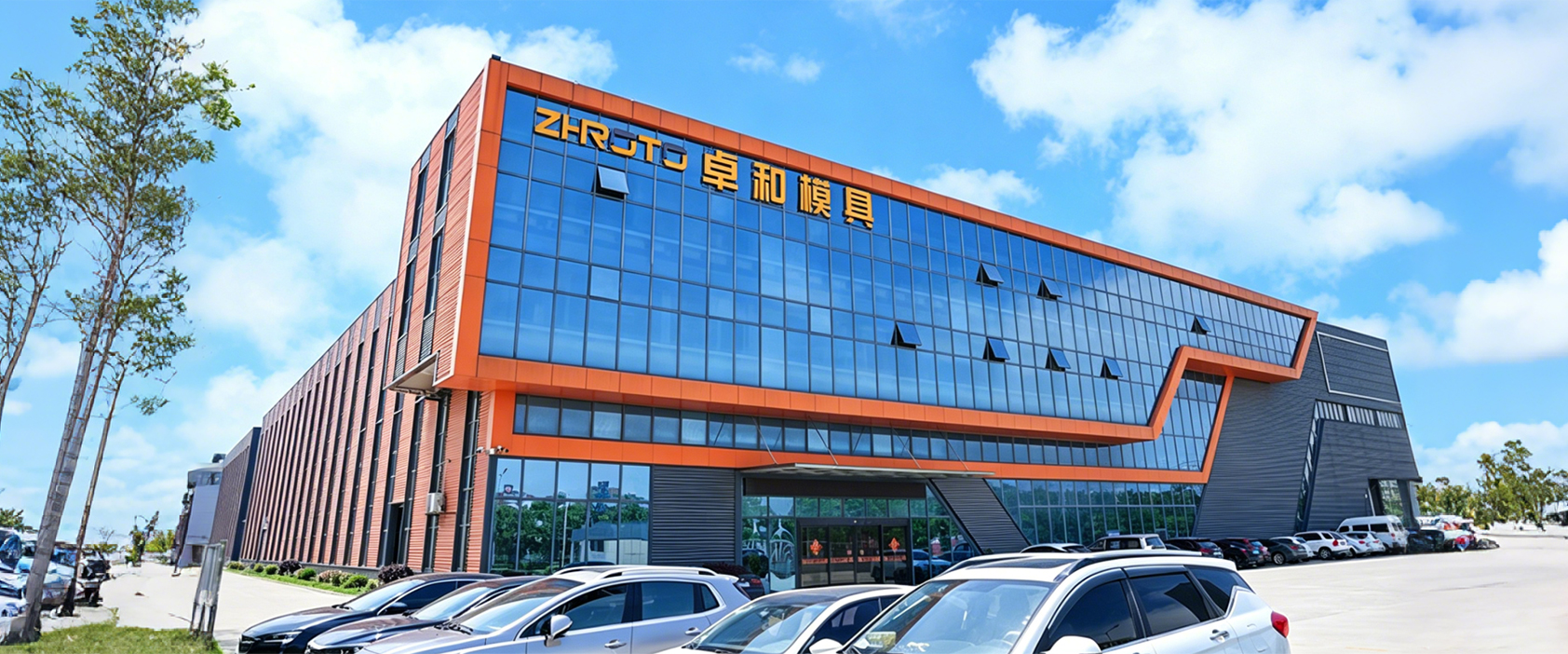
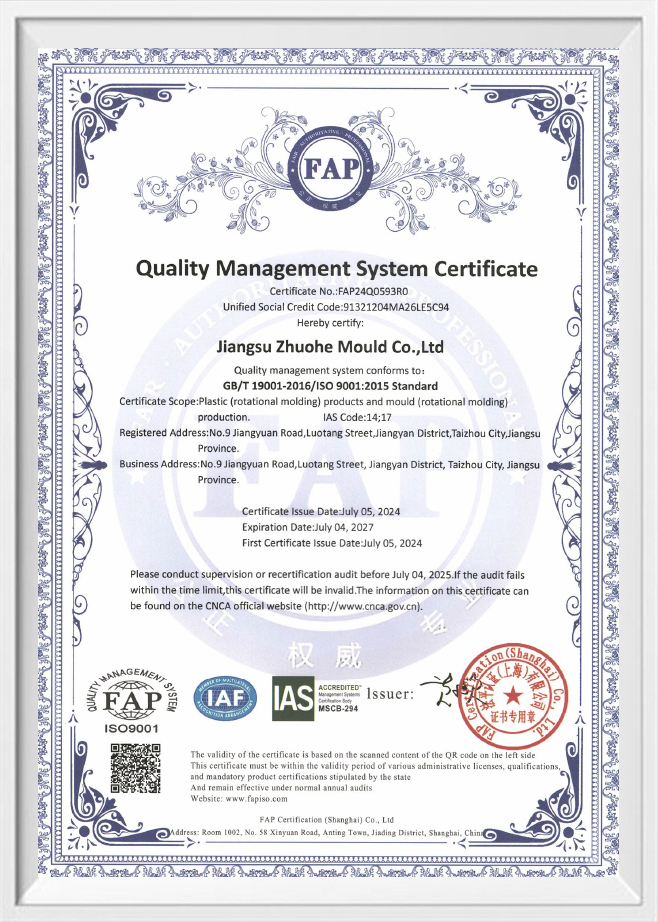
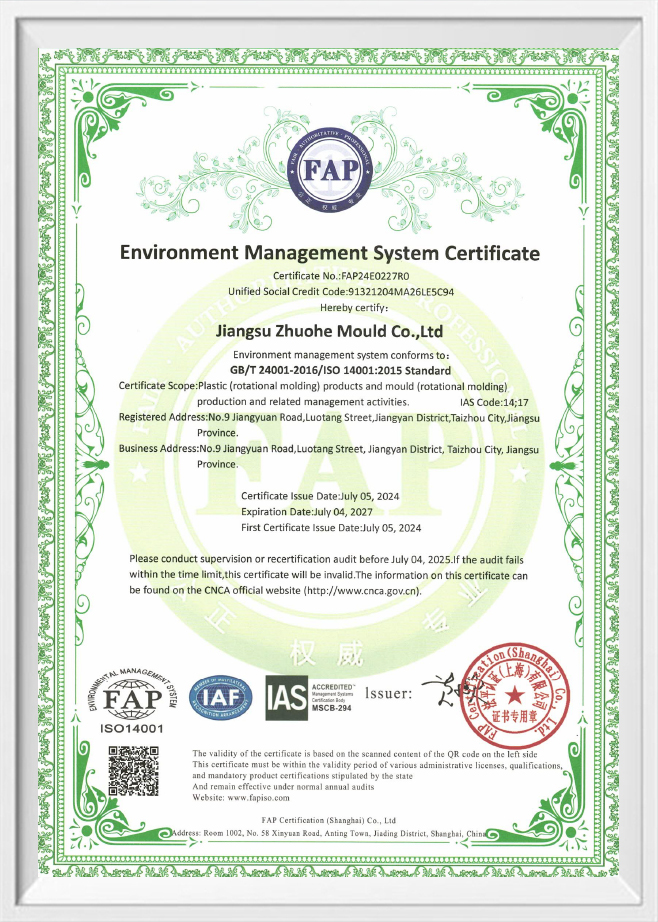
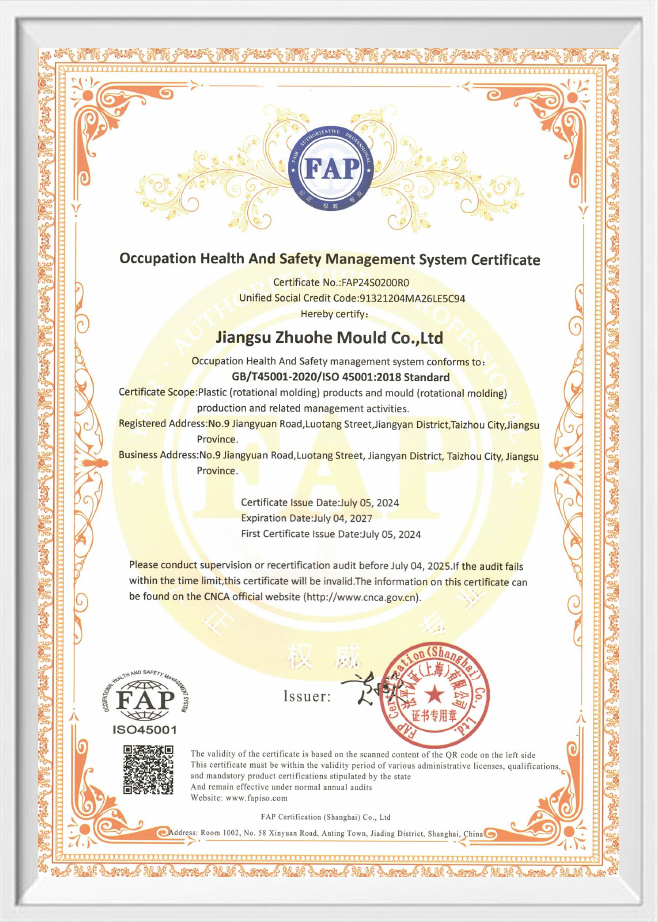
Jiangsu Zhuohe Mould Co., Ltd. combines mold manufacturing with maintenance advice and production technical support. Founded in 2015, the company operates a modern facility in Jiangyan District, Taizhou City, with standardized production workshops and capabilities covering design, engineering, CNC machining, mold testing, quality inspection, and technical assistance. Its management systems include ISO 9001:2015, ISO 14001:2015, and ISO 45001:2015 certifications.
Material, Heating, and Production Management
Tooling material must be matched with the intended manufacturing conditions. The mold should tolerate repeated thermal exposure while retaining its shape and surface condition. Heating uniformity is also critical because uneven thermal conditions can contribute to inconsistent product walls, excessive local stress, or unnecessary wear. Electric-heated rotational molding provides an additional option where precise temperature control and zoned heating are important to product requirements.
Production management also has a direct relationship with lifespan. Operators should follow appropriate loading, heating, cooling, demolding, and cleaning procedures. Excessive mechanical force during part removal can damage edges and surfaces even when the mold itself was initially well engineered. For this reason, heavy duty plastic mold maintenance should be treated as an ongoing production responsibility rather than an occasional repair activity.
Frequently Asked Questions
Q1: What mainly determines the lifespan of an agricultural machinery mold?
Mold structure, material quality, thermal cycling, production frequency, demolding practices, cleaning, storage, and preventive inspection are the main factors. Correct design and disciplined maintenance can significantly improve long-term reliability.
Q2: Why is rotational molding suitable for agricultural machinery components?
Rotational molding is suitable for large hollow and curved components because it supports seamless structures, flexible geometries, and relatively uniform material distribution. It can also support durable housings, tanks, guards, and protective panels.
Q3: How can farm equipment tooling durability be improved?
Manufacturers should optimize mold geometry, select appropriate materials, control heating conditions, validate prototypes, and establish regular inspection and maintenance procedures. These measures reduce avoidable tooling stress and production interruptions.
Q4: Can Jiangsu Zhuohe Mould Co., Ltd. provide customized agricultural tooling?
Yes. The company provides integrated rotational molding services covering project evaluation, product optimization, 3D engineering, mold manufacturing, testing, quality inspection, delivery, production support, and maintenance advice. Its experience covers agricultural machinery and other large plastic component applications.
In conclusion, mold lifespan is not determined by one factor alone. It is the result of engineering design, tooling construction, thermal management, production practices, and preventive maintenance working together. Manufacturers that evaluate these elements from the beginning can obtain more stable production, longer tooling service life, better dimensional consistency, and lower lifecycle costs. For agricultural machinery manufacturers, selecting a professionally engineered rotational mold is therefore an important investment in reliable long-term production.
 +86-18006248936
  ricky.t@zhroto.com
  No.9 Jiangyuan Road, Luotang Street, Jiangyan District, Taizhou City,Jiangsu Province, China