
 English
 中文简体
中文简体 русский
 Español
Military box mold


 [email protected]
 +86-18006248936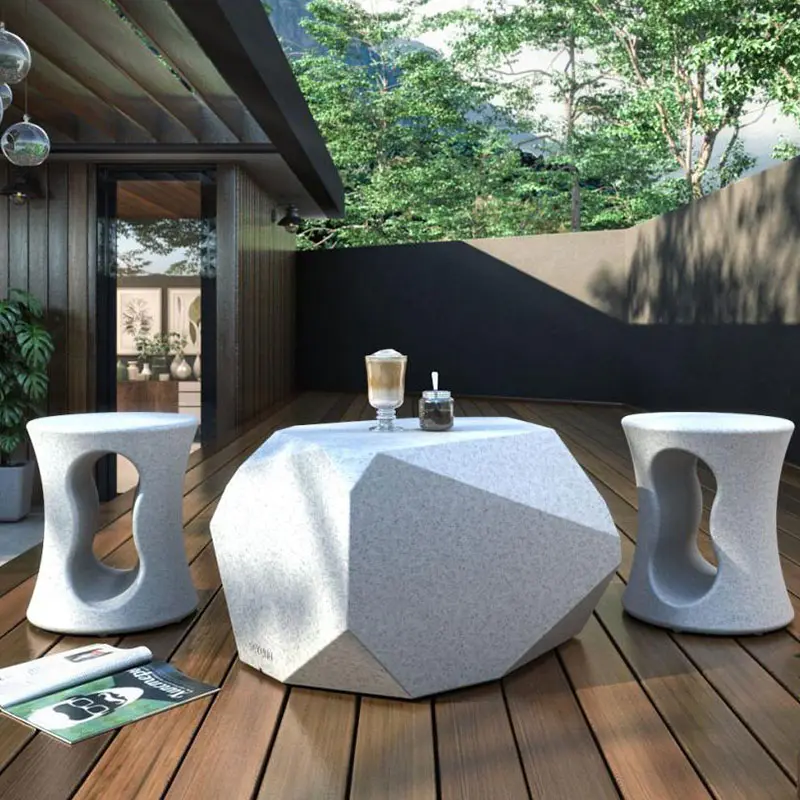

We provide top plastic furniture solutions to businesses in all walks of life. With expertise in rotational, thermoforming, and compression molding technologies, we can create seamless one-piece designs that resist wear, tear, and harsh weather conditions, delivering high-quality, durable, and versatile furniture to suit your needs Specific needs, beyond your expectations. Rotational molded furniture is ideal for indoor and outdoor applications. Compared to other plastic molding processes, such as injection molding and blow molding, rotational molding molds are generally less expensive. Especially for large products, the mold structure is relatively simple and the material consumption is low. The rotational molding process is not limited by product size and is particularly suitable for the production of large-volume, hollow furniture products. The unique wall thickness control capability of the rotational molding process is a significant advantage when manufacturing furniture molds. This control precision allows the edge thickness of rotomolded furniture to easily exceed 5mm, thus significantly improving its edge strength. This increased edge strength means greater durability and reliability for furniture that needs to withstand greater forces or is used more frequently. For example, the edges of outdoor furniture, children's furniture, or storage cabinets often need to withstand additional pressure or impact. The rotational molding process can meet these special needs and ensure the safety and stability of the furniture during use.
We understand that privacy protection is crucial for our clients and we take it seriously. Weare committed to protecting your privacy and ensuring your personal information and
business details are kept confidential.
Rest assured that your personal information and business details will never be shared withany third party without your express consent We will only use your information for thepurposes of providing you with our services and fulfilling our contractual obligations to you.
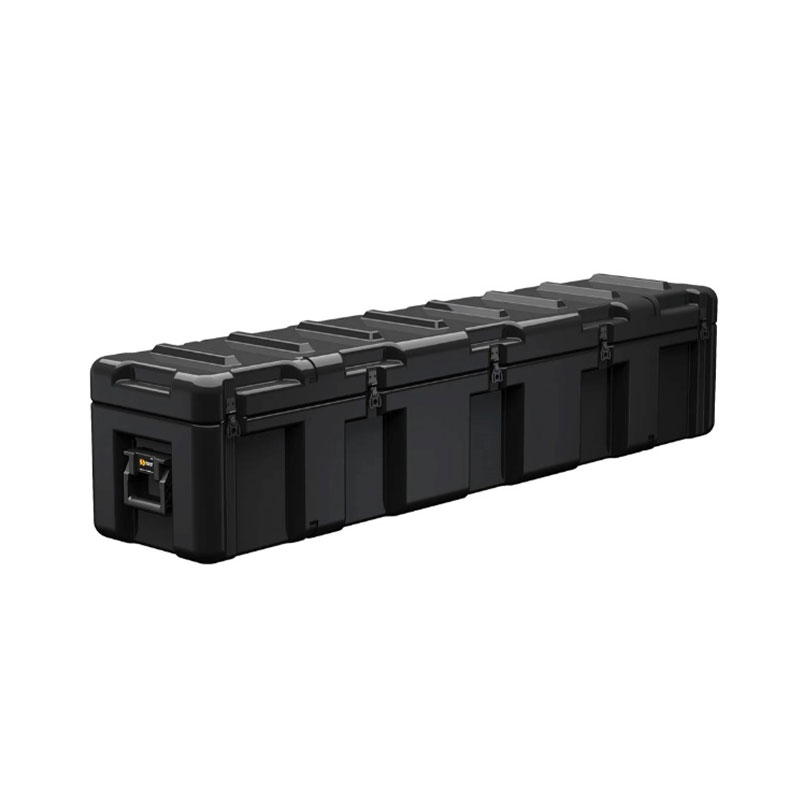
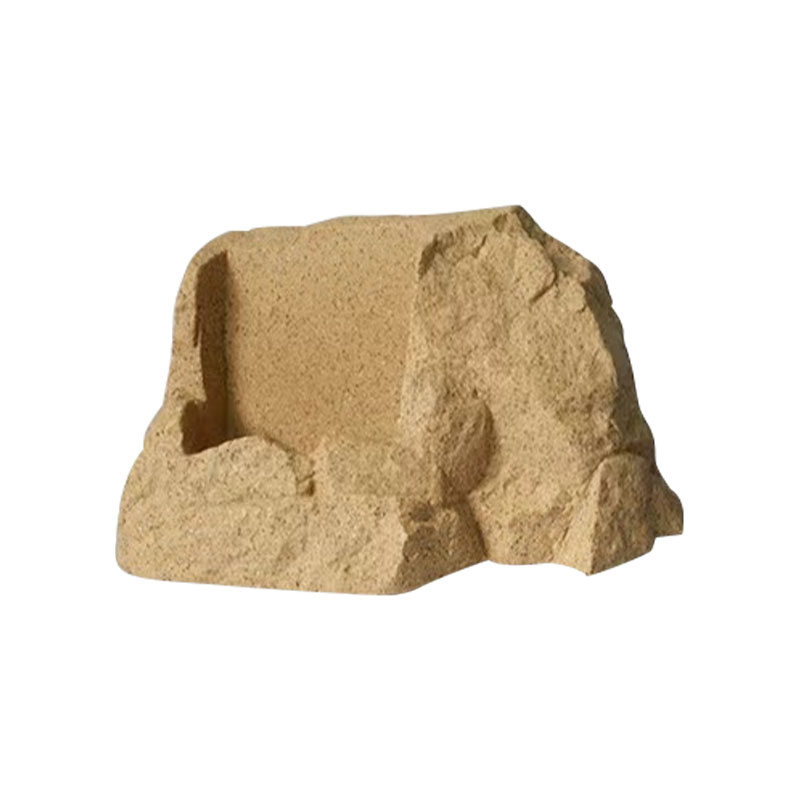
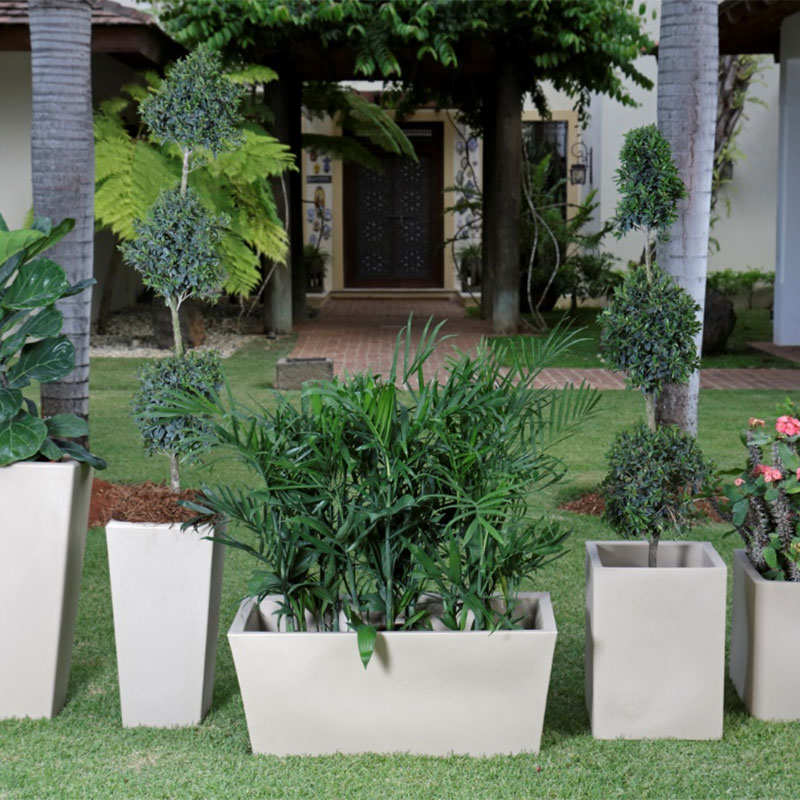
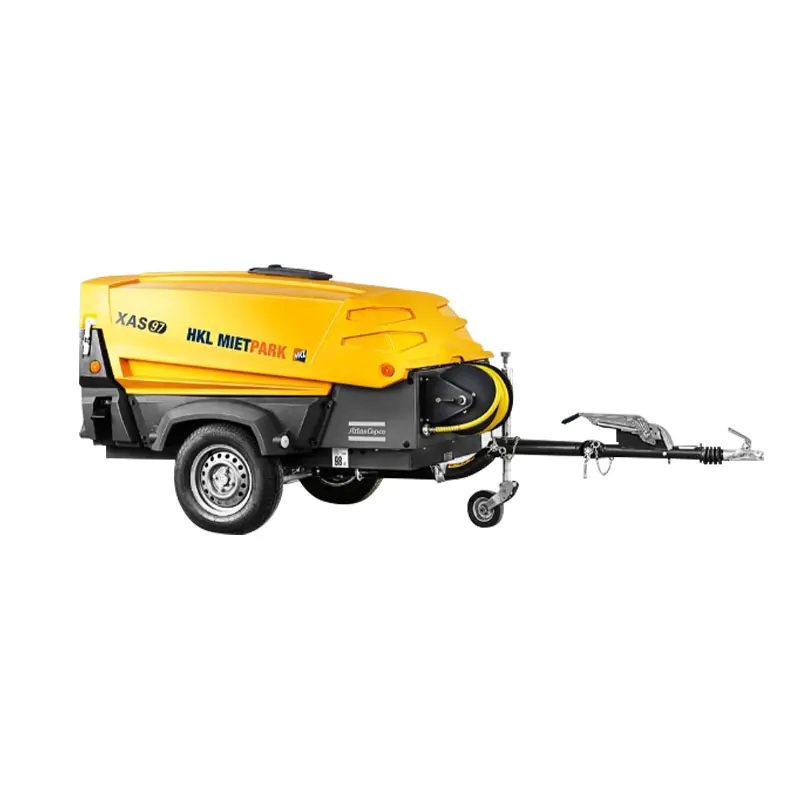
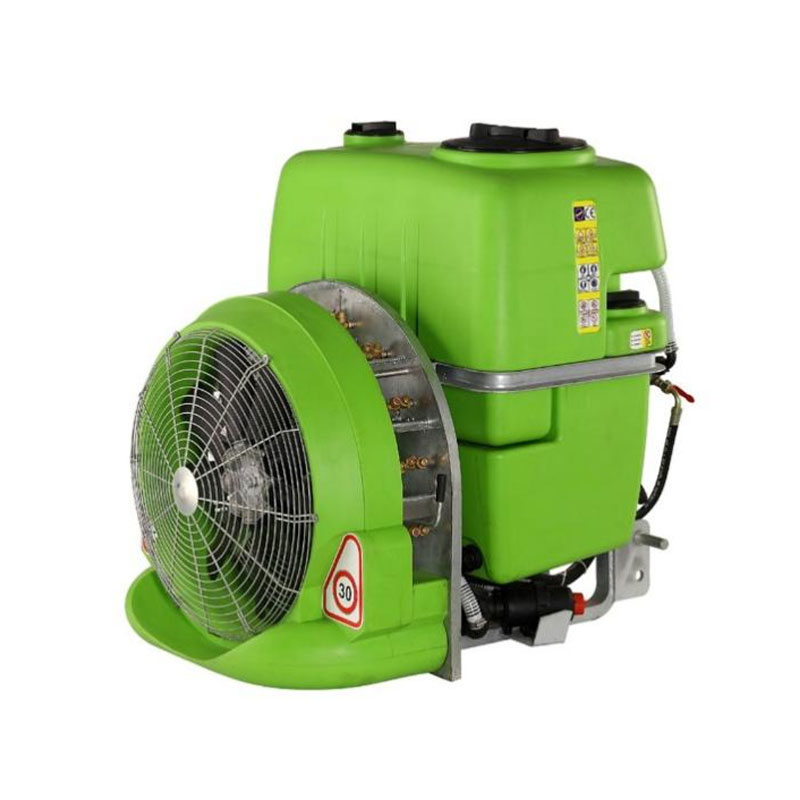
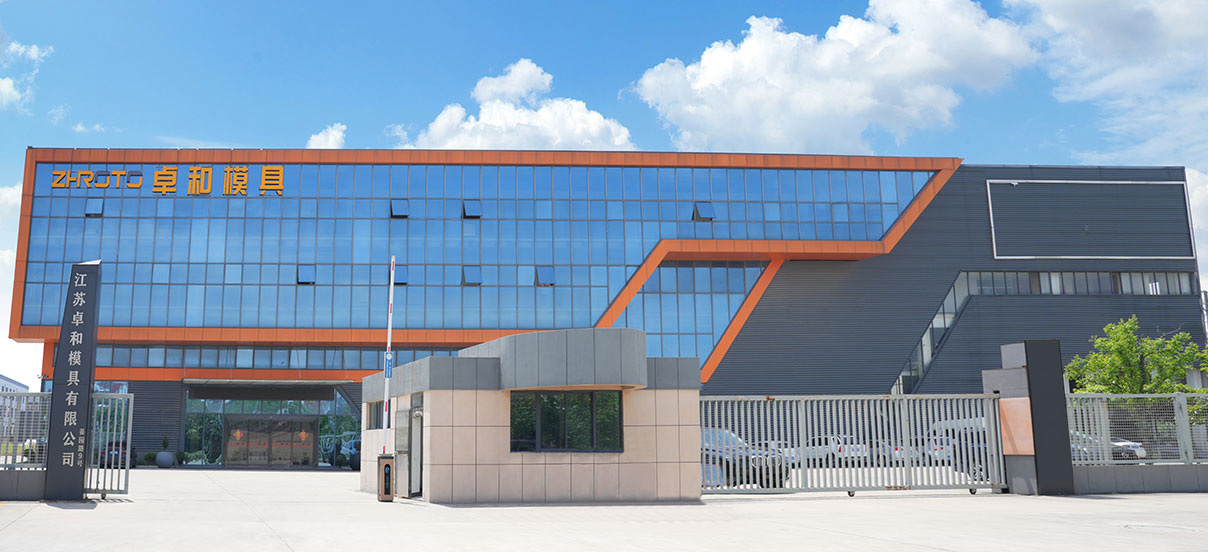
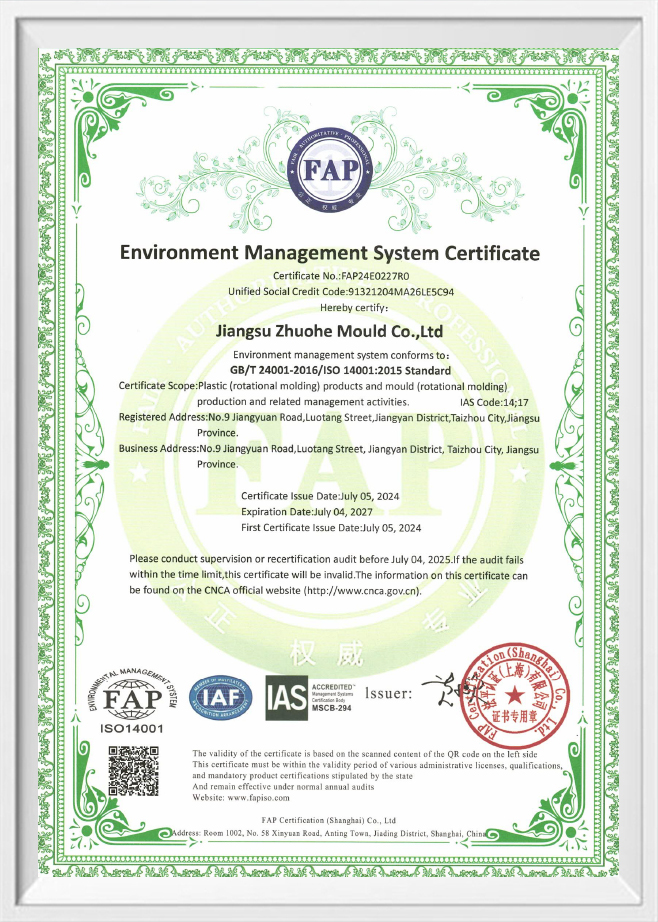
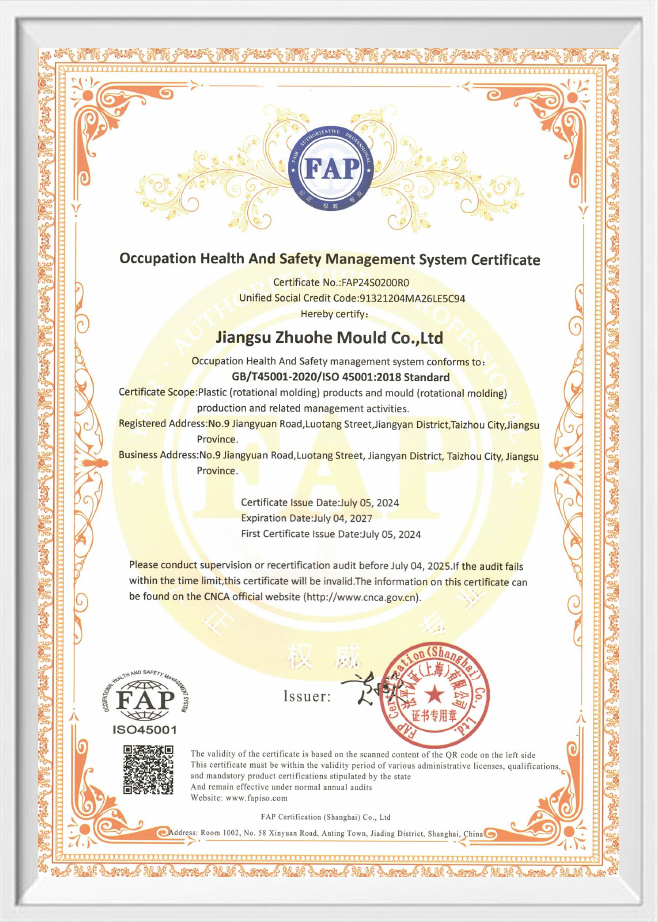
ZHROTO isChina Custom Rotomolded Furniture Manufacturers and Furniture Rotomolding Suppliers, founded in 2015 (formerly Suzhou Zhuohe Mould Technology Co., LTD.) moved to Taizhou City, Jiangyan District in December 2021, New name - Jiangsu Zhuohe Mould Co., LTD., with years of experience in the development and production of roto molding molds & parts, the company team participated in the 2008 Beijing Olympic Games and 2010 Shanghai World Expo. Skilled roto molding for engineering vehicle fuel/water tanks, cleaning environmental tanks, toy furniture, kayaking, buoy floating, agricultural machinery accessories, coolers, etc. The new factory plant covers an area of more than 12000 square meters, with 10 CNC centers, including one set of five-axis CNC centers, 1 set of 4mtrs rotational molding machine, 2 sets of 3.5mtrs rotational molding machines and 1 set of 3mtrs 3arms. The annual capacity of mold making is about 1500 sets and rotomoulding plastic products is more than 3600 tons. The company has passed ISO9001:2015 Quality management certification, ISO14001:2015 Environmental management certification, and ISO45001:2015 Occupational Health and Safety Management certification system. We offer Rotational Molding Furniture Mold.
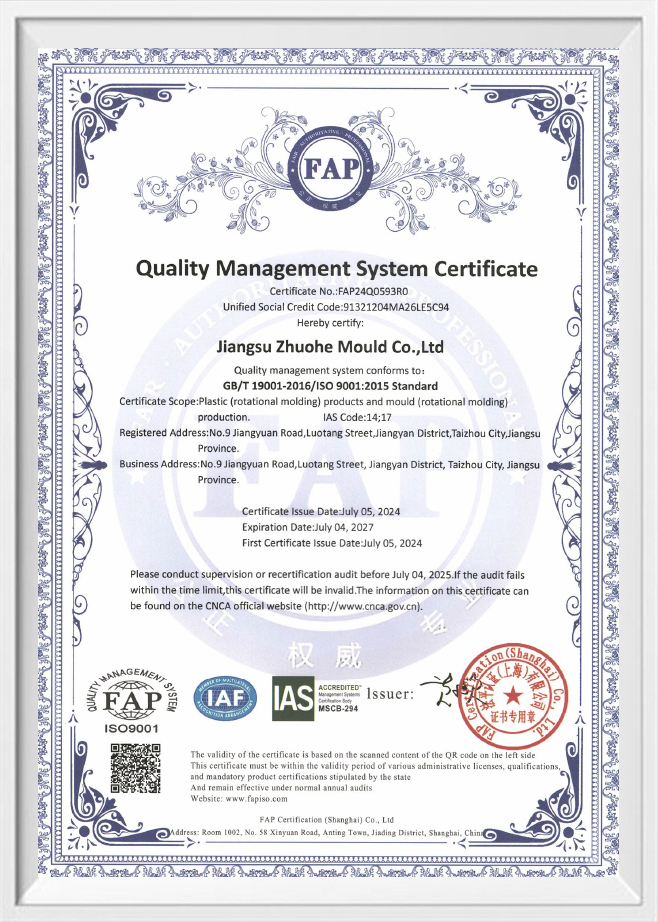
The company has passed ISO9001:2015 Quality Management Certification, ISO14001:2015 Environmental Management Certification, and ISO45001:2015 Occupational Health and Safety Management Certification System.
Core Equipment Required for Rotational Molding Rotational molding (rotomolding) requires a specific set of equipment to successfully produce hollow plastic parts. The four essential categories of equ...
What Is Rotational Molding? A Direct Answer Rotational molding (also called rotomolding) is a manufacturing process that uses heat and biaxial rotation to produce hollow, seamless plastic parts. A me...
Rotational molding is a widely used method for producing seamless, durable, and high-performance kayak hulls. The process allows for intricate shapes, uniform wall thickness, and multi-layer construct...
At Jiangsu Zhuohe Company, we are well aware that the rationality of roto-molding furniture mold design is crucial to avoiding quality problems during the molding process. In order to ensure the scientificity and efficiency of mold design, we have taken a series of rigorous and meticulous measures, relying on our technical strength and equipment advantages, which are specifically reflected in the following aspects:
High-precision design and simulation: We use advanced CAD/CAM design software, combined with years of accumulated experience in roto-molding mold design, to perform precise three-dimensional modeling and simulation. This process not only considers the appearance and functional requirements of the product, but also deeply analyzes key factors such as material flow, cooling effect and stress distribution to ensure that the mold design is theoretically optimal, thereby avoiding deformation, cracks and other quality problems during the molding process.
Strict dimensional accuracy and standardization management: Jiangsu Zhuohe Company implements strict inspection processes and time control for every size of the mold to ensure the standardization and high precision of all parts. This includes strict screening of raw material hardness, fine control of the processing process, and precise operation of CNC machining centers, especially the use of high-speed five-axis gantry machining centers for rough machining, semi-finishing and finishing of molds, which greatly improves the accuracy and consistency of molds and reduces molding problems caused by dimensional deviations.
Material flow inspection and wall thickness control: We are well aware of the impact of material flow on molding quality in the rotational molding process, so we pay special attention to the inspection and optimization of material flow. By accurately controlling the heating temperature, rotation speed and cooling time of the mold, we ensure that the material flows evenly in the mold to avoid defects such as bubbles and shrinkage holes. At the same time, using the unique wall thickness control ability of the rotational molding process, we ensure that the edge thickness of the furniture mold exceeds 5mm, significantly improving the edge strength and meeting the high requirements for durability and safety of outdoor furniture, children's furniture, etc.
Professional straightening, assembly and polishing: After the mold is manufactured, we strictly follow customer requirements to finely straighten and assemble the CNC-processed mold core and frame to ensure the accuracy and stability of the mold. Subsequently, professional mechanical polishing is carried out to create a deep and evenly distributed texture pattern, which not only improves the beauty of the product, but also further optimizes the quality of the molding surface.
Continuous technological innovation and customer communication: We continue to invest in research and development, introduce new technologies and new materials, and improve the level of mold design and manufacturing. At the same time, we maintain close communication with customers, deeply understand their specific needs and expectations, and ensure that the mold design meets both technical requirements and customer's personalized needs, thereby avoiding quality problems in the molding process from the source.
Jiangsu Zhuohe Company relies on high-precision design and simulation, strict dimensional accuracy and standardization management, material flow inspection and wall thickness control, professional straightening assembly and polishing, as well as continuous technological innovation and customer communication to ensure the rationality of rotomolding furniture mold design, effectively avoid quality problems in the molding process, and provide customers with top plastic furniture solutions.
At Jiangsu Zhuohe Company, we are well aware that quality control of rotomolding furniture molds during the cooling stage is crucial to the durability, dimensional accuracy and appearance of the final product. Therefore, we have adopted a series of precise and efficient methods to control the cooling rate and select the appropriate cooling medium to ensure that the quality of rotomolding furniture molds reaches the top level.
Cooling rate control
Intelligent temperature control system: We have introduced an advanced intelligent temperature control system that can automatically adjust the cooling rate according to the mold size, material properties and preset process parameters. By accurately monitoring the temperature changes inside the mold, the system can ensure that the cooling process is uniform and stable, avoiding stress concentration and deformation problems caused by too fast or too slow cooling.
Phased cooling strategy: For molds of different parts and thicknesses, we implement a phased cooling strategy. A faster cooling rate is used in the initial stage to quickly take away a lot of heat, and then the cooling rate is gradually slowed down to promote uniform shrinkage of the material and release of internal stress, thereby improving the overall quality of the mold.
Cooling medium selection
High-quality cooling medium: We strictly screen and use high-quality cooling medium, such as pure water or coolant with a specific ratio, to ensure that it has good thermal conductivity, chemical stability and low corrosiveness. These characteristics help achieve efficient heat exchange while protecting the mold surface from damage.
Circulating cooling system: Equipped with an advanced circulating cooling system, it ensures that the cooling medium circulates continuously around the mold to maintain a constant temperature and flow rate. This not only improves cooling efficiency, but also helps reduce medium waste and environmental pollution.
Zhuohe Company's unique advantages
Professional technology and experience: With deep accumulation in rotation, thermoforming and compression molding technology, we are able to accurately grasp every detail in the rotational molding process, including precise control of the cooling stage.
Advanced equipment support: With 10 advanced CNC machining centers including a high-speed five-axis gantry machining center, it provides strong hardware support for the precise manufacturing of molds, ensuring that the initial accuracy of the mold meets high standards, making it easier to achieve quality control goals during the cooling stage.
Customer-oriented service: We always focus on customer needs and customize cooling solutions according to customers' specific needs to ensure that the final roto-molded furniture molds are not only excellent in quality, but also perfectly match customers' actual application scenarios.
Jiangsu Zhuohe Company effectively controls the speed and medium of roto-molded furniture molds during the cooling stage through the comprehensive application of intelligent temperature control systems, phased cooling strategies, high-quality cooling media and circulating cooling systems, as well as a deep understanding of customer needs, thereby ensuring the excellence and stability of mold quality.

No. 9 Jiangyuan Road, Luotang Street, Jiangyan District, Taizhou City, Jiangsu Province, China
+86-18006248936
Copyright © Jiangsu Zhuohe Mould Co., Ltd. Rights Reserved. Custom Rotational Molding Furniture Mold Factory
